



Adolf El Assal Keeps Cinema Honest
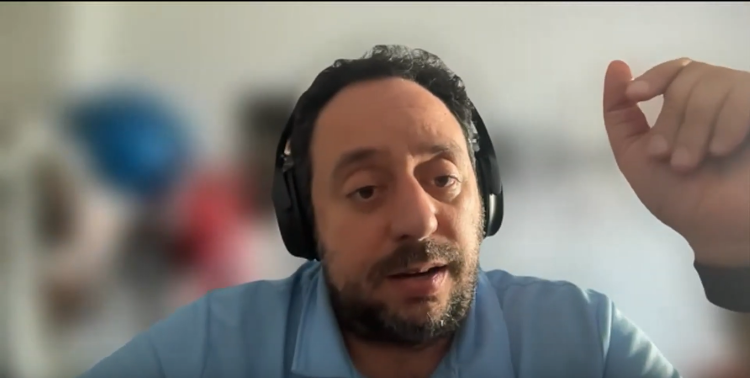
Luxembourg is not usually the first place people mention when discussing cinema, but Adolf El Assal is ensuring it stays on the map. The Egyptian-born, Luxembourg-raised filmmaker has carved out a space that is both local and global.
Last week, in an interview with CityNews, he was buzzing from fresh screenings in Berlin where two of his co-productions, The Kiss of the Grasshopper and The Witness, drew strong reactions from audiences. One was praised for its sharp political commentary, the other for its haunting mix of magical realism and raw family drama. Together, they show the range of El Assal’s slate.
He explains the journey with ease. His earlier film Sawah opened doors and proved Luxembourg could be more than a quiet hub. “People discovered that we could get films financed here, that there was real support, and that opened opportunities,” he said. From there, his company built credibility, attracting scripts and directors from different parts of Europe, Asia, the Middle East, North America … El Assal has become the bridge.
The Witness comes with a history almost as dramatic as its plot. Written by the acclaimed Jafar Panahi while under house arrest in Iran, it captures the risks women face in speaking truth to power. At the Berlin showing, it reminded audiences that cinema can still be dangerous. The Kiss of the Grasshopper, on the other hand, invites viewers into a hallucinatory world where family trauma takes shape as giant insects. Dark and unsettling, it divides opinion. But as El Assal notes, that is sometimes the point.
The projects keep piling up. A female-driven comedy Les Baronnes is set for release later this year. A Haitian-Canadian story titled Kanaval tested his logistical creativity, forcing him to film Haitian scenes in the Dominican Republic due to unrest. He has just wrapped post-production on a Gaza documentary. And then there is a small film he shot with nothing more than a pocket-sized DJI camera, proof that story still trumps budget. “If the story is genuine enough, you will find your audience,” he insisted.
Away from sets and festival red carpets, El Assal has also written a book with an unforgettable title: How Not to Fuck Up Your Film. Far from a technical manual, it is a personal survival guide built from two decades in the trenches. He does not hide the rough edges. Actors’ egos, unreliable distributors, and the heartbreak of financing are laid bare. He wanted to create the kind of book he never found when starting out. “It’s about experiences, not sugarcoating,” he said.
It is perhaps this refusal to sugarcoat that defines him. Asked if globalisation risks flattening originality, he was firm. “I don’t want to copy and paste,” he said. His identity is stitched across continents—Egypt, Luxembourg, the UK—and he believes that mix allows him to tell stories that ring true. Streaming platforms, he argues, have only strengthened the case for honesty, by breaking rigid structures and giving more space for unorthodox voices.
Still, originality must meet an audience. Marketing is different today, he says, cheaper and more direct. “You can build communities around stories. That is where cinema survives.” His own comedy Sawah, which started modestly in Luxembourg, went on to be screened in China, South Korea, and across Walmart shelves in the United States. It even trended on Netflix. A reminder that you cannot always predict where stories will travel.
At 44, El Assal has a long list of titles, two degrees in filmmaking, his own production and distribution companies. Yet his bigger dream remains humble. “I want to be free to make films until my last breath,” he said. That freedom is precious in a world where algorithms, box office demands, and political red lines often suffocate creativity.
In person, he radiates the restlessness of someone who is never done. He is working in Europe, the Middle East, and the UAE. He answers every young filmmaker who writes to him on social media, even if it takes a couple of days. For him, helping others is part of keeping cinema alive.
And that may be the clearest takeaway. Adolf El Assal is not simply producing films. He is fighting for a way of making them that is rooted in experience, courage, and above all, sincerity. In an industry often accused of losing its soul, his stubborn insistence on staying genuine feels like a quiet act of rebellion.
By David Danisa