





Over €1bn Spent – The Heavy Price of Extreme Weather in Luxembourg
Luxembourg has suffered more than €1bn in economic losses from extreme weather
since 1980, with scientists and insurers warning that climate change is driving up both
the frequency and intensity of damaging events.
Data compiled by risk analysts and reported in national studies put the country’s bill at
about €1.25 – €1.3bn over four decades, covering floods, storms, heatwaves and hail
damage. For a country with barely 650,000 people, the cumulative toll is striking.
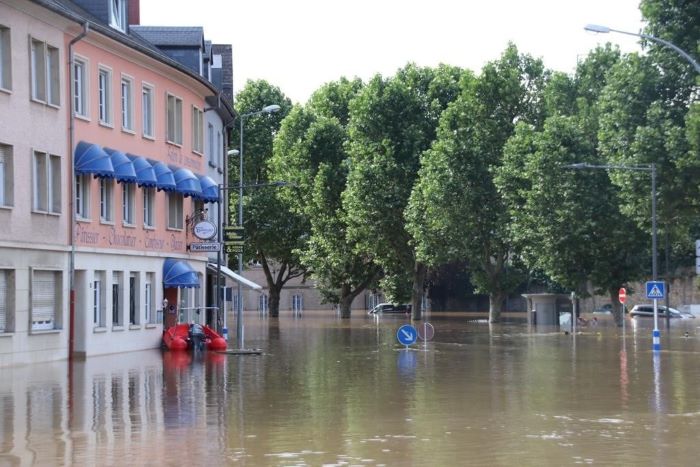
Flooding has been the most destructive hazard. The Moselle and Sûre rivers, which cut
through Luxembourg and link it to neighboring states, have burst their banks
repeatedly, with catastrophic effects in July 2021. That disaster, which also ravaged
parts of Germany and Belgium, left thousands of homes, vehicles and businesses
damaged in Luxembourg. Insurers described it as the costliest weather event in the
nation’s history.
Heatwaves have become more frequent and severe, adding pressure on health
services, while short, intense storms have caused localised but costly damage to
property and transport links. The European Environment Agency has recorded a clear
upward trend in such events across the continent, a warning echoed by the
Intergovernmental Panel on Climate Change.
Analysts say Luxembourg’s high-value economy magnifies the impact. With some of the
highest per-capita GDP in the world, property and infrastructure are densely
concentrated, making each episode more expensive than in less wealthy countries.
Urbanisation and changes in land use have also increased vulnerability, with drainage
and protective works struggling to keep up with heavier rainfall.
Officials stress that Luxembourg is not only a victim of climate extremes but also an
active player in efforts to curb them. The government has pledged climate neutrality by
2050 under EU rules and published an international climate finance strategy for 2021 -2025
Through this, it has channeled funds to support developing countries in adapting
to climate change and invested in transparency measures under the Paris agreement.
Luxembourg has also sought to position itself as a hub for sustainable finance,
encouraging private investment in low-carbon projects. Domestically, updated energy
and climate plans commit to expanding renewable energy and strengthening adaptation
measures after the 2021 floods exposed weaknesses in preparedness.
Surveys show that a majority of citizens back more adaptation spending, fearing that
failure to act now will mean higher costs later. Civil protection authorities have expanded
early warning systems, while local governments are under pressure to upgrade
drainage and reinforce river defenses.
The €1.25bn already spent is seen by many as a down payment on a far larger bill
unless more ambitious action is taken. With the climate crisis fueling increasingly
destructive events across Europe, Luxembourg’s experience highlights the financial
stakes for even the smallest and wealthiest of nations.
Photo – Flooding in Echternach Luxembourg, July 2021 – CGDIS