








What to Know About Orbital Energy – China’s Bold Bet on Space-Based Solar Power
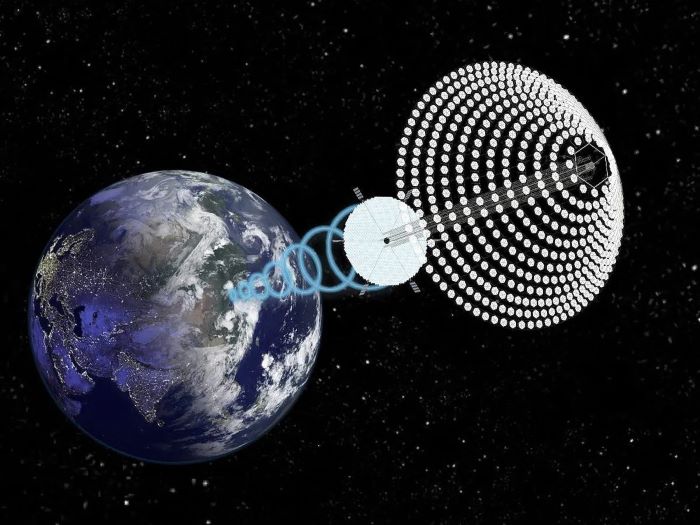
Space-based solar power, the idea of harvesting the sun’s energy in orbit and beaming
it down to Earth, is once again basking in global attention. The concept, first dreamt up
more than half a century ago, has often flickered between scientific promise and
economic impossibility. Now, renewed excitement is being fueled by China’s entry into
the race.
For decades, space agencies in the United States, Japan and Europe have produced
detailed studies on orbital energy stations, most of which have remained theoretical. But
when China’s well-funded space program starts testing hardware and building
facilities, the world tends to take notice. Yet enthusiasm does not necessarily equal
viability and the basic physics and costs of launching and maintaining vast solar arrays
in space have barely shifted since the idea first caught the imagination of NASA
engineers in the 1970s.
The appeal is obvious. Above the clouds and beyond nightfall, orbiting solar panels
could capture almost continuous sunlight. That energy could be converted into
microwaves and transmitted to Earth, offering an uninterrupted source of clean power.
In principle, it could solve one of renewable energy’s biggest challenges – intermittency.
NASA’s early studies in the 1970s inspired decades of research by Japan and the
European Space Agency, which imagined kilometer-wide solar farms in space
transmitting gigawatts of power to the ground. Each new wave of enthusiasm, from the
Space Shuttle era to the age of reusable rockets, has eventually crashed against the
hard reality of cost and complexity.
China’s ambitions have reignited the conversation. The Chinese Academy of Space
Technology has mapped out a path beginning with a small test satellite before the
decade’s end, followed by a one-megawatt demonstration system in the 2030s and,
ultimately, a one-gigawatt orbital power station by mid-century.
Officials have likened the endeavor to constructing a “Three Gorges Dam in space.” For Beijing, the plan is as strategic as it is scientific. Space-based solar power aligns with its push for technological leadership, justifying heavy investment in reusable rockets, robotic
assembly systems and high-power microwave transmission, all technologies with
military and industrial applications. It also provides a civilian narrative for the
development of the Long March 9 super-heavy rocket, the same launcher slated for
future lunar missions.
Despite the grand vision, cost remains the immovable obstacle. Launching a payload to
geosynchronous orbit today costs between $5,000 and $10,000 per kilogram. Even with
SpaceX’s Falcon Heavy, the world’s cheapest operational heavy-lift vehicle, prices
hover around $3,600 per kilogram to geostationary transfer orbit and roughly $5,900
once circularised. Even under highly optimistic assumptions, multiple launches, bulk
discounts, and reduced margins, the figure remains about $4,500 per kilogram. For a
gigawatt-scale station weighing thousands of tonnes, the math quickly becomes
astronomical.
However, China’s entry into space-based solar power has given fresh momentum to an
old dream of limitless clean energy from the heavens. But while the ambition is striking
and the geopolitics intriguing, the economics still don’t add up. Until costs plunge by an
order of magnitude, orbital energy will remain more about aspiration than application.
For now, the world’s most powerful nations are looking skyward once again, chasing
sunlight that may, for the foreseeable future, remain just out of reach.