








Pope Leo Meets Abuse Survivors as Vatican Confronts Decades of Scandal
Pope Leo has met with victims of sexual abuse within the Catholic Church, a rare and symbolic gesture that underscores renewed pressure on the Vatican to confront a crisis that has haunted it for decades.
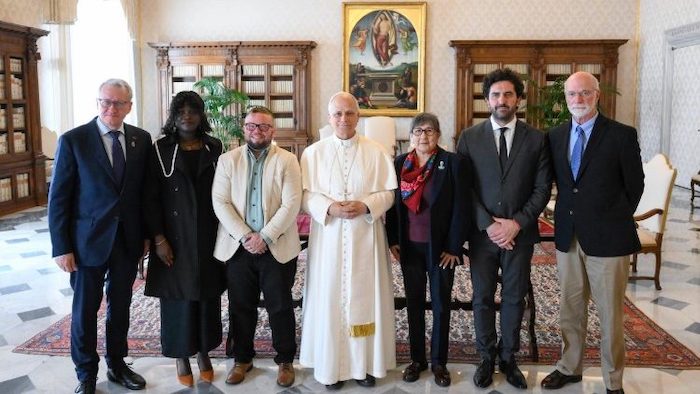
The meeting, held behind closed doors at the Vatican, brought together survivors from several countries under the umbrella of the global advocacy group Ending Clergy Abuse (ECA). They presented the Pope with a list of demands, including a universal zero-tolerance policy for offenders, independent oversight of abuse cases, and compensation for victims.
According to participants, the Pope listened attentively and expressed “deep sorrow” for the Church’s failures. He reportedly pledged to continue dialogue with survivors and vowed to strengthen the Vatican’s response to allegations of clerical abuse. While no immediate commitments to compensation were made, Vatican officials later confirmed that the Church was considering new mechanisms for supporting victims.
The audience comes amid fresh criticism of the Vatican’s handling of abuse cases, following a damning report by its own advisory commission that accused some senior Church figures of negligence and opacity. Survivors’ groups said the meeting represented a step forward but warned that apologies and sympathy must now be matched with action.
The Catholic Church’s record on sexual abuse has long been a stain on its moral authority. Since the early 2000s, revelations of systematic cover-ups have erupted across the United States, Ireland, Australia, France, and other parts of Europe. In Boston, the Spotlight investigation of 2002 exposed how priests accused of child abuse were quietly moved between parishes – a pattern that proved global in scope.
Independent inquiries and government commissions have since documented thousands of victims and decades of institutional concealment. While some dioceses have paid millions in settlements, many survivors continue to battle for recognition, justice, and compensation.
The accusations are far from exaggerated. Studies commissioned by the Church itself, including the John Jay report in the United States and similar inquiries across Europe, have shown that the abuse was widespread, systemic, and often tolerated by senior clergy. The Vatican has since introduced safeguards, including child-protection offices and internal tribunals, but critics say the pace of reform remains slow.
For Pope Leo, who inherited a Church weary from scandal and struggling to regain trust, the challenge is immense. His willingness to meet victims face-to-face marks a contrast with earlier papacies that often relied on written apologies or distant statements. Yet the question remains whether compassion will translate into accountability.
Survivors are cautiously hopeful but far from convinced. “This is a start,” said one advocate after the meeting. “But we’ve heard apologies before. What we need is justice, not words.”
As the Vatican contemplates its next steps, the Pope’s promise to “listen and act” will be tested against decades of institutional silence. For the victims, and for a wounded Church, the meeting may signal a new beginning or another missed chance to make things right.
Photo – Pope Leo with members of the Eca Global board of directors (@VATICAN MEDIA)