




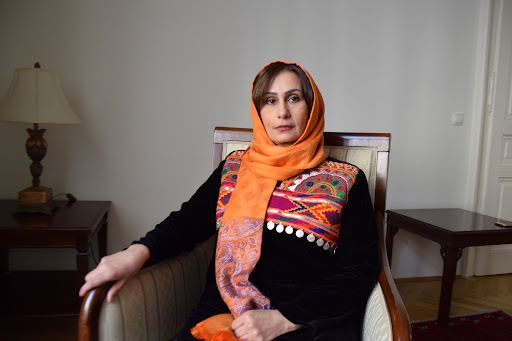
Manizha Bakhtari: Afghanistan’s Female Envoy’s Defiance Against the Taliban
In a quiet corner of Vienna, far from the watchful eyes of Kabul’s rulers, Afghanistan’s ambassador to Austria, Manizha Bakhtari, carries on her diplomatic duties, without the blessing of the Taliban. Appointed by the previous government before its collapse in August 2021, Bakhtari has defied the Taliban’s demand for her recall, citing their lack of international recognition. Austria continues to accredit her, allowing her to remain one of the last functioning representatives of the Afghanistan that once was and, in her view, the one that must endure.
Bakhtari’s defiance is not symbolic; it is practical resistance wrapped in protocol. Her embassy, though stripped to essentials, still issues documents, provides assistance to Afghans in Europe, and through her own initiative, runs the “Daughters” program, supporting education for Afghan girls forced out of classrooms back home. “The Taliban can claim to govern,” she once said, “but they cannot erase the spirit of Afghan women.”
Her refusal to step down has made her a target. The ambassador receives hate messages and death threats from Taliban sympathizers and conservative voices who see her persistence as rebellion. Yet, in a world where women in Afghanistan have been pushed out of schools, jobs, and even public spaces, Bakhtari’s stance carries a rare moral weight. She calls the regime’s policies “gender apartheid,” a term many rights groups have since adopted to describe the systematic exclusion of women under Taliban rule.
For now, the Taliban cannot remove her, not by law, and not by force. They have no seat at the United Nations, and most countries, including Austria, do not recognize them as Afghanistan’s legitimate government. That leaves Bakhtari in a peculiar diplomatic limbo – a representative of a state that no longer exists, standing against rulers who refuse to recognize her, yet still performing the duties of an envoy.
Her defiance underscores a larger truth about Afghanistan’s fractured identity. While men with guns dictate life at home, women like Bakhtari are rewriting what it means to serve the nation abroad, not through politics, but through persistence. In her small embassy office, she embodies the memory of a country that once dared to believe in progress, and the hope of one that may someday return to it.
In the silence left by the Taliban’s suppression of women’s voices, Manizha Bakhtari’s defiance rings louder than ever, a reminder that Afghanistan’s daughters are not done speaking.