






Luxembourg’s Prosperity Draining Its French and Belgian Neighbors
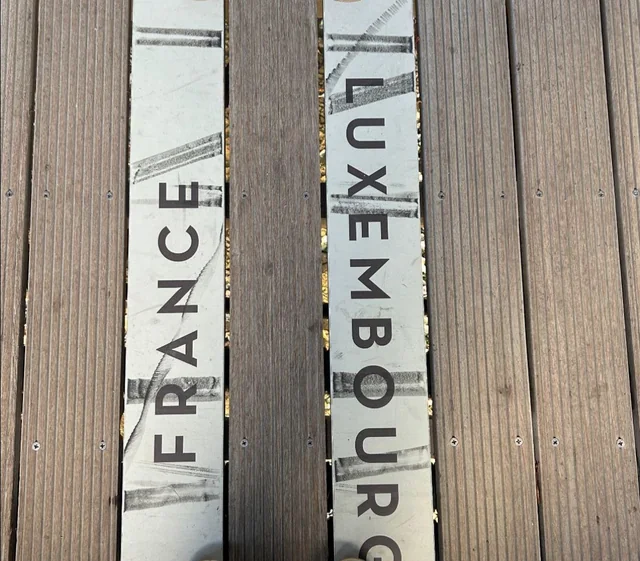
Luxembourg’s prosperity is casting a long, complicated shadow over its neighbors. Along the French and Belgian borders, small towns that once thrived on local industry now depend heavily on the Grand Duchy – their residents crossing daily for better pay, their economies hollowed by the same prosperity they rely on.
Every morning, tens of thousands of French and Belgian workers join the stream of commuters flowing into Luxembourg. They are teachers, nurses, builders, engineers – part of a cross-border workforce that has become essential to Luxembourg’s growth. For many, it is a daily journey toward opportunity. For the towns they leave behind, it is a slow bleed.
In northern France, communities like Longwy and Thionville were once industrial hubs, their factories humming with steel and manufacturing. Today, the hum comes from the engines of cars heading to Luxembourg City. The exodus has brought higher household incomes for commuting families but left municipal budgets thinner and public services weaker. While Luxembourg offers competitive salaries and stable work, local schools, hospitals, and small businesses across the border struggle to survive.
In Belgium, border towns such as Arlon and Aubange face a similar dilemma. Teachers and nurses are lured by better pay in Luxembourg, leaving local institutions short-staffed. Small hospitals have been forced to operate with fewer specialists, and school boards scramble to fill vacancies. The imbalance deepens as younger professionals settle closer to Luxembourg, driving up property prices in nearby communes and stretching housing availability for locals.
The construction sector, paradoxically, is both thriving and struggling. Luxembourg’s demand for new housing and infrastructure fuels a constant need for builders and contractors, yet local firms in France and Belgium often lose skilled workers to Luxembourg’s higher wages. The result is a labor shortage at home and rising costs for local projects. Even agriculture – less directly tied to cross-border work, feels the pressure. Farmers face dwindling local markets as working-age residents spend their days, and increasingly their money, across the border.
At the same time, Luxembourg’s soaring rental prices are shaping the housing crisis on both sides. Many border workers can no longer afford to live in Luxembourg, pushing demand and prices higher in nearby French and Belgian towns. What might have been affordable communities are now becoming commuter dormitories, where people sleep but rarely live their lives. Local economies see little benefit from the daily export of labor.
Without strong coordination between governments, the situation risks entrenching inequality. While Luxembourg reaps the benefits of its cross-border workforce, the towns that supply that labor bear the social and economic cost. Public revenue from commuting salaries largely flows into Luxembourg’s tax system, leaving little for local administrations across the border to maintain roads, schools, and community services.
Yet, there are faint signs of renewal. Some cross-border initiatives, supported by European Union funds, aim to strengthen regional cooperation, investing in transport, affordable housing, and shared healthcare infrastructure. A few towns are trying to reinvent themselves as affordable, livable alternatives to Luxembourg, attracting small businesses and remote workers. But these efforts are uneven and slow, often constrained by national bureaucracies and competing priorities.
For now, the borderlands remain in uneasy balance – dependent on Luxembourg yet neglected by their own governments. The teachers, doctors, and builders leaving every morning for better prospects keep their towns alive through remittances, but their absence is eroding the fabric of local life. The future of these border communities may depend on whether Luxembourg’s wealth can be shared in a way that sustains both sides of the divide.
If that balance is not found soon, the glitter of Luxembourg’s prosperity may come to define not only its skyline but also the quiet decline of the towns that surround it.