






Mexico’s Gen Z Protests- A Catalyst for Change or Flashpoint of Disorganized Frustration?
Mexico’s streets erupted this week in one of the country’s most significant youth-driven protests in decades, as thousands of young people, many of them members of Generation Z – mobilized nationwide to demand an end to corruption, violence, and impunity. What began as outrage over the assassination of Carlos Manzo, the mayor of Uruapan in Michoacán, has spiraled into a full-scale confrontation over the future of Mexican democracy.
Manzo, known for openly challenging organized crime, was shot dead during a Day of the Dead celebration on Nov. 1. His killing became a symbol of the institutional paralysis that many Mexicans, especially young people, feel has gone on too long. What followed was a torrent of online organizing led by a group calling itself “Generation Z Mexico,” which issued a manifesto denouncing corruption, abuse of power, and state failures. Their message resonated widely, drawing crowds far beyond the youthful core that launched the movement.
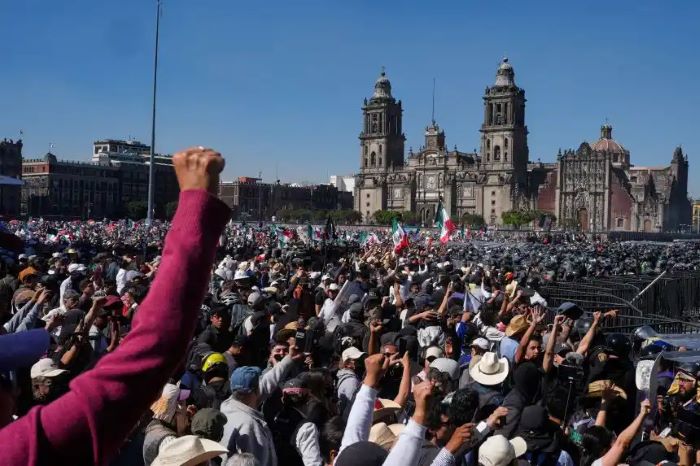
The protests reached a volatile climax in Mexico City, where tens of thousands marched toward the National Palace. Fences were torn down, clashes erupted, and police deployed tear gas. More than a hundred officers were injured, and dozens of demonstrators were detained. While many protesters insisted the movement was peaceful, the images of chaos quickly became political ammunition.
President Claudia Sheinbaum’s government pushed back forcefully, accusing the movement of being infiltrated by right-wing interests, amplified by bots, and financed through a suspicious digital campaign estimated at more than 90 million pesos. Some influencers who initially promoted the protests on social media later distanced themselves, fueling speculation about external influence and the authenticity of the movement’s leadership. Protesters denied manipulation, framing the accusations as an effort to delegitimize a generational cry for accountability.
The unpredictability of the unfolding crisis has analysts split on its likely outcome. Some argue the protest movement could become a turning point, noting its deep resonance in a country where insecurity and corruption are daily realities. The youth leading the demonstrations are digital natives adept at mobilizing quickly and across platforms, allowing them to generate momentum independent of political parties. The growing presence of older citizens at the marches – a sign of shared frustrations, suggests the movement’s appeal extends beyond age lines.
But the protests also face clear vulnerabilities. Their demands, while emotionally powerful, are broad and not yet tied to a clear political agenda or reform pathway. Without structure, movements like this often burn bright and fade fast. The violence that accompanied the Mexico City demonstrations may also fracture public support, giving the government justification for tougher responses. And questions about political infiltration could weaken credibility at a critical moment.
Beyond Mexico, the unrest is being watched closely in regions where young populations are similarly disillusioned by corruption, inequality, and stagnant governance. The movement echoes earlier youth-led mobilizations in Nepal, raising the possibility that Gen Z’s organizing power could cross borders much like the Arab Spring a decade earlier. With global platforms acting as both organizing tools and political battlegrounds, protest culture now travels quickly. That connectivity gives these uprisings potential reach, but also exposes them to manipulation, misinformation, and geopolitical interests.
For Mexico, the stakes are immediate. A sustained youth uprising could pressure institutions to enact reforms or force political concessions. But it could also deepen polarization, provoke a harsher security response, or destabilize an already fragile environment. Whether Generation Z Mexico becomes a catalyst for lasting change, or a flashpoint that briefly exposed the country’s deep frustrations, depends on what happens in the coming weeks.
For other nations, the message is simpler: a new generation is no longer willing to wait. And once Gen Z takes to the streets, the political cost of ignoring them grows harder to calculate.
Photo – On Saturday, several thousand people took to the streets of Mexico City to protest growing crime, corruption and impunity Marco Ugarte/AP