








How Newly Discovered 14,000 year old Ancient Mammoth RNA Could Rewrite Modern Medicine
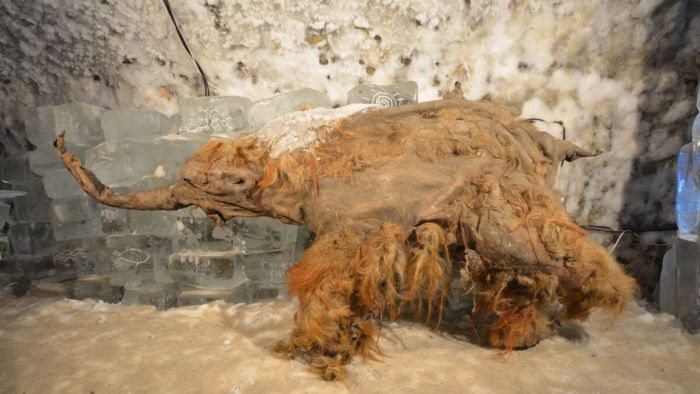
In a discovery that challenges long-held assumptions about how life’s genetic signatures endure through time, scientists have successfully extracted and decoded RNA molecules from a woolly mammoth that died more than 14,000 years ago. The study, led by researchers at Stockholm University and published in Cell, marks the first time ancient RNA, notoriously fragile and thought to degrade rapidly after death, has been recovered from an Ice Age creature.
The finding does more than illuminate the biology of a long-extinct animal. It opens a new frontier in understanding how genes function, evolve and interact across millennia and could transform the way modern medicine unravels the mysteries of disease, heredity and human evolution.
RNA, unlike DNA, represents the active genetic blueprint – it captures how genes were behaving at the moment a cell was alive. Where DNA offers a static archive, RNA provides a vivid snapshot of life in motion. That such molecules have survived in the Siberian permafrost astonished many scientists who believed RNA’s delicate structure made long-term preservation impossible.
The mammoth samples – muscle and skin tissue frozen since the Ice Age – contained fragments of messenger RNA that revealed which genes were switched on when the animal was still breathing. Researchers say the transcripts reflect processes such as immune response, tissue function and metabolism, offering an unprecedented view into the biology of an extinct species.
But beyond paleontology, the implications extend sharply into medical science. Ancient RNA could help researchers understand how genetic expression has shifted over thousands of years, potentially shedding light on modern disorders linked to gene regulation. Conditions such as cancer, autoimmune disease and neurodegeneration all involve disruptions in how RNA interprets DNA instructions. Studying ancient RNA, preserved under natural conditions, could reveal how these pathways originally worked before environmental and evolutionary pressures introduced harmful variations.
The discovery may also allow scientists to trace the origins of key genetic traits shared across mammals, identifying when certain disease-related genes activated or mutated. With enough preserved specimens – mammoths, bison, even ancient humans – researchers could begin mapping gene-expression timelines, comparing ancient cellular behaviour with modern abnormalities.
In more ambitious terms, ancient RNA might serve as a reference point for reconstructing biological systems lost to time. Already, scientists studying extinct pathogens hope the technique could help recover RNA viruses buried in permafrost, a prospect both promising and unsettling. While such research could illuminate how viruses evolved and spread, it raises biosecurity questions about reviving organisms long thought extinct.
For now, the achievement is primarily a scientific milestone – a challenge to the assumption that RNA simply cannot survive deep time. Yet it is difficult not to see broader implications. If Ice Age RNA can remain intact for thousands of years, it may be hiding in far more ancient environments than previously imagined. Each frozen tissue sample becomes an archive not just of species, but of the molecular choreography that sustained life.
Researchers caution that the work is still in its early stages. The RNA fragments recovered are far from complete, and preservation depends heavily on extreme, stable cold. Still, the breakthrough suggests a new era in molecular archaeology – one where the central dogma of biology, from DNA to RNA to protein, might be traced backward through time.
For medical science, it offers something rare – the possibility of reading life’s playbook not only as it is today, but as it once was. And in those ancient notes, scientists suspect, may lie answers to some of the most persistent puzzles of modern genetics.
Photo – How Newly Discovered 14,000 year old Ancient Mammoth RNA Could Rewrite Modern Medicine