








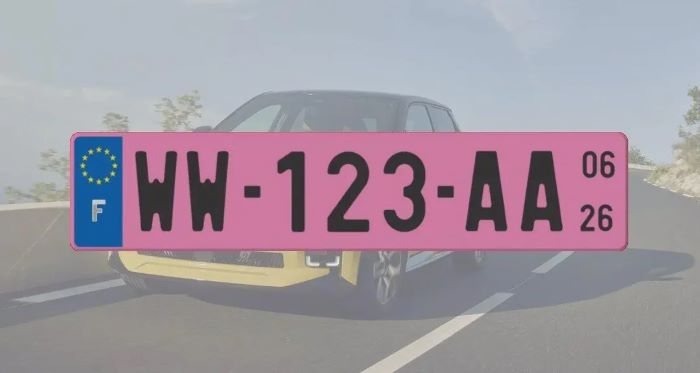
Number Plates – Why France is Going Pink
France will introduce pink number plates from January 2026 for all vehicles using temporary registrations, marking one of the country’s most visible attempts yet to curb longstanding abuses linked to provisional licence numbers.
The reform applies to the widely used “WW” plates that allow motorists to drive newly purchased or imported cars while waiting for permanent registration, as well as certain “W garage” plates issued to dealerships and repair centres. For years these temporary plates have been almost indistinguishable from regular registrations, a detail that authorities say has enabled some drivers to keep them in circulation beyond their legal validity, switch them between vehicles or sell them on, leaving unsuspecting owners to contest fines tied to numbers that should never have been in use.
By switching to a bright pink background – a colour not previously used on French plates – the government aims to make temporary registrations instantly recognisable on the road. Police will be able to determine at a glance whether a vehicle is driving under a provisional permit, reducing the need for immediate database checks and making it more difficult for expired plates to slip past routine patrols.
The new plates will also display the expiry date of the temporary registration, printed directly on the surface. Officials say this simple addition will close a loophole that allowed drivers to keep using provisional numbers months after they should have been replaced, contributing to a steady rise in fraudulent use.
France issues roughly 400,000 temporary registrations each year. While the majority are used legitimately, motoring associations have warned that minor but persistent abuses have caused problems for both law enforcement and new vehicle owners. Fines linked to misused temporary numbers often end up in the mailboxes of people who have no connection to the offences, triggering lengthy disputes with authorities.
Industry reaction to the reform has been largely pragmatic. Dealers and garages will continue issuing the temporary plates as they do now, but the new colour is expected to make the system more transparent for everyone on the road. Motoring groups have welcomed the change as a practical step that should protect buyers from inheriting registration problems they did not create.
The government has stressed that the new colour scheme will not alter the rules governing temporary registrations. Motorists who obtain a provisional plate will simply receive the pink format instead of the traditional white version, with no extra paperwork or obligations.
The shift also aligns with a wider European trend toward clearer visual identification of special vehicle categories, though France’s decision to use pink stands out as an unusually bold choice. Officials say that transparency and enforceability were the driving factors, with the colour selected specifically because it has no prior association with the country’s registration system.
Whether the move will meaningfully reduce misuse will become clearer once the rollout begins. But from early 2026, a splash of pink on French roads will signal the state’s latest attempt to tighten oversight of a system that has long proved vulnerable to subtle but costly forms of abuse.