



The Epstein Files and the Reach of Power, From Washington to Luxembourg
Few modern document releases have captured global attention quite like the Jeffrey Epstein files. With every new tranche, the reaction is instant and electric – headlines ripple across continents, names are scanned obsessively, and speculation blooms. In sheer public fascination, the Epstein archive now rivals and in some respects surpasses the long-sealed files surrounding the assassination of John F Kennedy.
At the heart of this fixation lies the unsettling nature of Epstein’s crimes and the world he moved in. Epstein was not merely a convicted sex offender – he was a man who cultivated proximity to power. Politicians, royalty, financiers, academics and celebrities passed through his orbit. The files, drawn from court proceedings and disclosures tied largely to civil litigation, offer a rare, partial map of elite social networks that ordinarily operate far from public scrutiny.
Like the Kennedy files, the Epstein documents sit at the intersection of sex, power, secrecy and state failure. The Kennedy assassination raised enduring questions about who governs behind the scenes and whether the public ever receives the full truth. The Epstein saga raises a more contemporary and visceral question – how many powerful people knew, enabled or ignored abuse, and how many institutions quietly looked away?
This is why the files have become so coveted. They promise not just salacious detail, but accountability, or at least the possibility of it. Each release feeds the hope that patterns will emerge, that influence will be exposed, and that impunity may finally crack. Yet, as with the Kennedy papers, expectation often exceeds what the documents can definitively prove. Names appear without context, associations without conclusions, and proximity without guilt.
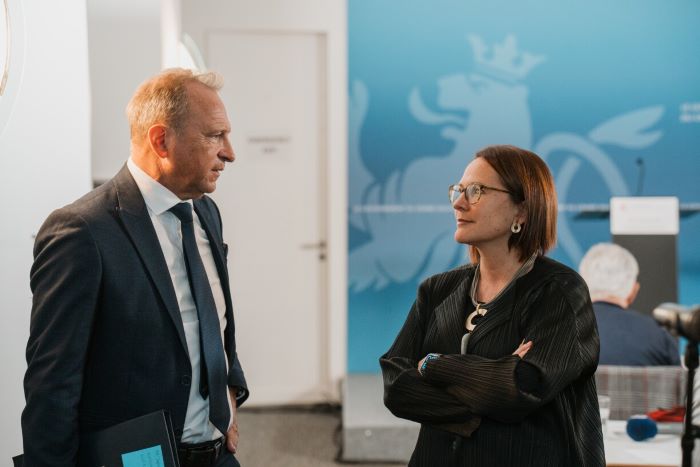
It is within this charged atmosphere that the name of Luxembourg’s former foreign minister, Jean Asselborn, surfaced in the latest batch of released documents. The appearance of his name has inevitably triggered questions, particularly in a small country unused to being pulled into scandals of such global magnitude.
What such mentions mean and what they do not, is crucial. The Epstein files are not a list of perpetrators. They are records of testimony, contacts, travel references and third-party recollections compiled through legal processes. The inclusion of a name does not imply wrongdoing, criminal behaviour or even a personal relationship with Epstein. In many cases, individuals are referenced because they were discussed by others, listed in passing, or mentioned in relation to diplomatic, social or professional contexts.
Asselborn, who served as Luxembourg’s foreign minister for nearly two decades and was one of Europe’s longest-serving diplomats, occupied a role that brought him into contact with a wide range of international figures. In such circumstances, being named in documents tied to Epstein’s sprawling social web does not, on its own, indicate anything more than proximity within overlapping elite circles. To date, no allegation of misconduct has been levelled against him in connection with Epstein.
Still, the reaction illustrates the power of the files themselves. In the Epstein era, appearance alone carries weight. Reputations are tested not by proven acts, but by association – a dynamic that reflects both legitimate public anger and the darker excesses of suspicion culture.
This is where the comparison with the Kennedy files sharpens. Both sets of documents reveal less than the public hopes, yet more than institutions once wished to disclose. They do not deliver neat resolutions. Instead, they expose gaps, in justice systems, in political courage, and in the mechanisms meant to protect the vulnerable.
Ultimately, the Epstein files matter not because they guarantee dramatic revelations, but because they symbolise a reckoning. They represent society’s refusal to let power close ranks in silence. Whether they will lead to genuine accountability remains uncertain. But their grip on the global imagination – now strong enough to rival one of the most mythologised archives in modern history – suggests that the demand for truth, however uncomfortable or incomplete, is no longer easily buried.