








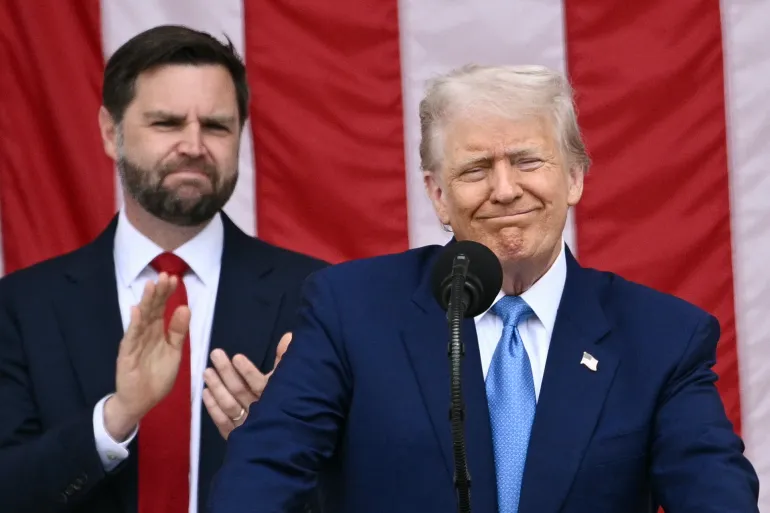
Trump Threatens Iran, Raises Stakes in Escalating Middle East Conflict…
As a volatile conflict between Israel and Iran stretches into its fifth day, former U.S.
President Donald Trump has intensified his rhetoric, calling for Iran’s “unconditional
surrender” and threatening severe consequences if Tehran does not halt its military
actions and nuclear ambitions.
In a series of posts on his social media platform Truth Social, Trump wrote, “We know
exactly where the so-called ‘Supreme Leader’ is hiding. He is an easy target… but we
won’t take him out. At least not for now. But we won’t tolerate missiles fired at civilians
or our troops. Our patience is wearing thin.”
The comments mark a sharp escalation in U.S. posturing. Trump, who cut short his
appearance at the G7 summit in Canada to return to Washington, is now meeting with
his national security team amid speculation that the U.S. may take a more direct military
role in support of Israel.
Israel has launched a sweeping campaign targeting Iran’s nuclear facilities and air
defense systems. Prime Minister Benjamin Netanyahu claims the strikes have crippled
Iran’s ability to defend against further attacks and insists the offensive will continue until
Iran’s nuclear programme and missile capabilities are dismantled.
While Israel’s attacks have caused widespread damage, they have not yet destroyed
Iran’s most fortified site, the Fordo uranium enrichment facility, buried deep in the
mountains. To achieve that, Israeli forces may require the U.S.-made GBU-57 “bunker
buster” bomb and a B-2 stealth bomber to deliver it – assets Israel currently lacks.
Trump, speaking aboard Air Force One, signaled his willingness to escalate. “They
should have done the deal,” he said, referring to Iran’s past nuclear negotiations. “I’m
not in the mood to negotiate anymore.”
The White House has since re-positioned warships and aircraft closer to the region,
signaling preparedness for a larger confrontation.
Despite the saber-rattling, Trump left the door slightly ajar for diplomacy. He hinted at
possibly sending Vice President JD Vance and special envoy Steve Witkoff to open
talks with Iran. Yet, he simultaneously dismissed testimony by National Intelligence
Director Tulsi Gabbard, who in March said U.S. agencies had found no evidence that
Iran was actively building a nuclear weapon.
“I don’t care what she said,” Trump responded bluntly. “I think they were very close to
having it.”
Dr. Elena Markovic, a Middle East analyst at the International Crisis Institute, warns that
deeper American involvement could rapidly internationalize the conflict.
“We’re on the brink of a regional war that could draw in Lebanon’s Hezbollah, Iraqi
militias, and possibly even Gulf states. If the U.S. provides the kind of strategic support
Israel is asking for, Tehran may feel it has no choice but to retaliate against American
assets and allies.”
General David Kim (Ret.), a former CENTCOM strategist, echoes this sentiment:
“Giving Israel bunker-busting capabilities could be seen by Iran as a declaration of war.
This isn’t a limited proxy fight , this is two sovereign nations on a collision course, and
the U.S. would become a co-belligerent by default.”
He also notes that such a move might provoke asymmetric attacks on U.S. military
bases, oil infrastructure in the Gulf, or cyberattacks on Western economies.
Meanwhile, European diplomats have expressed growing alarm. Jean-Claude Duval,
the EU’s special envoy to the Gulf, warned:
“Trump’s approach risks dismantling years of fragile diplomacy. Escalation in this form,
especially without broad coalition support, is dangerous not just for the region but for
global stability and energy markets.”
At home, Trump faces conflicting pressures. On one hand, hardline conservatives
support a strong response to Iran’s provocations. On the other, isolationist voices within
his MAGA base are wary of a new entanglement. Critics, including media personality
Tucker Carlson, have accused Trump of abandoning his “no more endless wars”
pledge.
Trump fired back online: “Somebody please explain to kooky Tucker Carlson that IRAN
CAN NOT HAVE A NUCLEAR WEAPON!”
So far, Trump has resisted Israel’s request for a green light to assassinate Supreme
Leader Ayatollah Ali Khamenei, reportedly rejecting the proposal during private
consultations. Still, the pressure to act, or at least to authorize more strategic support
continues to mount.
Defense Secretary Pete Hegseth, in a televised interview, reaffirmed Trump’s “peace
through strength” philosophy:
“We’re postured for peace. But we are also prepared for what’s necessary.”
Whether that translates into the delivery of bunker-busting weapons, broader U.S. air
support, or boots on the ground remains to be seen. But the region and indeed, the
world is watching closely as Washington weighs its next move.
Trump demands Iran’s “unconditional surrender” and threatens severe consequences.
Israel has damaged Iran’s air defences but may need U.S. weapons to strike deeper
targets.
Experts warn of potential for regional war and global fallout if U.S. escalates.
Trump appears torn between hawkish policy and isolationist promises.
Diplomacy remains a faint but possible option for now.