








China-Luxembourg Trade Route Expands with New Zhengzhou Cargo Link
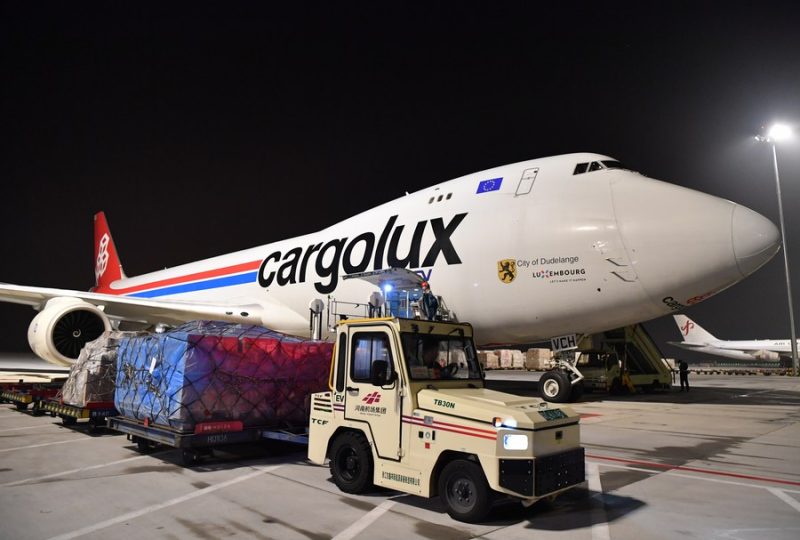
A new cargo route between Zhengzhou and Luxembourg launched this week, further deepening trade and logistics ties between China and the Grand Duchy. The first flight under the China Post-operated service took off from Zhengzhou Xinzheng International Airport on Monday, marking the formal establishment of a direct and regular air freight corridor that is expected to carry high-value goods and cutting-edge technology components between the two countries.
The service currently operates once weekly but is expected to increase in frequency as demand rises. The air route is designed to handle more than standard parcels. It is part of a larger effort by China Post and local authorities in Henan Province to scale up trade in advanced manufacturing, pharmaceutical products, and other strategic goods that reflect a shift from volume-based logistics to value-driven exports. Officials say the aim is to enhance China’s presence in global high-tech markets while reinforcing Luxembourg’s position as a premier gateway for European imports.
Trade between China and Luxembourg has expanded steadily in recent years, driven by both macroeconomic shifts and targeted investment in cross-border logistics infrastructure. According to data from China’s General Administration of Customs, bilateral trade reached over $6 billion in 2024, up more than 20 percent from the previous year. Luxembourg is one of the few European economies to maintain a structural trade surplus with China in services, largely due to its strong finance, aviation, and satellite industries. Conversely, China has become a growing supplier of electronics, machinery, and increasingly, medical equipment to the Luxembourg market.
The economic partnership between the two nations has been underpinned by close collaboration in the logistics and cargo sectors. China’s interest in Luxembourg’s strategic location within the European Union, combined with Luxembourg’s interest in China’s outbound cargo potential, led to the establishment of the Luxembourg–Zhengzhou air cargo corridor nearly a decade ago. The route was initially pioneered by Cargolux, Luxembourg’s flagship cargo airline, which began regular freight flights to Zhengzhou in 2014. That connection soon evolved into one of the busiest cargo links between China and Western Europe, especially during the height of the COVID-19 pandemic when medical supplies and essential goods flowed in both directions.
The introduction of a parallel service operated by China Post adds a new dimension to this evolving corridor. Rather than relying exclusively on established cargo carriers, China Post is looking to control more of the logistics chain directly, targeting high-margin industries and the rapidly growing e-commerce sector. This includes not only conventional consumer products but also temperature-sensitive medical goods, semiconductors, and specialized components for renewable energy systems.
Officials at Zhengzhou Xinzheng International Airport say the decision to expand flights to Luxembourg is strategic. From January to May 2025, the airport handled more than 239,000 tonnes of international and regional cargo, an increase of nearly 46 percent over the same period in 2024. Of that volume, a growing share was attributed to high-tech and time-sensitive shipments, including those destined for Western Europe.
Luxembourg, for its part, has welcomed the expanded service. Officials from the Ministry of the Economy noted that the corridor not only enhances the country’s connectivity with Asia but also solidifies Luxembourg’s role as a key node in China’s Belt and Road logistics chain. Luxembourg’s Findel Airport, known for its specialization in cargo logistics, is expected to benefit from increased throughput, supporting jobs and bolstering the country’s profile as a European logistics center.
Experts believe the expanded China–Luxembourg corridor could also act as a bellwether for future trade arrangements between China and other small EU states. It offers a model of how targeted logistics development, coupled with diversified export strategies, can foster stronger bilateral ties without the political complexity often associated with broader EU-China relations.
For China Post, the move represents a bid to internationalize its operations and tap into lucrative European markets. For Luxembourg, it is an opportunity to remain relevant in global trade networks that are increasingly driven by digital platforms, high-tech goods, and real-time logistics.
The full economic impact of the new route will depend on the trajectory of demand for premium air freight, the evolution of geopolitical tensions affecting EU-China relations, and the degree to which both countries can sustain logistical collaboration amid rapidly changing trade patterns. What is clear, however, is that the skies between Zhengzhou and Luxembourg are set to become significantly busier.