



Norway’s Bold Move in Ukraine – Symbolic?
In a headline-making development, Norwegian arms manufacturer Kongsberg Defence & Aerospace has opened an office in Ukraine, marking Norway’s most visible independent policy maneuver in the Russo-Ukrainian war. Known globally for its NASAMS air defense systems, Kongsberg’s physical presence in Kyiv is being touted as a sign of Norway’s growing role in European defense – but beneath the headlines lies a deeper, more nuanced geopolitical calculation.
Historically, Norway has maintained a delicate balance in its relations with Moscow. During the Cold War, Norway, a founding NATO member, resisted hosting foreign bases or nuclear weapons on its soil in peacetime, aiming to avoid provoking the Soviet Union. Despite its military alignment with the West, Oslo pursued a pragmatic policy of neighborhood diplomacy, including fisheries agreements and border cooperation with the USSR.
After the fall of the Soviet Union, Norway deepened its engagement with NATO while continuing bilateral ties with Russia, especially in the High North. However, relations soured following Russia’s 2014 annexation of Crimea. Norway condemned the move and aligned with EU sanctions, but remained cautious not to overextend. Since the 2022 full-scale invasion of Ukraine, Norway has ramped up support – supplying weapons, training Ukrainian troops, and now, authorizing a significant defense industry expansion into Ukrainian territory.
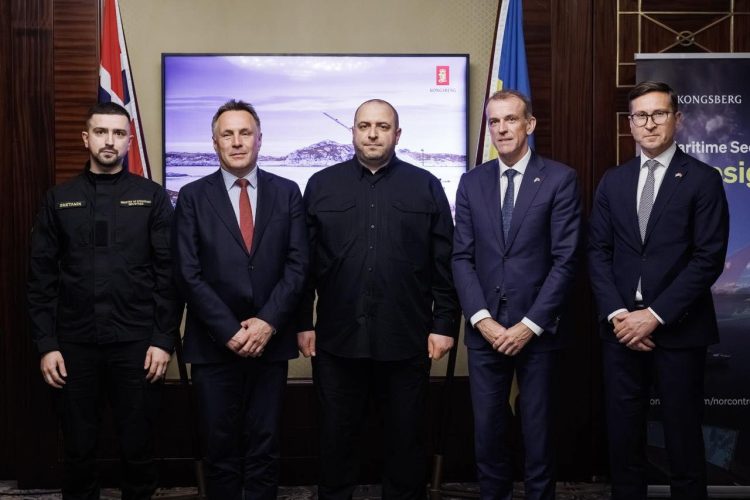
Kongsberg’s new office, announced in June 2025, is being framed as a deepening of this support. The facility will serve as a center for air defense cooperation, including co-production of NASAMS systems and exploration of advanced missile interception technologies. Ukraine’s Defense Minister Rustem Umerov called the partnership “urgent and strategic,” citing over 3,500 Russian missiles and drones launched this month alone.
For Norway, this move is unprecedented. A traditionally cautious actor, especially when it comes to Russia, Oslo is now visibly engaging a country at war with NATO’s primary adversary. “This isn’t just about hardware,” the Ukrainian Ministry of Defense emphasized. “It’s about pairing Ukrainian ingenuity with Norwegian engineering.”
However, the real question remains: is this policy shift by Norway truly substantive, or is it a diplomatic ornament designed to elevate Oslo’s international profile without fundamentally altering its strategic dependence on NATO?
Experts are divided. On one hand, Norway’s advanced defense industry – particularly its proven success with NASAMS, used by both Ukraine and the United States – gives it some clout. Kongsberg is one of Europe’s most respected defense innovators. On the other hand, Norway’s influence remains narrowly technical and economic, not geopolitical. It lacks the military muscle or political leverage of France, Germany, or even Poland.
“Norway is acting with boldness, but not necessarily with weight,” says Dr. Erik Sørlie, a defense analyst at the Norwegian Institute of International Affairs. “The Kongsberg move enhances Ukraine’s capabilities, yes. But it doesn’t shift the balance of power in Europe.”
Moreover, without the NATO umbrella, Norway’s move could appear largely symbolic. There’s no indication that this new office is backed by a NATO-wide strategy, nor is there consensus within the alliance about such forward-positioned national initiatives. In that light, Norway’s gesture may be seen as bold but ultimately cosmetic – an act of solidarity that, while laudable, may not withstand long-term strategic pressures should the war escalate.
Politically, Norway also risks inviting Russian retaliation – not necessarily militarily, but through hybrid actions, cyberattacks, or energy-related pressures. Unlike major powers, Oslo’s room for maneuver is constrained, especially in Arctic diplomacy and energy exports where Russia retains influence.
In sum, Norway’s Kongsberg initiative is a clever and morally assertive play in the context of a grinding European war. It demonstrates technical leadership and signals solidarity with Ukraine. But whether it constitutes a truly independent policy course, or merely a carefully calculated gesture wrapped in national branding, remains to be seen.
In the long arc of history, Norway has often preferred quiet diplomacy to theatrical moves. This moment, while headline-worthy, may be more about image than impact.