








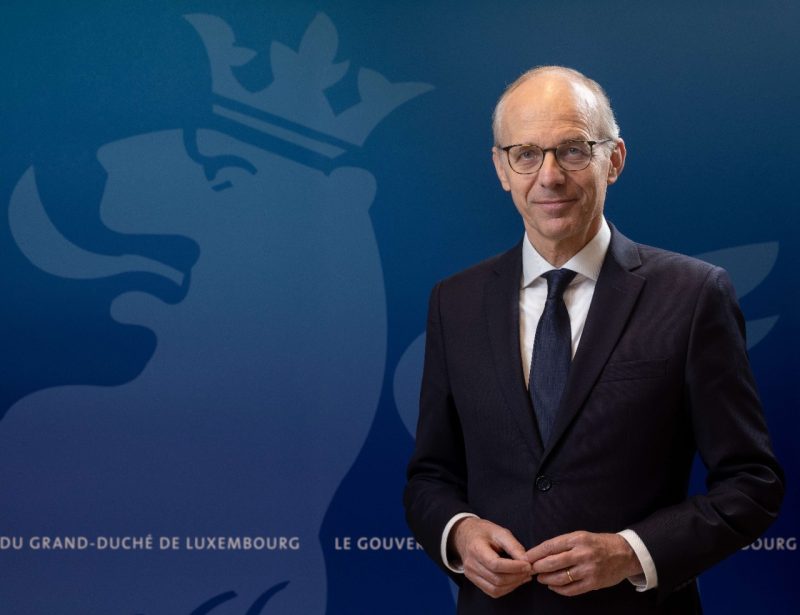
What is Currently Happening in Gaza is Humanely Unacceptable – Luc Frieden
At the European Union summit in Brussels this week, Luxembourg’s Prime Minister Luc
Frieden sent a pointed message: friendship with Israel does not mean silence in the
face of suffering.
“Israel may be a friend of Europe, but what is currently happening in Gaza is humanely
unacceptable,” Frieden told reporters, standing before a backdrop of rising international
outrage and fraying European consensus over the war in the Middle East.
It was a rare moment of moral clarity in the cautious language of diplomacy. Frieden
reiterated his government’s unwavering support for a two-state solution, “two
populations living alongside one another in peace, freedom and security”. He backed
continued EU dialogue with Israel, with EU foreign affairs chief Kaja Kallas entrusted to
lead further talks.
But beneath the firm words lies a deeper story: a small country at the heart of Europe
trying to hold both empathy and pragmatism in balance.
A Steady Voice for International Law. Over the past two years, Luxembourg has carved out a consistent position, anchored in international law, committed to humanitarian principles, and increasingly vocal about
what it sees as disproportionate military force in Gaza.
Its message is not new, but it is growing louder. In May 2024, then Foreign Minister Xavier Bettel, traveled to the region amid devastating Israeli offensive in Rafah. At the time, he urged Israel to comply with a
recent International Court of Justice ruling and halt operations. “The protection of the
civilian population must be the absolute priority,” he said. That same week, Luxembourg
announced a boost in aid to Gaza, directing funds to the UN Relief and Works Agency
(UNRWA) and medical NGOs, even as some EU states debated pulling support.
Luxembourg’s position has earned it allies, often aligning with Belgium, Ireland, and
Spain in pushing for stronger EU action on Palestinian rights but also political pushback
at home.
Walking the Diplomatic Tightrope. Inside Luxembourg’s parliament, pressure is mounting. Left-wing and Green lawmakers, along with a groundswell of civil society voices, including a petition from over 100
Jewish Luxembourgers titled “A Jewish Call for Peace”, have called for immediate
sanctions on Israel, formal recognition of Palestinian statehood, and a halt to arms-
related exports.
The government’s response has been cautious but firm. Recognition of Palestine, it
says, should emerge from a coordinated international process, not unilateral moves. At
the June 2025 international peace conference in New York, Luxembourg reiterated its
willingness to act independently if multilateral diplomacy fails but not before.
It’s a position that seeks to preserve EU unity, even as consensus becomes harder to
sustain. “On Ukraine, there is still unity,” Frieden noted in Brussels. “But we cannot take
that unity for granted on all foreign policy issues.”
Civilian Protection and Humanitarian Access. While diplomacy moves slowly, the government has taken clearer stances on the ground. Luxembourg has condemned Israeli airstrikes that endanger civilians,
demanded full access for humanitarian convoys, and supported UN-led efforts to secure
a permanent ceasefire.
Humanitarian support has also deepened. Luxembourg remains one of the EU’s more
generous per-capita donors to Palestinian aid, and it has pushed for continued funding
of UNRWA even amid controversy over the agency’s internal challenges.
Crucially, Luxembourg also joined a small group of EU countries backing sanctions on
violent Israeli settlers, a move seen as signaling that support for Israel’s security does
not mean impunity.
Balancing Tradition with Change. Luxembourg’s relationship with Israel has long been shaped by post-war European guilt and historic alliance. But in today’s geopolitical context, Frieden’s government is
recalibrating: upholding Israel’s right to security, but increasingly critical of its military
conduct in Gaza.
It’s a balancing act, between historic loyalties, moral urgency, and a volatile domestic
political climate. For now, Luxembourg continues to walk that line, demanding
accountability without severing diplomatic channels.
Whether that stance leads to real change or risks getting lost in the noise of louder
powers, remains to be seen. But in Brussels this week, one of Europe’s smallest nations
reminded the world that friendship does not require silence. Sometimes, it demands the
courage to speak out.
By Moji Danisa