







Artificial Intelligence Isn’t So Intelligent
Dr. Luc Julia, a French engineer and researcher based in Silicon Valley, is a name deeply woven into the fabric of modern digital life. Widely recognized as a co-creator of Siri, Apple’s virtual assistant, Dr. Julia currently serves as Vice President of Innovation and CTO at Samsung Electronics. There, he continues his decades-long mission of enhancing the relationship between humans and machines, recently focusing on the Internet of Things and building smarter, more helpful systems. His latest work, a provocative book titled “Artificial Intelligence Doesn’t Exist”, challenges common perceptions about AI, calling for a sober reassessment of what these technologies truly are and what they are not.
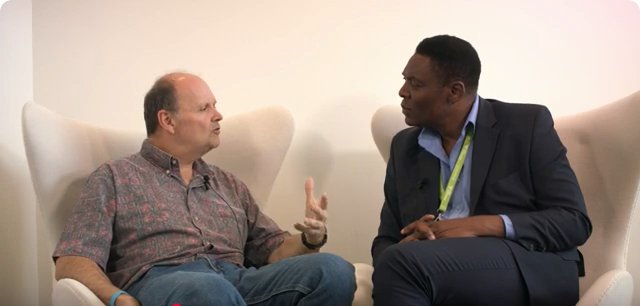
In his conversation with Yvan David Danisa of CityNews Luxembourg, Dr. Julia offered a sweeping yet incisive look at the philosophy and realities of what we call artificial intelligence. Despite spending over 30 years in the field, working with everything from natural language processing to smart assistants, he insists the popular idea of AI is largely a myth. According to him, what society envisions—machines that think, reason, and independently evolve into entities on par with or surpassing human intelligence—is nowhere close to the systems engineers like himself actually build.
Julia’s key message is deceptively simple: there is no such thing as general artificial intelligence. What we have are highly specialized tools, crafted to solve narrowly defined problems. These include systems that scan medical images to detect cancer, algorithms that help cars avoid accidents, or assistants like Siri that interpret spoken commands. Underneath it all are methods that have not fundamentally changed since the birth of machine learning in 1956. What we call “AI” today remains rooted in pattern recognition, optimization, and statistical learning—powerful, yes, but still far from the sentient, autonomous minds portrayed by Hollywood.
This disconnect between reality and fantasy is precisely what Dr. Julia hopes to clear up. Yet his explanation, though illuminating, may also leave many ordinary people grappling with uncomfortable truths. For decades, popular culture has seeded fear and fascination around the notion of machines taking over—ideas that sell movies and grab headlines but warp public understanding. It’s little wonder people mistake a plane’s faulty software for an aircraft “with a mind of its own,” or assume fully autonomous cars are just a few years away from eliminating drivers altogether.
Julia’s insistence that these technologies are tools, not independent agents, re-frames responsibility. If a plane crashes because an algorithm failed, it is a human error in design, not a malevolent robot deciding to defy pilots. Likewise, while autonomous driving systems will likely reduce accidents dramatically—by eliminating distractions like drunk or texting drivers—Julia believes total autonomy is simply not achievable. Machines lack genuine understanding. They follow patterns we program, nothing more.
Why, then, do people get it so wrong? Julia hints at several reasons: an appetite for scare stories, a tendency toward science fiction, and the sheer complexity of modern systems. Most people lack the time or inclination to dig through technical realities. Information overload compounds the problem—an endless stream of breathless articles and speculative think pieces makes it easier to accept thrilling or alarming narratives over measured explanations. It is not necessarily laziness or indifference; often it is a reasonable retreat in the face of overwhelming, contradictory noise.
Yet Julia’s outlook remains cautiously optimistic. He envisions a future where smart assistants proliferate not as overlords, but as helpful collaborators embedded in our everyday environment. In his telling, ovens, lights, cars, and countless other objects will become modest helpers, responding to simple spoken requests, communicating among themselves to make our lives easier. Freed from mundane chores, he hopes people will spend more time on what truly matters: family, community, creativity, social life. Of course, he acknowledges the risk—these same technologies could also enable dystopian surveillance or deepen social passivity. But once again, he stresses it is not the machines that decide; it is us.
Julia’s larger philosophical thrust, then, is a call for agency and accountability. Technology is a mirror reflecting human intention. We can use it to build a world reminiscent of Orwell’s 1984, or we can harness it to create societies that are more connected, compassionate, and curious. The future he describes is not pre-written by algorithms—it is one we collectively shape.
For ordinary people to truly grasp the nature of AI, it will take more than technical briefings; it demands a cultural shift that prizes critical thinking over sensation, long-term reflection over momentary thrills. Perhaps it also requires educators, journalists, and technologists like Julia to keep reiterating, patiently and publicly, what these tools are and are not. Only then might society replace its anxious myths with an informed confidence, grounded in the real possibilities—and real limits—of today’s so-called artificial intelligence.
By David Danisa