








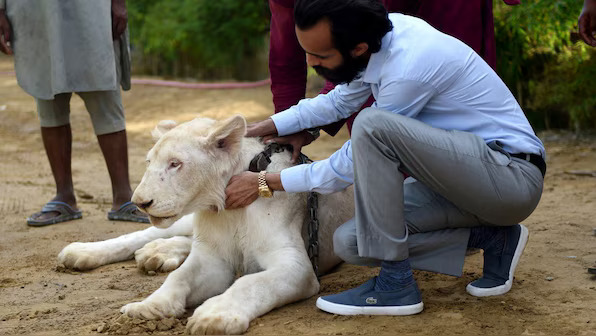
The Dangerous Pet Craze: Keeping Wild Animals as Status Symbol
Despite international outrage and the risks involved, keeping wild animals such as lions,
tigers, and cheetahs as domestic pets remains a growing trend among the wealthy in
parts of Asia and the Arab world. This fascination with owning exotic animals came
under fresh scrutiny after Pakistani authorities confiscated 18 lions illegally kept as pets
in the Punjab province, following an incident where a lion attacked and injured two
children and their mother.
The incident, which occurred in Lahore last Thursday, prompted a crackdown by
Pakistani wildlife officials. The confiscation of the big cats from various cities, including
Gujranwala, Faisalabad, and Multan, was accompanied by the arrest of eight
individuals.
Wildlife conservationist Badr Munir lauded the operation, pointing out that
keeping dangerous animals in residential areas poses severe risks. “Unfortunately, in
Pakistan, it has become a bizarre status symbol, people drive around with big cats,
make TikTok videos, and then panic when one escapes or attacks,” he said.
Why would anyone keep such dangerous animals as pets? The answer is simple – it is a
symbolism of power and wealth.
In many cases, the ownership of wild animals is less about affection for animals and
more about projecting power, wealth, and exclusivity. Lions and tigers, long symbols of
strength and nobility, have become living trophies for the rich. In Gulf countries like the
United Arab Emirates and Saudi Arabia, images and videos frequently circulate online
of young royals posing with cheetahs in luxury cars or feeding lions at private estates.
For these elites, exotic pets are part of a lifestyle statement. The rarer the animal, the
more extravagant the display. Social media has intensified the trend, with platforms like
TikTok and Instagram flooded with posts of owners petting wild beasts or taking them for
rides, often without regard for the animals’ welfare or public safety.
However, while these displays may garner admiration or envy online, they come with
serious consequences. Lions and tigers are apex predators with instincts that cannot be
domesticated. As the Lahore attack demonstrates, they can turn dangerous without
warning. Yet, many owners are untrained and ill-equipped to manage the needs and
behaviors of such creatures, which require vast space, specific diets, and expert care.
Veterinarians and animal welfare groups have repeatedly warned that confining these
animals to small enclosures or urban homes can lead to psychological distress and
unpredictable aggression. The risks extend beyond the owners. Neighbors, domestic
workers, and passersby are often unknowingly placed in harm’s way.
Despite existing laws in countries like Pakistan that regulate wildlife ownership,
enforcement remains patchy. In Punjab province alone, officials estimate over 500 big
cats are legally registered, but believe the actual number is far higher due to rampant
illegal breeding and sales.
Corruption, weak penalties, and the influence of powerful owners often make
regulations difficult to implement. In many cases, permits are either forged or granted
under dubious circumstances, and regular inspections are rare.
However, with growing public concern, some countries are beginning to act. The recent
crackdown in Pakistan is part of a broader move to address illegal wildlife ownership.
Authorities are now targeting unregistered facilities and encouraging stricter
documentation and monitoring.
Experts say real change must go beyond law enforcement. It requires a cultural shift
that de-glamorizes the ownership of wild animals and promotes ethical treatment of
wildlife. Conservationists stress the importance of education and public awareness,
particularly among youth who often idolize celebrities and influencers flaunting exotic
pets online.
As more incidents of attacks and escapes come to light, the conversation is shifting.
The question now is not just whether people should be allowed to keep lions and tigers
as pets but whether the world can afford the human, ethical, and ecological cost of
turning wild creatures into status symbols.