


Faith in the Heart of Europe, “Global Mission of Latter-day Saints”
Location – Route d’Arlon-Strassen, a busy urban artery leading to Luxembourg City. Venue, a bright and imposing four storey building. Here, members of The Church of Jesus Christ of Latter-day Saints gather every Sunday for worship, teaching, and spiritual connection. For many passersby, the building might go unnoticed. For the people inside, it represents something eternal—a spiritual home and a window into a faith that spans continents and cultures.
The Latter-day Saints, often called Mormons by the public (though the church now prefers its full name), trace their origins to 1830, when a young man named Joseph Smith founded the church in upstate New York. Born in a time of intense religious activity in early America, Smith claimed to have had a vision of God the Father and Jesus Christ. That vision, say church members, led to the restoration of Christ’s original church. Today, nearly 200 years later, the movement has over 17.5 million members across the globe, including thousands in Europe.
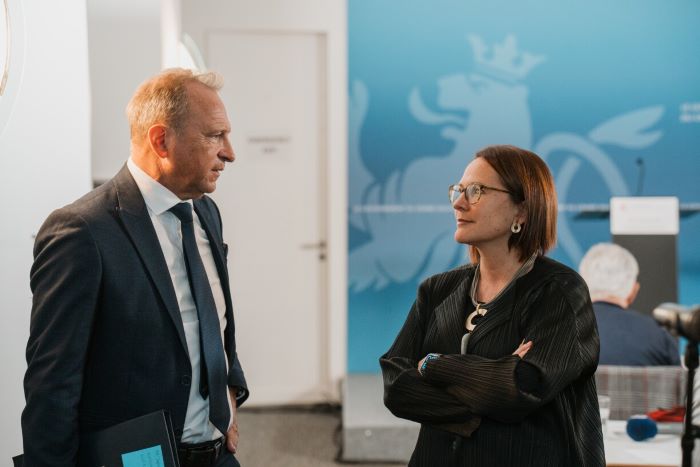
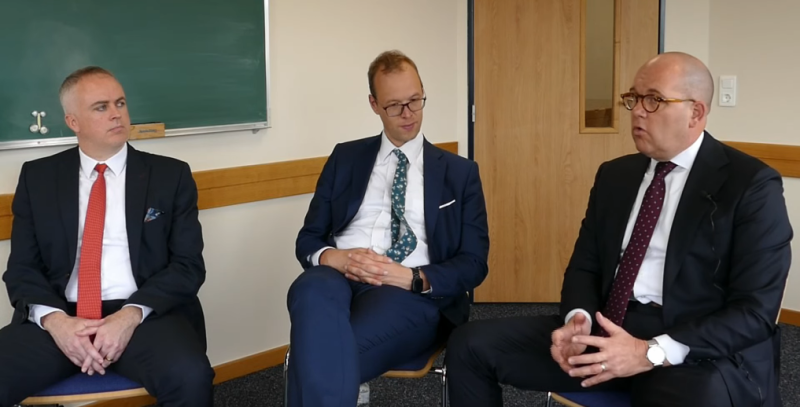
Three senior leaders of the church recently spoke to us about what the church is, why it matters, and what people often get wrong about it. Elder James McConkie, Second Counsellor, Europe Central Area Presidency, who helps oversee the church’s work in Central Europe, was joined by Michael Ulrich, Stake President, Nancy – France Stake, and Bishop Paul Howarth, Bishop, Luxembourg 1st Ward of the Church, in Luxembourg.
According to Elder McConkie, the story of the Church is one of global transformation rooted in deeply personal beliefs. “It began with just a few people,” he said, “and now we have missionaries from Johannesburg to Tokyo and congregations from Mexico to Luxembourg.”
Central to the doctrine is the belief that God continues to speak through modern-day prophets. Members believe Joseph Smith was one of these prophets, and they follow a current living prophet, Russell M. Nelson. “When God speaks, He calls prophets,” said President Ulrich. “We believe the heavens are open again.”
The Luxembourg congregation under Bishop Howarth is a reflection of the Church’s growing internationalism. “We’re blessed with members from every walk of life—Portuguese, French, Ukrainian, English-speaking families—all united by faith,” he shared. The congregation has seen significant growth since moving into their city-centre building and has become involved in local community initiatives, such as offering language classes to Ukrainian refugees.
Michael Ulrich explained that one of the most meaningful doctrines for him is the belief in eternal families. “In our church, you won’t hear ‘till death do us part.’ We believe marriage and family relationships can last forever,” he said. After losing his first child, he found peace in the belief that he would see his son again and continue their relationship in the next life.
Each Sunday, newcomers to the Church are welcomed into a two-hour service. The first part is a communal worship called sacrament meeting, where members sing hymns, share spiritual messages, and partake of bread and water in remembrance of Christ’s sacrifice. The second hour divides attendees into smaller groups for age- and gender-specific classes. “It’s simple and heartfelt,” Bishop Howarth said. “Everyone contributes. Even the children speak.”
While critics have often dismissed the Church as secretive or cult-like, the leaders emphasise transparency, community service, and global outreach. “People form opinions based on rumours,” said Elder McConkie. “But if they come and see for themselves, they’ll find something very different—warmth, purpose, and deep commitment to Jesus Christ.”
That commitment extends far beyond Sunday services. In 2024 alone, the Church provided humanitarian aid in 174 countries. In Nigeria, its annual “Light the World” initiative brought food and hope to hundreds of widows and orphans. The Church also operates universities, supports millions of students, and maintains nearly 200 temples worldwide—with over 170 more in planning, under construction, or undergoing renovation.
In Europe, the Church’s presence continues to grow. The Central Europe Area, which includes 37 countries, is home to thousands of members and an enthusiastic missionary force. President Ulrich oversees a stake that includes parts of France, Belgium, and Luxembourg. “Our goal,” he explained, “is not to increase in numbers, but to share something we believe changes lives—that God knows us, that families can be forever, and that Christ’s message is alive today.”
The Church’s global structure is mirrored locally in Luxembourg. The Relief Society—one of the largest women’s organisations in the world—coordinates humanitarian and spiritual outreach. Meanwhile, bishops and stake presidents work together through prayer and counsel to lead their congregations. “We believe everyone can receive revelation,” said President Ulrich. “We are led by inspiration, not ambition.”
For a church often misunderstood or viewed with suspicion, these leaders hope to open their doors a little wider. “If your family is important to you, if you wonder whether God still speaks, if you want more peace in your life,” said Bishop Howarth, “come and see. That’s our invitation.”
And for those who do, the doors in Luxembourg—and around the world—are open.
Photo – (L-R) Bishop Paul Howarth, Michael Ulrich and Elder James McConkie