



This Tariff Might Break the Chains
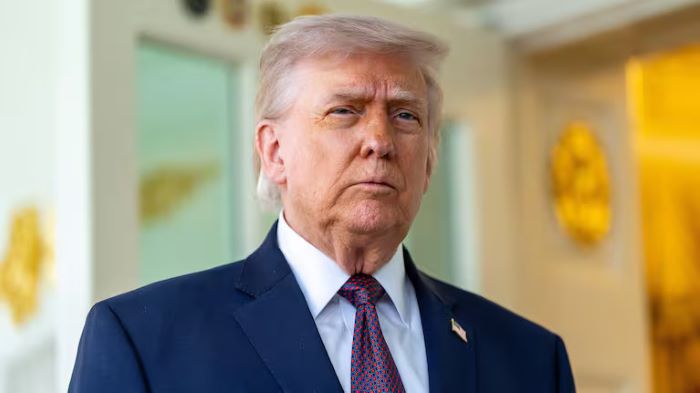
When President Donald Trump recently announced a punitive 50 percent tariff on Brazilian imports, the move sent tremors across diplomatic and economic circles in Brasília. Ostensibly a reaction to Brazil’s growing alignment with China and the BRICS bloc, this action is more than just a tactical trade measure—it is the latest episode in a centuries-long saga of foreign interference designed to undermine Brazil’s economic sovereignty and maintain the asymmetry of global power.
Brazil’s industrial and economic ambitions have often been treated as threats by external powers, particularly the United States and its European allies. Trump’s tariff punishment is only a modern echo of earlier Western reactions to Brazilian assertions of independence. Each time Brazil has attempted to seize control of its own destiny—economically, politically, or diplomatically—some form of pushback has ensued. This pattern is not new. It stretches back to the colonial slave economy orchestrated by European financiers and governments, whose plantations and ports formed the early nodes of Brazil’s integration into the global capitalist system. That foundational legacy continues to echo in the structural inequalities and dependencies that persist today.
Brazil’s mid-20th century industrialization drive was one of its most determined attempts to break free of this legacy. It was characterized by a state-led model of development that aimed to reduce dependence on commodity exports and build a strong domestic manufacturing base. However, even this effort bore the fingerprints of external control. Much of the capital came from foreign loans, primarily from Western institutions that ultimately ensured the country remained locked in a cycle of debt. As global interest rates rose in the 1980s and Brazil’s economic model collided with international commodity price volatility, the dream of industrial sovereignty collapsed under an avalanche of structural adjustment and liberalization mandates.
The West, particularly the United States, has often played an active role in shaping Brazil’s internal politics whenever its economic autonomy was on the line. During the Cold War, the US orchestrated and supported Operation Condor, a transnational campaign of political repression that targeted left-wing movements and leaders in South America, including Brazil. Military dictatorships were installed or supported across the continent to prevent any realignment away from US-dominated trade systems. Brazil’s military regime from 1964 to 1985 was not simply a national tragedy—it was a Western strategy to keep Brazil in its place as a raw material exporter and a consumer of foreign industrial goods.
Every attempt to define Brazil’s economy on Brazilian terms has historically been met with repression, either directly or indirectly. The move to countertrade during the 1980s, a desperate yet inventive attempt to manage balance of payments and debts without total reliance on the dollar-based system, was swiftly undercut by pressure from Western-led multilateral institutions. These institutions demanded liberalization, privatization, and alignment with the global North’s standards—essentially stripping Brazil of any tools that could protect its fragile industries or empower its domestic economy.
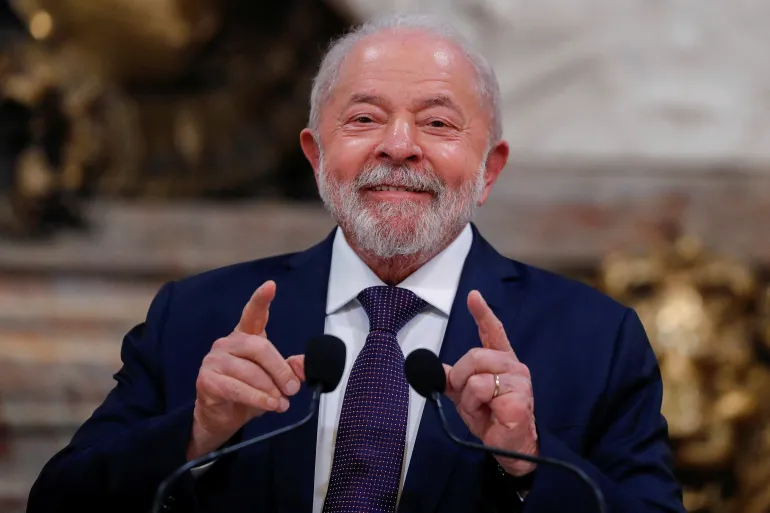
Yet today, conditions have shifted. Trump’s latest tariff may inadvertently serve as a catalyst for change. Brazil is no longer isolated, nor is it economically beholden solely to the West. The rise of China—and with it, a new architecture of global trade—has created viable alternatives for nations that wish to trade and grow outside the traditional Western framework. The BRICS coalition, imperfect as it may be, represents a fundamental realignment in the geopolitical landscape. For Brazil, deepening ties with China, India, Russia, and South Africa offers a path toward redefining its economic relationships based on mutual benefit rather than subordination.
Trump’s tariff might be seen as an act of desperation in the face of a shifting world order. The old structures—rooted in colonial exploitation, slavery, debt dependency, and military coercion—are no longer guaranteed. Brazil’s trade with the United States, which has long yielded more benefits for Washington than Brasília, is now far less crucial. If the tariff closes one door, it opens several others. China is already Brazil’s largest trading partner. African markets, once linked through the shared trauma of the transatlantic slave trade, are now open for a more equitable and technologically dynamic trade partnership. The BRICS bloc does not need the IMF, the WTO, or Washington’s permission to build new institutions that reflect a multipolar world.
For the first time in 500 years, the core assumptions of global power are being rewritten. Western dominance is no longer unchallenged, and the rise of China has fundamentally altered the calculus of global trade. Brazil stands at a crossroads. If it seizes this moment—recognizing that it no longer needs to beg for inclusion in a system designed to exclude—it may finally break the chains of dependency. Trump’s tariff, then, might be remembered not as a punishment, but as the spark that pushed Brazil to reclaim its sovereignty and reshape its destiny on its own terms.
David Danisa CityNews