




France Pushes for Palestinian Statehood Despite Firm US Opposition
France has renewed its call for the recognition of a Palestinian state, positioning itself at odds
with the United States and amplifying diplomatic tensions over the future of the Israeli-
Palestinian conflict.
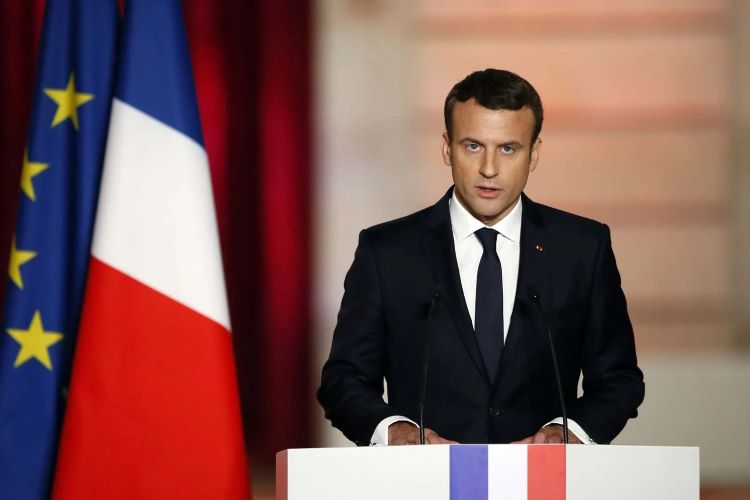
President Emmanuel Macron’s government continues to advocate for a two-state solution,
arguing that a viable and independent Palestinian state is essential for long-term peace and
stability in the Middle East. French officials have framed the move as both a moral imperative
and a strategic necessity, particularly as frustration grows across Europe and the Global South
over the stalled peace process and deepening humanitarian crisis in Gaza.
“Peace cannot be achieved without justice for the Palestinian people,” Macron said in a recent
statement, underlining France’s intention to act as a counterweight to what it perceives as
Washington’s increasingly unbalanced approach in favour of Israel.
France’s stance is partly driven by internal considerations. With a large and vocal Muslim
population and widespread public sympathy for the Palestinian cause, the issue resonates
domestically as well as internationally. Paris also sees its position as a reaffirmation of its role as
a global diplomatic power capable of mediating in complex international disputes.
The United States, however, has remained firmly opposed to any unilateral moves to recognise
Palestinian statehood. It insists that a state must emerge through direct negotiations between
Israel and the Palestinians. American officials argue that international recognition, particularly
through forums like the UN General Assembly, could undermine Israel’s security and strengthen
Hamas, which the US and EU both classify as a terrorist organisation.
Critics, however, accuse the US of shielding Israel from accountability and perpetuating the
status quo, in which Palestinians face occupation, displacement and periodic conflict without a
path to sovereignty.
While France and others continue to back General Assembly initiatives, the UN’s capacity to
enforce statehood is limited. In 2012, the Assembly granted Palestine non-member observer state
status, but only the Security Council can approve full UN membership. That path remains
effectively blocked by the US veto, which has been exercised repeatedly to prevent Palestinian
advancement.
Nonetheless, symbolic recognition carries significant diplomatic weight. It could enhance
Palestine’s ability to join international institutions and mount legal challenges, including at the
International Criminal Court.
Calls for Palestinian statehood are not new. Yasser Arafat, the late leader of the Palestine
Liberation Organization (PLO), pursued an international diplomatic campaign beginning in the
1970s. In a landmark 1974 UN speech, Arafat appealed to the global community with “an olive
branch and a freedom fighter’s gun,” urging nations to support peaceful statehood. His 1988
declaration of an independent Palestinian state from Algiers received broad international support,
laying the groundwork for the 1993 Oslo Accords, which created the Palestinian Authority.
However, the failure to translate those agreements into a lasting settlement, combined with
growing disillusionment and internal divisions, contributed to the rise of Hamas and a
fragmentation of the Palestinian leadership.
Analysts say the recognition of a Palestinian state today could reinvigorate moderate voices,
reduce Hamas’s influence, and pressure both regional powers and Israel to re-engage in peace
talks. But it also risks inflaming tensions, particularly if seen as bypassing Israel’s consent.
Whether the current diplomatic momentum leads to substantive change remains uncertain. For
now, France’s advocacy adds to the mounting international pressure—but the road to Palestinian
statehood continues to be strewn with political and geopolitical roadblocks.
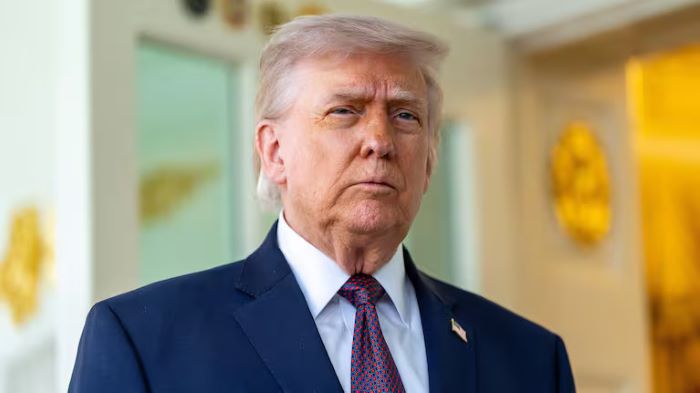
Photo – Emmanuel Macron, President of France