


Tesla’s $243m Autopilot Fine Could Rewrite the Future of Electric Cars
In a verdict that sends a seismic shockwave through the world of automated driving, a
Miami jury has ordered Tesla to pay $243m (£183m) in damages, holding the electric
car maker partially responsible for a deadly 2019 crash. The ruling is a significant
setback for a company that has long championed its Autopilot system as a pinnacle of
safety and a stepping stone to a fully autonomous future.
The case, which captivated a federal courtroom for three weeks, centred on a horrific
accident that killed Naibel Benavides Leon, 22, and left her partner, Dillon Angulo, with
life-altering injuries. The couple were standing by their parked vehicle on a Florida road
when they were struck by a Tesla operating on Autopilot. The driver of the Tesla, who
admitted to being distracted by his mobile phone at the time, was found to be two-thirds
to blame. Crucially, however, the jury assigned one-third of the fault to Tesla itself.
The verdict is a stunning rebuke for a company that has, in the past, successfully
defended against similar claims or settled them out of court. The jury awarded $200m in
punitive damages against Tesla, on top of $43m in compensatory damages, sending a
clear message that the company’s marketing and design of its driver-assistance
technology were found to be dangerously misleading.
Lawyers for the Benavides Leon family and Angulo argued that Tesla’s Autopilot system
was defective and its marketing created a false sense of security for drivers. They
claimed the company failed to properly restrict the use of the system to highways,
where it is designed to operate, and that it did not have adequate safeguards to prevent
a distracted driver from misusing the technology.
In a statement following the verdict, Tesla called the decision “wrong” and said it would
appeal. The company has long maintained that its Autopilot system is a driver-
assistance feature, not a self-driving system, and that drivers are ultimately responsible
for staying engaged and in control of their vehicles. However, the jury’s decision
suggests that a line has been crossed and that the company’s responsibility extends
beyond simply stating a disclaimer.
The ruling has been hailed by safety advocates as a watershed moment. “This verdict
represents justice for Naibel’s tragic death and Dillon’s lifelong injuries,” said Brett
Schreiber, the lead attorney for the plaintiffs. “It holds Tesla and [CEO] Elon Musk
accountable for propping up the company’s trillion-dollar valuation with self-driving hype
at the expense of human lives.”
The repercussions of this landmark judgement extend far beyond Tesla’s immediate
financial liability. It marks a critical turning point for the entire autonomous driving
industry and raises profound questions about corporate responsibility, regulation, and
the future of vehicle safety.
For Tesla, the verdict is a major blow to its reputation and a potential catalyst for a wave
of new lawsuits. The company’s stock price, a barometer of investor confidence, saw a
dip following the announcement, reflecting concerns about the financial and reputational
fallout. More significantly, it challenges the very foundation of Musk’s vision for the
company, which is heavily reliant on a future of fully autonomous “robotaxis.”
The judgement will undoubtedly intensify the scrutiny of regulators worldwide, including
the National Highway Traffic Safety Administration (NHTSA) in the US, which has been
investigating numerous crashes involving Autopilot. The verdict could provide the
impetus for stricter, more prescriptive regulations on what features can be included in
automated driving systems, how they are marketed, and under what conditions they can
be used.
For the broader electric vehicle and technology industries, the ruling serves as a
cautionary tale. Companies like Waymo and Cruise, which are developing their own
autonomous systems, will be watching closely. The case highlights the immense legal
and ethical challenges of creating technology that is designed to take control from a
human driver, even partially. It underscores the fact that while a human driver may be
reckless, the company that designed the technology that enabled that recklessness may
also be held liable.
The future of autonomous technology is now at a crossroads. While the industry has
made significant technological advancements, this verdict suggests that the legal and
ethical framework has failed to keep pace. The court’s decision will likely force a re-
evaluation of how these systems are developed, tested, and deployed. It may lead to a
renewed focus on building in robust safeguards, clearer communication with consumers
about the limitations of the technology, and a more cautious approach to the promises
of a fully autonomous future. The path forward will be defined not just by technological
innovation, but by a legal and public reckoning over the very definition of who is in
control: the human, or the machine.
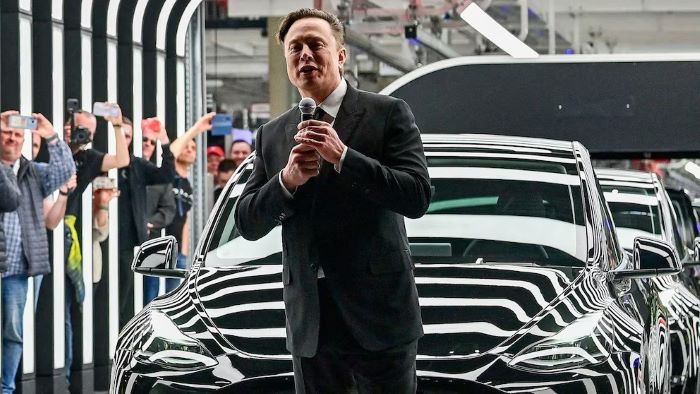
Photo – Elon Musk, CEO and product architect of Tesla