








MIT Scientists Use AI to Discover First-in-Class Antibiotics for Drug-Resistant Infections
In a breakthrough hailed as a major step in the fight against antimicrobial resistance,
scientists at the Massachusetts Institute of Technology have used artificial intelligence
to design novel antibiotics capable of tackling two of the most stubborn bacterial threats:
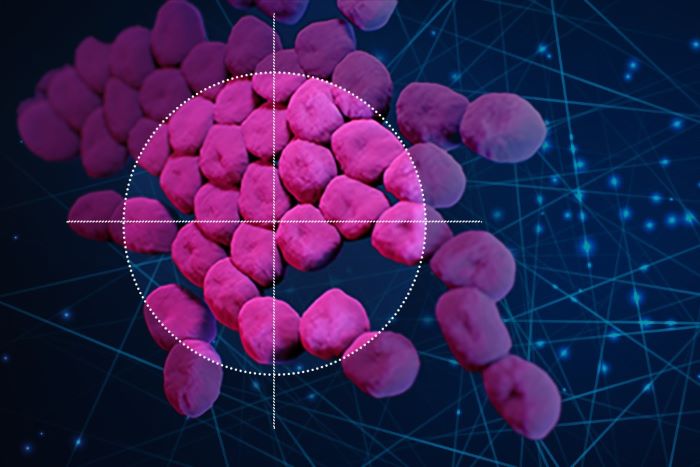
a drug-resistant strain of Gonorrhea and multi-drug-resistant Staphylococcus aureus
(MRSA).
The team, led by Professor James Collins, the Termeer Professor of Medical
Engineering and Science, deployed generative AI to create more than 36 million
theoretical compounds, which were then screened computationally for signs of
antimicrobial activity. The most promising candidates, they report, are structurally unlike
any antibiotics currently in use, and appear to work by novel mechanisms that disrupt
bacterial cell membranes.
Published in Cell, the study suggests that the approach could open new frontiers in drug
discovery, enabling researchers to explore vast areas of chemical “space” previously
inaccessible to human chemists. “Our work shows the power of AI from a drug design
standpoint,” Collins said. “It allows us to exploit much larger chemical spaces that were
previously inaccessible.”
For decades, the development of new antibiotics has lagged behind the pace of
resistance. The researchers note that in the past 45 years, only a few dozen new
antibiotics have been approved by the US Food and Drug Administration, most of them
minor variations on existing drugs. In the meantime, resistant infections have surged,
with an estimated five million deaths worldwide each year linked to drug-resistant
bacteria.
The MIT Antibiotics-AI Project had already produced promising compounds, including
halicin and abaucin, by mining vast libraries of known chemicals. In this latest work, the
team moved beyond those libraries entirely, using AI to generate hypothetical molecules
that have never been discovered or synthesised. By doing so, they aimed to widen the
search to an unprecedented diversity of potential drug candidates – a strategy they now
plan to apply to other bacterial species.
If successful in clinical development, the new compounds could mark the first major new
class of antibiotics in decades, offering fresh weapons against infections that have
outpaced the medical arsenal.