








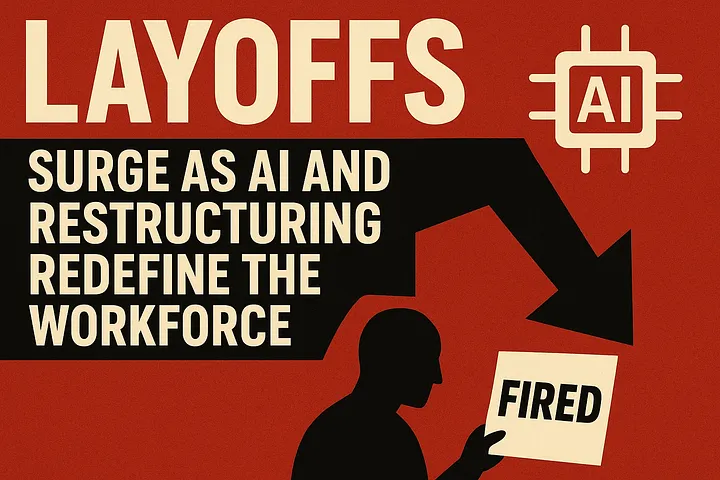
AI Layoffs Sweep Across Global Tech as Luxembourg Firm Cuts 115 Jobs
Artificial intelligence is driving a fresh wave of job losses across the globe, with tens of
thousands of workers in the technology sector already affected this year. From the
United States to Europe, companies are cutting back staff as they turn to automation,
signalling a profound shift in the future of work.
In the US alone, more than 80,000 technology jobs have been lost in 2025, with Intel
announcing up to 24,000 redundancies, Microsoft shedding more than 15,000 across
multiple rounds, and Oracle laying off hundreds as it redirects resources into AI
infrastructure. Specialist firms have also been hit – Scale AI has dismissed 200
employees along with 500 contractors, while Israeli software giant Amdocs has cut
hundreds of jobs as it undergoes an AI-driven transformation. Industry analysts say the
rapid spread of generative AI tools has intensified the pace of restructuring, with more
than 10,000 layoffs in the first seven months of the year directly attributed to AI
adoption, according to the consultancy Challenger, Gray & Christmas.
That global trend reached Luxembourg this week, where Docler Holding, one of the
country’s largest tech and media employers, announced 115 job cuts linked to its own AI
reorganisation. The redundancies amount to nearly 15% of its 800-strong workforce and
will be completed by the end of summer. The company said the decision was part of a
“significant reorganisation process” designed to streamline operations through
automation.
Trade unions have condemned the move, accusing management of failing to consult
workers or agree to a fair social plan despite strong international profits. Employees
reported being suddenly dismissed without warning. Docler, which began its AI
transition 18 months ago, has suggested that further workforce adjustments could follow
across its international subsidiaries, raising fears of more losses.
For Luxembourg, the layoffs are among the most visible signs so far of artificial
intelligence displacing human jobs. Globally, the warnings are starker still, while
Goldman Sachs predicts that AI could displace up to 7% of jobs in the longer term,
industry observers say the immediate effect is already being felt, with companies
moving quickly to cut costs and reorganise around automation.
For those affected, the shift is less about the promise of innovation than the reality of
livelihoods lost and the uncertainty of what comes next.
Photo – Vithu Online