





Luxembourg Holds Firm Among World’s Strongest Democracies
Luxembourg ranks among the world’s most robust democracies, standing tenth in the
latest Economist Intelligence Unit (EIU) Democracy Index with an overall score of 8.88.
The Grand Duchy is classed as a “full democracy,” outpacing several of its larger
European neighbors and consolidating its reputation as a politically stable state.
The index measures five core areas – electoral process and pluralism, civil liberties,
functioning of government, political participation and political culture. Luxembourg
received a perfect 10.00 for electoral process and pluralism, reflecting a transparent and
fair voting system, and scored 9.71 on civil liberties. Its government institutions also
performed strongly, with a score of 9.29.
However, Luxembourg’s rating was tempered by weaker civic engagement. The EIU
gave the country 6.67 for political participation, signaling relatively low levels of public
involvement in political activity beyond voting.
In comparison, Germany ranked 13th with 8.73 points, reflecting similar institutional
strengths but slightly lower civil liberty scores. France placed 26th (7.99), dragged down
by weaker marks in political culture and public trust in institutions. Belgium,
Luxembourg’s closest neighbor, ranked 34th (7.64), and recorded one of the lowest
participation scores in Western Europe.
The figures highlight how Luxembourg, despite its small size, maintains stronger
democratic standards than its immediate neighbors. Analysts point to a combination of
efficient institutions, broad protections for rights and liberties, and a political system
largely free of polarisation.
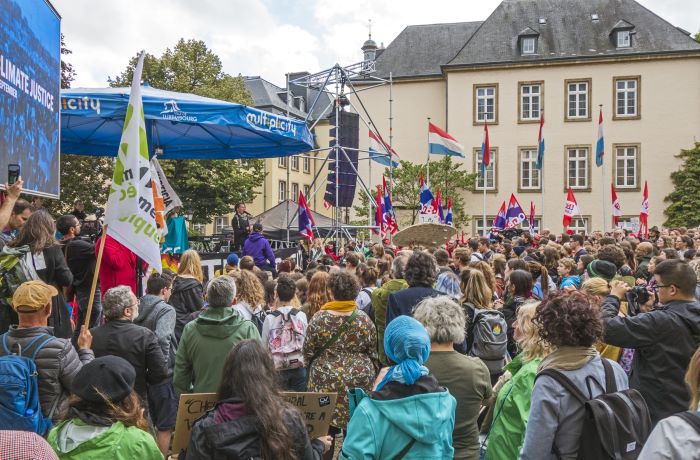
Yet the country’s relatively modest score for participation underscores a challenge
common across Western Europe, declining civic involvement. Both France and Belgium
face similar pressures, with street protests and institutional deadlock often substituting
for sustained public engagement through conventional political channels.
The EIU report also stressed that 2024 marked the worst year for global democracy
since the index was first compiled in 2006, with more countries sliding towards
authoritarianism. Against this backdrop, Luxembourg’s resilience is striking. It has
preserved democratic norms and maintained institutional trust, even as larger powers
around it wrestle with political volatility and societal fragmentation.
Luxembourg’s position near the top of the global rankings underlines a paradox, the
smallest states in Europe often sustain the most stable democracies. Its example
suggests that size and global clout do not necessarily dictate democratic quality but also
that even the strongest systems cannot afford complacency in the face of declining
participation.