


Sushila Karki, Nepal’s First Female PM and Her Incorruptible Tag
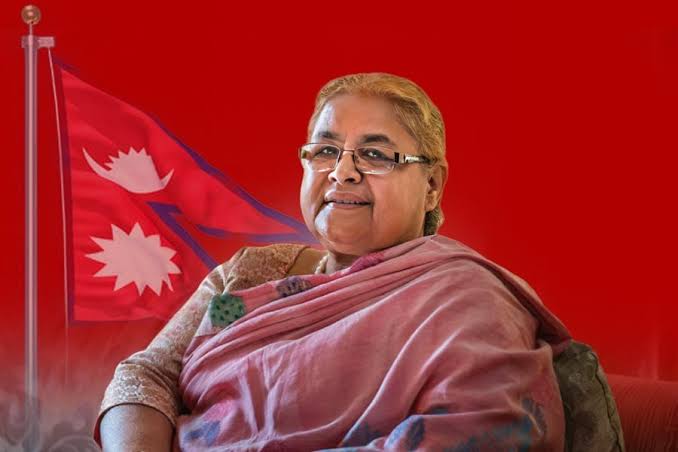
Nepal is preparing to swear in its first female prime minister, after former Supreme Court
chief justice Sushila Karki was chosen to lead an interim government in the wake of
violent anti-corruption protests that forced K.P. Sharma Oli from office.
Karki, 73, will assume the role on Friday evening following an agreement between
President Ram Chandra Poudel and protest leaders, who demanded a figure untainted
by party politics. More than 50 people have been killed in the unrest, which began after
the government attempted to ban 26 social media platforms and quickly grew into a
nationwide movement against corruption and political privilege.
The protests, driven largely by Nepal’s Gen Z activists, culminated in crowds storming
parliament and torching government buildings in Kathmandu earlier this week. Oli
resigned soon after, ending a week of the most serious unrest the country has seen in
decades.
Karki’s elevation is historic in a country where women remain underrepresented in
politics. A former law professor, she made her mark as Nepal’s first female chief justice
in 2016, earning a reputation as a fearless defender of judicial independence. She
presided over several high-profile corruption cases, including rulings that challenged
powerful politicians and business elites.
Her tenure was turbulent. In 2017, she faced an unprecedented impeachment motion
brought by members of parliament after she ruled against the appointment of a
politically connected police chief. The motion was widely criticised as an attack on
judicial independence and collapsed following public backlash, reinforcing her image as
an incorruptible figure who refused to bend to political pressure.
It is that reputation which has made her acceptable to both protest leaders and the
presidency as a consensus candidate to calm the crisis. “She represents a rare figure of
integrity in Nepal’s turbulent political life,” said a senior lawyer involved in the
consultations.
Her rise also sets Nepal apart in the region. Neighboring South Asian countries have
all seen women reach the highest political office, but most, from Indira Gandhi in India
to Benazir Bhutto in Pakistan, Sheikh Hasina and Khaleda Zia in Bangladesh, and
Sirimavo Bandaranaike in Sri Lanka, came from powerful dynastic families. Karki is
different; she is not a politician, nor a dynast, but a judge propelled into power by her
clean image and the demand for change. In that sense, her appointment carries a
symbolism that is as much about breaking with political tradition as it is about gender.
Her mandate will be limited. Parliament is expected to be dissolved shortly, and her task
as interim prime minister will be to stabilise the country and prepare the ground for fresh
elections. With the army patrolling the streets of Kathmandu, the fragility of the situation
is evident.
Whether Karki can restore trust in Nepal’s institutions and turn a symbolic breakthrough
into lasting reform remains uncertain. For now, her rise offers a historic first and a rare
glimpse of possibility, in a country searching for change.