




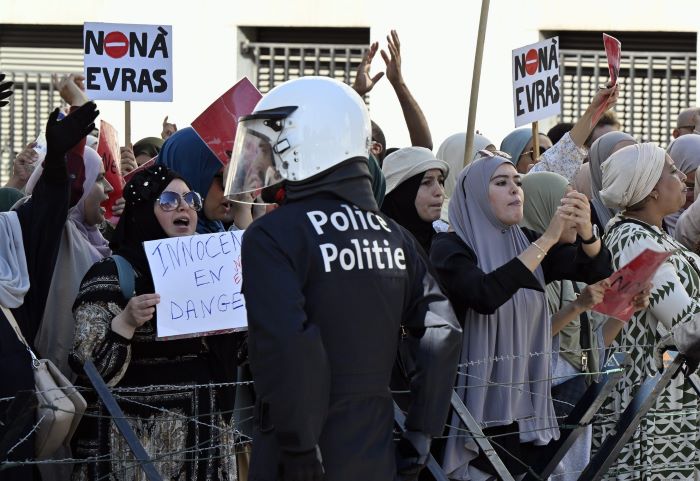
Faith, Family and Freedom: Belgium’s Sex Education Reforms Stir Tensions
The introduction of Belgium’s new sexual education program, EVRAS, has reignited
a delicate debate at the crossroads of religious freedom, parental authority, and state
policy. While government officials frame the initiative as a vital step toward empowering
young people with knowledge about relationships, affection, and sexuality, Muslim
parents and religious groups fear that it undermines their rights to raise children, according to
their beliefs.
At the heart of the controversy is a question familiar to liberal democracies – where does
a government’s obligations to promote equality and health end, and where do family
and faith begin?
Muslim associations across Belgium released a joint statement on Wednesday
condemning the EVRAS initiative, which they say “confronts the universal and inviolable
values of familial education.” The statement, signed by seven major organisations
including the Diyanet Foundation and the Islamic Federation of Belgium, expressed
concern about what they describe as “hypersexualisation” in the curriculum, and warned
that it could “erode religious freedom and parents’ rights to guide their children’s
education.”
The EVRAS program, short for “Education à la Vie Relationnelle, Affective et
Sexuelle”, is designed to introduce age-appropriate lessons on emotional well-being,
consent, and biological development. Expert teams will visit schools to deliver lessons to
around 110,000 students in the French-speaking Wallonia region and Brussels. Belgian
authorities say the project, expected to be formally adopted in parliament on Thursday,
aims to combat sexual abuse and foster respect and equality between genders.
But for many in the Muslim community, and indeed some Christian and conservative
parents, the reforms represent a growing intrusion of the state into deeply private family
spheres. Critics argue that such policies risk alienating communities that already feel
culturally misunderstood or marginalised.
Legal scholars note that the Belgian constitution guarantees both the right to education
and freedom of religion, a balance that can prove difficult when policy touches on
sexuality, one of society’s most sensitive areas. “The state must protect children’s
rights,” said one human rights expert in Brussels, “but it must also respect the moral and
spiritual convictions of their parents. The EVRAS debate shows how those principles
can sometimes collide.”
As the government prepares to move ahead with the program, Belgium once again
finds itself negotiating the fine line between progress and pluralism and the ever-
complex intersection of public policy, private faith, and personal freedom.