




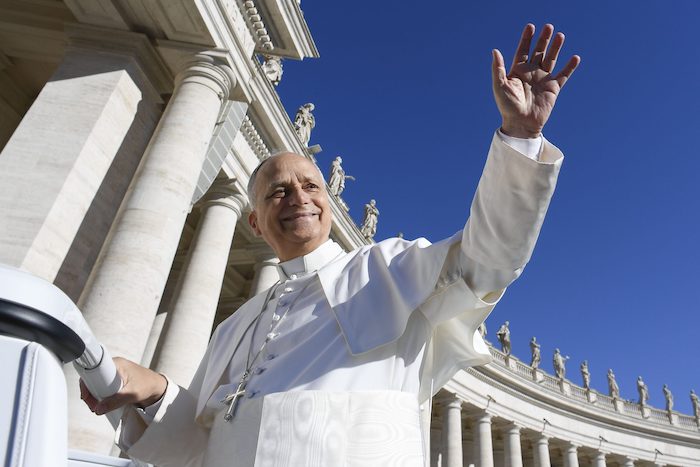
A Pope of Continuity – Leo XIV Carries Forward Francis’ Radical Love for the Poor
In his first major teaching document, I Have Loved You, Pope Leo XIV has left little
doubt that his papacy will walk firmly in the footsteps of his predecessor, Pope Francis.
Released by the Vatican on Thursday, the encyclical is both a moral reflection on the
state of global inequality and a spiritual call to compassion. It renews the Church’s voice
as a defender of the poor in an age of widening wealth gaps and moral indifference.
Leo XIV condemns what he calls “the seductive illusion of self-sufficiency” among the
wealthy, accusing the privileged classes of living in “a bubble of comfort and luxury”
while the poor struggle on society’s edges. “We cannot pretend holiness in a world
where hunger and exclusion persist,” he writes, urging Catholics and all people of
goodwill, to “see Christ in the abandoned and the broken.”
Elected in May after the death of Francis, Pope Leo has been widely regarded as a man
of humility and pastoral zeal, cut from the same cloth as the Argentine pontiff who
redefined the modern papacy with his emphasis on mercy, environmental justice, and
inclusion. ‘I Have Loved You’ reinforces this continuity, both in tone and theology.
Much of the document draws from the unfinished writings of Francis, and Leo makes no
attempt to obscure that lineage. “This is the fruit of a seed he planted,” Leo
acknowledges, “and I, like him, wish to tend it.” He echoes Francis’ call for “a poor
Church for the poor,” invoking the spirit of Evangelii Gaudium and Laudato Si’ – Francis’
landmark encyclicals that challenged consumerism, greed, and ecological neglect.
Where Leo’s voice adds a distinct resonance is in his deeply personal appeal to
empathy. The Pope, known before his election as Cardinal Pietro Lamberti of Florence,
built his reputation on quiet service, visiting prisons, washing the feet of refugees, and
insisting on modest living. His teaching style is less academic than contemplative, more
pastoral than political.
“Love,” he writes in the encyclical, “is not an abstract virtue. It is the bread we break with
the forgotten, the time we give to the weary, the dignity we restore to the discarded.”
Observers in Rome say this emotional directness may help the Pope connect with
ordinary Catholics who admired Francis’ warmth but sometimes struggled with the
institutional inertia of the Church. “Leo speaks with the same fire as Francis, but with a
poet’s heart,” says one Vatican insider.
In a time of global disillusionment with political and economic systems, Leo XIV’s
message lands as both a spiritual manifesto and a moral challenge. He calls for
renewed attention to “those whose voices are drowned in the noise of prosperity,”
warning that societies which ignore their poor “build walls around their own souls.”
While some conservative factions within the Church had hoped for a less socially
engaged pontificate after Francis, ‘I Have Loved You’ makes it clear that Leo intends to
double down on the mission of reform and compassion. The encyclical is a bridge, not a
break, binding two papacies by the same unyielding thread of human dignity.
For the world’s marginalized, that thread remains a lifeline. And for the Church, it is a
reminder – as Pope Leo writes, that “to love as Christ loved is not a choice, but the
measure of our faith.”
By Moji Danisa