






Louvre Museum Theft:Two Arrests Signal Momentum But Troubling Times Persist
French authorities have arrested two men in connection with last week’s audacious theft
of crown jewels from the Louvre Museum, a crime that has shaken France’s sense of
national pride and raised urgent questions about security and state competence.
According to the Paris public prosecutor, Laure Beccuau, the suspects were detained
after forensic traces linked them to the heist. One was arrested late on Saturday at
Charles de Gaulle airport as he attempted to board a flight to Algeria, while the other
was picked up in the Paris region. Investigators say items recovered at the scene,
including gloves, a high-visibility vest, motorbike helmet, power tools and walkie-talkies,
provided crucial evidence that led to the arrests.
The theft, estimated at over €88m, involved a set of Napoleonic-era jewels of
“inestimable” historical value. The robbers are believed to have used a stolen movers’
truck equipped with a lift to reach a first-floor balcony, cut through a window and smash
open the glass display cases of the Apollo Gallery, which houses some of the museum’s
most prized treasures. The operation reportedly took less than eight minutes, a feat that
stunned both security experts and the public.
Despite the arrests, officials have cautioned that none of the stolen jewels has yet been
recovered. The prosecutor has criticised the premature leak of the arrests to the press,
warning that it could jeopardise the ongoing investigation. More than a hundred officers
are said to be working on the case, which has now expanded to include international
law enforcement agencies. The jewels have been entered into INTERPOL’s Stolen
Works of Art database in an effort to prevent them from being trafficked or resold
abroad.
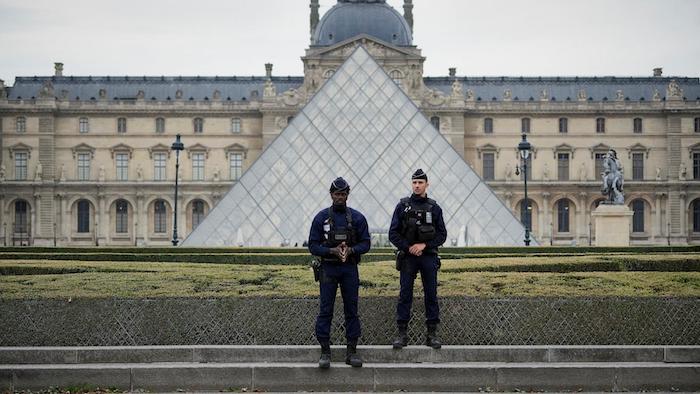
The Louvre, the world’s most visited museum, reopened on 22 October under tightened
security, though the Apollo Gallery remains closed. The incident has exposed major
gaps in museum protection and renewed criticism over long-delayed security upgrades.
Audits in recent years had warned of inadequate staffing, faulty alarms and outdated
surveillance systems, yet little had been done to address them.
The loss has also dealt a symbolic blow to France’s cultural prestige. For many, the
Louvre is not just a museum but a repository of the nation’s identity and a global
emblem of its artistic heritage. The possibility that the jewels could be dismantled,
melted down or lost forever has sparked outrage among historians and the public alike.
Politically, the heist comes at a difficult moment for President Emmanuel Macron’s
government, which is already facing economic pressures, labour unrest and criticism
over its handling of public security. Opposition figures have seized on the theft as
evidence of what they describe as a broader failure of governance and institutional
decay. The affair, they argue, is symptomatic of a country struggling to protect not just
its wealth but its history.
The arrests mark an important development in what remains one of Europe’s most
significant art crimes in decades. Yet the sense of unease persists. Unless the jewels
are recovered and the full network behind the theft is dismantled, the crime will continue
to resonate as a metaphor for France’s fragile confidence in a period of political and
financial uncertainty.
For now, the Louvre theft stands as both a stunning criminal act and a sobering
reflection of the vulnerabilities of a nation that prides itself on being the custodian of
world culture.