







Why Luxembourg Remains a Magnet for Migrants
Luxembourg’s once-surging immigration figures eased slightly in 2024, reflecting a broader slowdown across Europe, yet the country remains one of the continent’s most attractive destinations for workers, families, and asylum seekers.
Recent data from European and national migration agencies show that while arrivals dipped modestly, Luxembourg’s pull as a stable, multilingual, and high-income nation endures. The slowdown, analysts say, stems from a combination of tighter housing supply, policy adjustments within the European Union, and shifting global migration patterns, not from any loss of interest in the country itself.
Much of the decline mirrors continental trends. Across the EU, first-time asylum applications dropped after peaking in 2023. Stricter border controls in neighboring states such as Belgium, France, and Germany, and new rules governing entry routes, have reduced secondary movements toward smaller member states like Luxembourg. Meanwhile, record housing costs and limited rental stock in the capital and surrounding towns have discouraged new arrivals.
Still, Luxembourg continues to draw thousands seeking economic opportunity, safety, and a better quality of life. With one of the highest GDPs per capita in the world, a thriving financial sector, and strong social protections, the country offers stability rarely found elsewhere. For asylum seekers, its well-managed refugee system, education access, and social supports make it an appealing destination despite its small size.
The Grand Duchy’s immigrant population remains dominated by Europeans – mainly from France, Belgium, Germany, and Portugal – who benefit from EU free-movement laws and fill roles across finance, construction, healthcare, and hospitality. But an increasing number of non-EU nationals also arrive through skilled employment programmes such as the EU Blue Card, family reunification, and education visas.
According to government policy, residency can be temporary or permanent, depending on a migrant’s category. EU citizens need only to register after three months of residence, while third-country nationals must hold valid work, study, or family permits. Permanent residency typically requires at least five years of continuous legal stay, proof of language integration, and stable income.
Demographically, new arrivals tend to be between 25 and 45, an age group drawn by Luxembourg’s strong job market and proximity to European institutions. Smaller numbers of asylum seekers from West Africa, the Middle East, and parts of Eastern Europe also continue to seek protection under humanitarian grounds.
Despite the brief cooling in 2024, Luxembourg’s government expects immigration to remain robust in the coming years as labour shortages persist and the demand for skilled professionals grows. Economists warn, however, that without faster housing reforms and infrastructure expansion, the country may struggle to sustain its open-door appeal.
For now, the Grand Duchy’s balance between economic opportunity, social stability, and cosmopolitan life ensures it remains one of Europe’s smallest yet most sought-after destinations – a place where ambition meets refuge, even amid shifting migration tides.
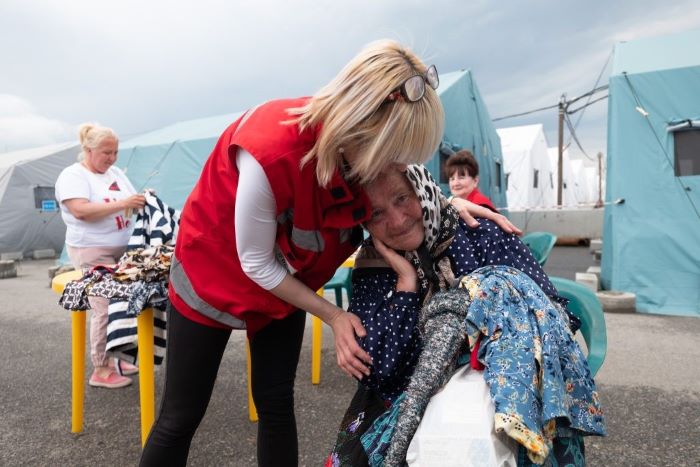
Photo – Luxembourg Red Cross
