







Phasing Out Combustion Cars by 2035, How Feasible?
Luxembourg has reaffirmed its commitment to the European Union’s ambitious plan to phase out sales of new petrol and diesel vehicles by 2035, a move that has become one of the most defining, and divisive, pillars of Europe’s green transition. The goal is clear – to make road transport, one of the largest sources of carbon emissions, fully carbon-neutral within the next decade. But as political winds shift and economic realities tighten, the question remains – is Europe’s 2035 deadline truly achievable?
The EU’s 2035 ban on new combustion-engine cars – first proposed under the “Fit for 55” climate package, was hailed as a bold step toward climate neutrality. Yet, as implementation draws nearer, cracks in political and industrial confidence are beginning to show.
Several European nations, particularly Germany, Italy, and parts of Eastern Europe, have called for a reassessment of the timeline. Their argument is both economic and practical – the automotive industry, one of Europe’s industrial backbones, is undergoing a radical transformation that demands enormous investment, technological breakthroughs, and workforce retraining.
Carmakers, while largely committed to electrification, have warned that supply chain bottlenecks, high battery costs, and lagging charging infrastructure could make a total shift by 2035 unrealistic. The cost-of-living crisis and soaring energy prices have also dampened consumer appetite for electric vehicles (EVs), which remain significantly more expensive than their combustion counterparts in most EU countries.
Still, Europe’s resolve to eliminate combustion engines is rooted in an urgent environmental necessity. Road transport accounts for nearly 20% of the EU’s total CO₂ emissions, and despite efficiency improvements, the continent’s car fleet continues to grow. Electric vehicles are seen as the linchpin of Europe’s strategy to meet its net-zero emissions target by 2050.
For Luxembourg, a nation influential in environmental diplomacy, standing by the 2035 target is a matter of principle. The country has invested heavily in charging networks, public transport, and incentives for EV purchases – part of a broader effort to align its economy with the EU’s green agenda.
The government argues that delaying the ban would risk derailing progress and sending the wrong signal to industries and investors betting on clean technology. “The future of mobility is electric,” Luxembourg’s officials insist. “Delaying means denying.”
Technically, the 2035 goal is possible but only just. Success will depend on scaling up battery production, expanding renewable energy capacity, and ensuring access to affordable EVs for middle- and low-income Europeans. The EU will also have to address raw material shortages and strengthen its “green industrial policy” to compete with the U.S. and China, both of which are aggressively subsidizing electric mobility.
Luxembourg’s role, while small in manufacturing terms, may be symbolic: demonstrating that even compact, service-driven economies can lead by example. But for the broader EU, the road to 2035 will be as much about political will as technological progress.
Whether the 2035 target holds or bends, it has already reshaped Europe’s auto industry, forcing innovation and redefining what sustainable mobility means. The debate isn’t just about cars, it is about the kind of continent Europe wants to be – one that leads the green revolution, or one that hesitates at the edge of change.
In the end, Luxembourg’s steadfastness may reflect the deeper European conviction that transformation, however costly, is better faced now than postponed indefinitely, because in the race against climate change, delay is the most dangerous detour of all.
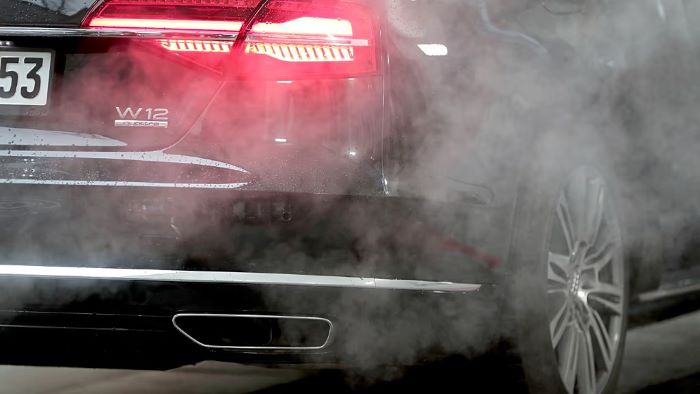
Photo – Copyright AP Photo/Michael Sohn