








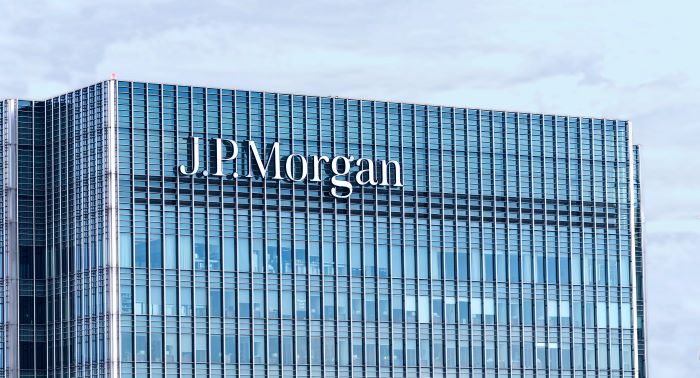
J.P Morgan’s Exit Raises Questions about Luxembourg’s Financial Resilience
J.P. Morgan’s decision to shut down its mobility payments subsidiary in Luxembourg, leaving 33 employees out of work, has landed with a weight that goes beyond one company’s restructuring. In a country that prides itself on being Europe’s most stable financial hub, even small tremors tend to provoke larger questions and this one does.
According to financial sector union Aleba, the bank attributed the closure of J.P. Morgan Mobility Payments Solutions to “performance and profitability” issues. On paper, that may sound like a narrowly financial or strategic move, but the announcement is already fuelling a broader debate – does this reflect a deeper strain in Luxembourg’s economy, or is it simply an example of the rapid technological transformation reshaping global finance?
Luxembourg’s economy has been under quiet pressure. Growth has slowed, corporate investment has softened, and the financial sector – the country’s economic engine – has been feeling the pinch from global volatility, digital disruption and tighter regulatory scrutiny. While the country remains wealthy, its long-standing model is being tested. The closure of even a modest subsidiary of one of the world’s largest banks is, therefore, more than a footnote. It suggests that traditional structures within financial services are being reassessed – sometimes ruthlessly. When profitability stalls, even in a tax-friendly and business-friendly environment like Luxembourg, large institutions increasingly prefer to consolidate operations in fewer locations, relying on digital hubs and scalable technologies.
The mobility payments arm that J.P. Morgan is shutting down sat at the crossroads of two powerful forces – fintech innovation and the slow erosion of older payment-processing frameworks. Across Europe, digital wallets, instant payments, open banking and AI-driven transaction systems have rapidly overtaken legacy systems. In that sense, the closure may say less about Luxembourg’s shortcomings and more about the bank’s attempt to reposition itself in a world where payments are increasingly dominated by agile fintechs and tech giants. J.P. Morgan has been investing heavily in automation, AI and centralised infrastructures, moves that often leave smaller satellite teams vulnerable.
However, it would be naïve to dismiss the development as purely technological. When a global banking giant chooses to retreat from Luxembourg, even partially, observers naturally wonder whether the country’s high labour costs, rising office expenses and tightening oversight are making some specialised units uncompetitive.
The mood within the sector is uneasy. While there is no wave of institutions heading for the exit, there are quiet concerns. Some smaller banks and fintechs have already struggled with profitability and downsized operations. Larger institutions, meanwhile, are under immense pressure to automate and cut costs. If similar closures or relocations occur, the impact on Luxembourg’s workforce could be significant. The financial sector employs around 50,000 people – a huge figure for a country of just over 650,000 residents. Even small job losses ripple widely through the labour market. More worrying still is that the roles most at risk are often specialised, meaning laid-off workers may not easily transition without retraining. With AI reshaping traditional financial jobs at speed, back-office teams, compliance units and payment-processing divisions are increasingly vulnerable.
Luxembourg’s government continues to stress the country’s resilience, and it remains a magnet for global finance. But the J.P. Morgan decision exposes the urgency of preparing the workforce for rapid digital transformation and ensuring that workers have pathways to re-skill and adapt. It also underscores the need for policies that attract the next generation of fintech players, not just traditional banks.
For now, the closure of J.P. Morgan Mobility Payments Solutions may appear to be a relatively small development. But it comes at a moment when Luxembourg can least afford symbolic blows. Whether it becomes an isolated episode or the first sign of a more unsettling pattern will depend on how quickly the country adapts to a financial world evolving faster than ever. One thing is clear – the era when Luxembourg could rely solely on its reputation as a stable financial enclave is ending. The next chapter will require reinvention – from its institutions, its regulators, and its workforce.