






Belgium on Edge as Country Braces for Historic Three-Day Strike
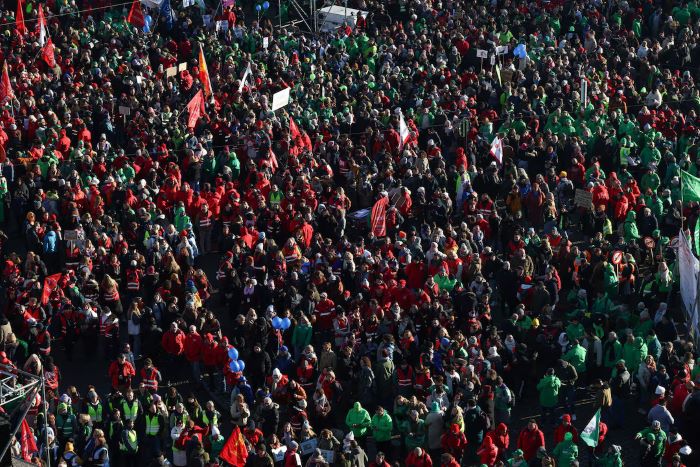
Belgium is preparing for a paralyzing three-day national strike as trade unions escalate their confrontation with the federal government over sweeping austerity reforms. The action, called by the country’s three major union federations, is expected to shut down transport networks, disrupt public services, and inflict significant economic losses, marking one of the most consequential labour protests in recent years.
The unions accuse Prime Minister ’s coalition government of tearing apart the foundations of Belgium’s long-standing social protection model. At the centre of their anger are controversial pension changes, cuts to welfare benefits, and fears over tighter limits on wage growth. To union leaders, these reforms are less about fiscal discipline and more about eroding hard-won rights of workers who already face rising living costs.
For many workers, the strike is a last resort. Pension reforms raising the retirement age and restricting special pension regimes have been described as an assault on dignity for people in physically demanding jobs. Proposed caps on unemployment benefits have deepened anxieties in a country where social stability is built on the belief that no one should fall too far behind. The prospect of curtailing Belgium’s automatic wage-indexation system – a mechanism widely seen as a safeguard against inflation – has only sharpened the sense of insecurity.
The political stakes for the government are high. The coalition, often referred to as the “Arizona” government, won office promising to restore budgetary balance but its determination to push through cuts at a time of economic unease has provoked unusually unified resistance. The three-day strike is designed as a show of force, signalling that unions will not accept reforms they believe punish workers while sparing wealthier groups. For the administration, backing down could be read as a sign of weakness – pressing ahead risks deepening social unrest.
The economic impact is expected to be severe. Belgium’s logistics-driven economy is particularly vulnerable to industrial paralysis. A strike of this magnitude could cost hundreds of millions of euros, especially in regions already struggling with sluggish growth. Small businesses warn they cannot withstand prolonged disruptions, while manufacturing and transport sectors face the threat of missed deadlines and broken supply chains. The strike will not only test the resilience of the economy but also the patience of citizens navigating delays, closures, and frayed services.
Ordinary Belgians are bracing for chaos. Public transport is likely to operate far below capacity, with major disruptions across bus, tram, and rail services. Air travel through airports in Brussels and Charleroi may slow to a crawl. Schools, administrative offices, and local services could face staff shortages or shut down entirely. For many families, the inconvenience will be unavoidable. Yet public sympathy for the strikers remains mixed – while some blame the government for pushing austerity too far, others fear that the economic toll will ultimately fall on workers themselves.
Whether the strike will yield results remains uncertain. On one hand, its scale and unity give unions unusual leverage. If the economic damage becomes too costly or political pressure builds, the government may be forced to open negotiations or soften its approach. On the other, the administration appears convinced it has little choice but to tighten the budget, and may be willing to endure the disruption in order to push reforms through.
What is clear is that Belgium is approaching a defining moment. The clash over pensions, wages, and welfare is more than a budgetary dispute – it reflects competing visions of the country’s future. The coming days will reveal whether the strike becomes a turning point – either forcing a policy rethink or entrenching a new era of fiscal restraint. For now, Belgium stands on edge, waiting to see which side bends first.
Photo – Reuters