








Luxembourg’s Forests Test the Nation’s Resolve on Climate Adaptation
Luxembourg’s environment minister has issued an unusually blunt warning – the country cannot continue managing its forests as though the climate were standing still. For a nation that has invested heavily in emissions reduction, renewable energy and a planned phase-out of fossil fuels by 2035, the anxiety may seem counterintuitive. Yet officials say the country’s forests are now revealing the limits of its climate strategy and the need for far more practical adaptation on the ground.
Around a third of Luxembourg’s territory, some 90,000 hectares, is covered by forest. The figure has remained relatively stable in recent years, giving the impression of a healthy, well-preserved landscape but beneath that canopy, foresters are observing a pattern of stress that mirrors the wider European picture – drought-weakened trees, increasingly frequent pest outbreaks and a creeping decline in the ecological functions that forests are meant to provide.
The minister’s concern stems from the nature of Luxembourg’s woodland itself. More than half of it is privately owned, carved into thousands of small, fragmented parcels. Large sections were planted in the last century with spruce, pine and other fast-growing species that struggle under the hotter, drier conditions now becoming routine. In practice, this means that even if the overall share of forest remains unchanged, the resilience of those forests, their ability to store carbon, regulate water and support biodiversity – is eroding.
Scientists and officials argue that the country’s broader climate agenda, ambitious as it is, has not yet filtered down into the everyday management of its woods. Luxembourg has excelled at long-term planning, energy transition policies and research funding, but its forests require something more immediate – active stewardship. That includes diversifying species, restoring degraded soils, thinning dense monocultures and preparing entire landscapes for the climate Luxembourg is expected to have in 20 to 30 years.
Compared with its neighbours, the Grand Duchy occupies an unusual middle ground. Germany and France, both with vast forest expanses and long traditions of state forestry, have more institutional capacity to absorb regional losses and experiment with climate-resilient methods. Belgium, with far smaller woodland cover and severe land-use pressures, faces sharper fragmentation and slower regeneration. Luxembourg, smaller than both but relatively well-wooded, carries vulnerabilities of each model: a high percentage of forest cover but low absolute area, and a management system reliant on thousands of smallholders whose individual decisions collectively shape the country’s environmental health.
Foresters insist there is no immediate crisis, but the warning signs are clear enough to prompt concern. Forests that appear intact can decline rapidly once stress thresholds are crossed, leaving landscapes exposed to erosion, water shortages and biodiversity collapse. Officials are now pushing for more robust monitoring, incentives for private owners to convert plantations into mixed stands, and stronger ecological corridors to allow wildlife and tree species to shift as temperatures rise.
What remains is the political will to widen the focus of climate action from national targets to the slower, more painstaking work of transforming how land is managed. Forests, long treated as symbols of Luxembourg’s environmental success, are becoming the test of whether its climate policy can adapt as quickly as the climate itself.
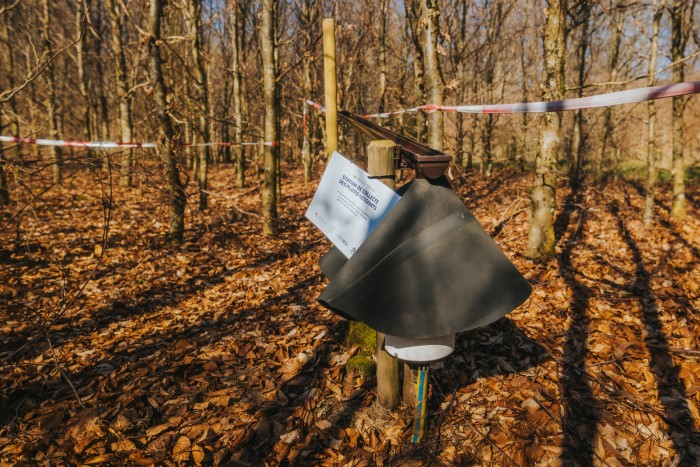
Photo – forets@vdl.lu