








Luxembourg Faces Growing Calls to Name and Confront Femicide
Women’s groups in Luxembourg are stepping up pressure on the government to recognise femicide as a distinct crime, arguing that the country can no longer rely on general homicide laws to confront what they describe as a persistent and gender-driven pattern of violence. Their calls, once mostly confined to annual awareness weeks, have become louder and more coordinated as activists insist that the state must count, define and confront the killing of women because they are women.
The push comes at a moment when domestic-violence figures are rising and the limits of Luxembourg’s existing protections are increasingly visible. Police interventions for domestic violence have climbed steadily in the past two years, with more exclusion orders issued and more women seeking help from shelters. The country records an average of one to two femicide a year – a small number in absolute terms but significant in a population of barely 660,000. Each case typically exposes a pattern that women’s groups say is impossible to address without a clear legal definition – previous threats, coercive control, and a failure to intervene early enough.
What frustrates campaigners most is the absence of a national framework to recognise these killings for what they are. Luxembourg has no legal category of femicide, no centralised registry, and no systematic review of fatal incidents. As a result, activists argue, the state cannot see the full picture of how many murdered women previously sought help, how many had filed complaints, how risk assessments were handled, or how institutions failed to intervene. Without official recognition, they say, the crime remains hidden in plain sight.
Neighbouring countries provide a stark contrast. Belgium has adopted a comprehensive law against femicide, establishing data systems, coordination between police and social services, and explicit rights for victims’ families. France, where the number of fatal domestic-violence cases runs far higher, has introduced successive reforms after public outcry over recurring killings. Germany and other European states have invested in specialised units and multi-agency monitoring intended to detect escalating violence before it turns deadly. Against that backdrop, Luxembourg – wealthy, orderly, governed by consensus – appears behind the curve.
Women’s organisations argue that the government’s reluctance to move forward is increasingly untenable. They warn that the apparent smallness of the problem is deceptive; that rising police interventions suggest a deeper pressure within households and that a single killing in a small country should carry the weight of an epidemic. For them, recognition of femicide is more than a symbolic act. It would force institutions to measure and understand the problem, require specialised training for police and prosecutors, and oblige the state to treat gender-motivated killings as preventable rather than tragic inevitabilities.
The debate has reached ministers, who have acknowledged the need for better data but stopped short of endorsing a new legal category. Officials often point to existing domestic-violence provisions and the difficulty of legislating around motive. Feminist groups counter that motive is already central to criminal law in cases of hate crimes and terrorism, and that gender-based killings fit the same logic.
Luxembourg’s strengths – its size, its compact institutions, its resources – could, in theory, make it a model for prevention. Instead, activists say, the country risks mirroring the worst European trend: recognising the scale of violence only after another woman is killed. In a region where other governments are expanding protections, Luxembourg’s caution now looks increasingly like complacency.
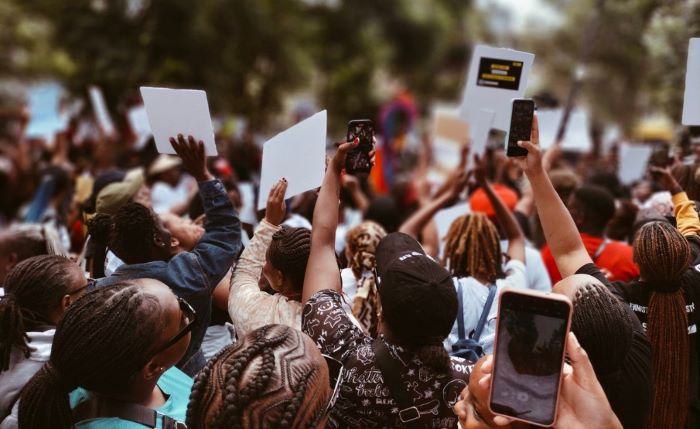
For campaigners who have spent years documenting cases, supporting victims and marching through the capital’s quiet streets, the demand is simple. They want the state to call femicide what it is, to count every case, and to confront the social conditions that allow it to happen. Until then, they argue, the country cannot claim to be the safe haven it believes itself to be for the women who live there.