






A New Rail era for Europe as Direct London-Germany Trains Draw Closer
Plans for the first direct high-speed trains between London and Germany are gathering pace, with rail operators and officials confirming that work is under way to make through-services possible in the early 2030s. The project, long seen as technically desirable but politically complicated, has moved into a more concrete phase as Eurostar and Germany’s Deutsche Bahn deepen cooperation and prepare for a new generation of trains capable of running seamlessly between the UK and mainland Europe.
The emerging plan centres on potential services from London St Pancras to major German hubs such as Cologne and Frankfurt, with indicative journey times of about four hours and five hours respectively. Rail companies say the combination of new, interoperable rolling stock, increased capacity, and revived demand for sustainable travel has made the idea more realistic than at any point since the Channel Tunnel opened. Officials on both sides of the Channel now describe the proposal as feasible, albeit dependent on resolving border, security and scheduling arrangements across multiple countries.
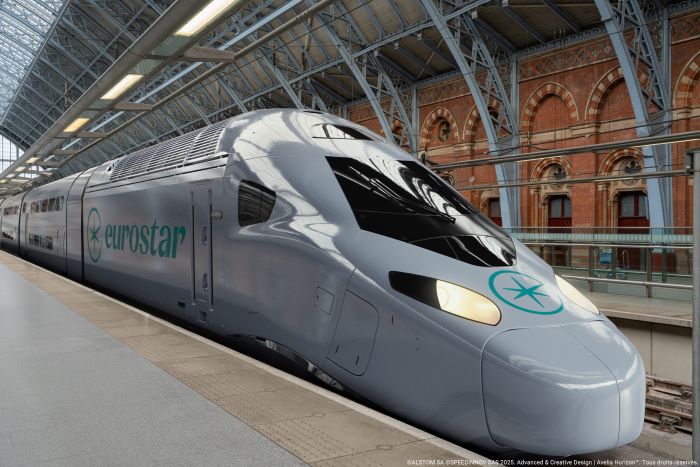
No firm start date has been set, but both governments and the operators involved say the early 2030s are the earliest credible window. The timeline hinges on the delivery of new high-speed trains, certification for multiple national signalling systems, and agreements on how British and EU border checks will be managed without creating long delays at stations. Eurostar’s planned fleet expansion, which includes a high-capacity double-deck design, is being framed as a prerequisite for opening new long-distance international routes.
Supporters of the plan argue that a direct rail link would deliver significant economic benefits for both the UK and Germany. Business groups have long said that centre-to-centre connections can boost trade by reducing travel friction for frequent cross-border meetings in finance, consulting, technology and industrial sectors. German cities stand to draw more UK tourists seeking short city breaks, while London’s hotels and cultural venues could see increased visitor numbers from the Rhine-Ruhr region. The construction of new trains and supporting infrastructure would also generate industrial and engineering jobs in the coming years.
Environmental considerations are a major driver. A five-hour rail service is widely seen as a viable alternative to short-haul flights, with operators citing the substantial emissions savings that come with shifting passengers from air to electrified rail. Policymakers in both countries have said that expanding long-distance rail is increasingly central to meeting climate targets, especially on heavily travelled corridors.
Socially, the link is expected to bring the two countries closer by increasing the flow of students, researchers, artists and families who currently rely on air travel. Advocates point to the “psychological proximity” created when journeys between major cities become simpler, allowing spontaneous trips and deeper cultural exchange that airports often fail to encourage.
Yet significant obstacles remain. Post-Brexit border controls remain the most politically sensitive hurdle, with no final agreement on how checks will be handled for passengers boarding in London and arriving in Germany. Operators must also secure scarce slots in the Channel Tunnel, coordinate timetables with congested European high-speed networks and ensure that new trains meet safety and technical standards across several jurisdictions. Commercial viability is another question, with rail companies needing to be confident that demand will justify the considerable investment.
Despite those challenges, optimism around the project is higher than at any point in the past decade. Rail executives say that renewed appetite for international train travel, combined with technological improvements and political backing, has created a window of opportunity that did not previously exist. If that momentum holds, the London-Germany link could quietly reshape European mobility, offering travellers a greener, faster and more seamless way of moving across the continent.