







A Small Robot, Big Hope for Autism Support in Luxembourg
Luxembourg has no definitive national register for autism, and official statistics remain sparse, yet clinicians and advocacy groups say diagnoses among children have risen steadily in recent years, mirroring global trends that place the prevalence of autism at roughly 1-2 per cent of the population. In schools and paediatric services across the country, demand for early support continues to outpace availability – a gap that has prompted one of the most ambitious scientific initiatives yet seen in the Grand Duchy.
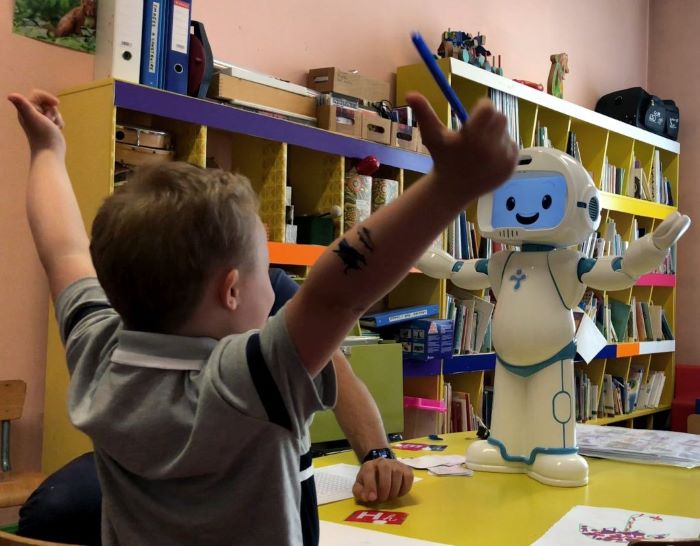
LuxAI, the Luxembourg Institute of Health (LIH) and the University of Birmingham in the UK have launched what they describe as the world’s first large-scale, long-term study into a robot-led early development programme for young autistic children in their own homes. The project centres on QTrobot, a compact humanoid machine designed by LuxAI to help children learn communication, social and emotional skills through highly structured, repeatable interactions. Sixty-nine families have volunteered to take part, and the study is set to run until the end of 2026.
The choice to bring a social robot into family living rooms reflects a shift in how early intervention is being imagined. QTrobot is not intended to replace therapists or educators – rather, it functions as a steady companion, guiding children through exercises that build joint attention, turn-taking, early language and emotional understanding. Its simplified expressions and predictable routines can be easier for some autistic children to process than the complexities of human social cues, creating a calmer setting in which to practise skills that are later transferred to real-world relationships.
Researchers believe the model could support families who often wait months for assessments or specialist appointments. By giving parents a structured programme they can run daily with the help of the robot, the project aims to increase the intensity of early learning without adding financial or logistical strain. For families already familiar with inconsistent access to therapy, the promise of a standardised tool that can be used at home is a powerful draw.
The study is designed to be rigorous and long-term. Over the course of the programme, scientists will monitor children’s development in areas such as communication, social engagement, cognitive skills and adaptability. They will also look at how confident parents feel in supporting their child’s learning, and whether robot-assisted sessions change family routines or ease daily challenges. By comparing the families using QTrobot with those relying on existing services alone, researchers hope to understand whether the technology brings measurable improvements that endure over time.
The long-term goals extend well beyond the 2026 conclusion date. The partners want to establish whether robot-assisted learning can become a recognised, evidence-based part of early autism care – not just in Luxembourg, but internationally. If the findings are positive, QTrobot could eventually be integrated into school settings, therapy pathways and home-based support programmes, improving access for families who currently struggle to obtain timely specialist help. The work may also contribute to a broader understanding of how technology can complement human-led intervention without overwhelming or replacing it.
Luxembourg’s size presents both challenges and opportunities. Services can be fragmented, and expertise is limited, but the country’s agility allows for innovations like this one to be tested quickly and thoroughly. This study reflects a growing recognition that supporting autistic children requires not only clinical expertise but flexible tools families can rely on daily.
For now, the small robot sits quietly in the homes of 69 families, repeating lessons with patience no human could sustain for hours on end. Whether it can shift developmental trajectories or widen access to early intervention remains to be seen. But for many parents, it already signals something rare: a sense that new ideas, backed by careful science, are beginning to meet the reality of raising autistic children in a system still finding its feet.
Photo – Photo © LuxAI