







Legal Limbo Unravels, EU vs Belgium and Hungary
The European Commission has opened infringement procedures against Hungary and Belgium in a reminder that membership of the European Union comes with binding legal obligations, not optional guidelines. Though the cases differ in substance and tone, both point to the same underlying concern in Brussels: that core rules governing the internal market and fair competition are being stretched, bent or ignored.
In Hungary’s case, the dispute centres on domestic economic measures that the Commission believes undermine the principle of equal treatment within the single market. Laws introduced in recent years, ostensibly to shield consumers from rising prices, have imposed restrictions and controls that disproportionately affect foreign-owned companies operating in the country. Brussels argues that such measures breach EU rules guaranteeing freedom of establishment and non-discrimination, which are meant to ensure that businesses from one member state are not penalised simply for crossing borders.
The Commission’s action reflects a long-standing view that while governments are free to pursue social or economic policy goals, they must do so within the framework of EU law. National interventions that tilt competition in favour of domestic players, even when politically popular, strike at the foundations of the single market. For Brussels, allowing such practices to stand would invite other states to follow suit, fragmenting a system built on uniform rules.
Belgium’s case is less overtly political but no less significant. Here, the Commission is concerned about the handling of arbitration awards and financial arrangements that it believes may amount to unlawful state aid. EU rules tightly restrict the ability of governments to support companies financially, precisely to prevent hidden subsidies that distort competition across borders. The Commission’s view is that Belgium’s approach risks giving certain firms an unfair advantage, to the detriment of competitors elsewhere in the Union.
Taken together, the two cases highlight the Commission’s dual role as both political actor and legal enforcer. Under the EU treaties, it is charged with overseeing the application of European law and intervening when member states fall short. Infringement procedures follow a formal path, beginning with warnings and explanations, and potentially ending before the European Court of Justice, where fines and corrective measures can be imposed.
Critics often portray such actions as heavy-handed or technocratic, evidence of Brussels overreach into national affairs. Supporters counter that without enforcement, the EU’s legal order would quickly unravel, leaving stronger or more assertive states free to ignore rules that others continue to follow. In that sense, infringement procedures are less about punishment than about preserving trust in a shared system.
There is also an unavoidable political backdrop. Hungary has repeatedly clashed with EU institutions over governance, economic policy and the rule of law, making each new legal dispute part of a broader confrontation over the country’s direction. Belgium, by contrast, is a founding member of the Union and host to its institutions, yet its inclusion underlines a key point Brussels is keen to stress: no member state is above the rules, however central its role.
Ultimately, the Commission’s actions against Hungary and Belgium are a reminder of what the EU is, and what it is not. It is a union of sovereign states, but one bound together by agreed laws that require consistent application. When those laws are challenged, the Commission is obliged to respond. Whether the two governments adjust their policies or allow the disputes to escalate will determine not only the legal outcome, but also how seriously the Union’s rulebook is taken in practice.
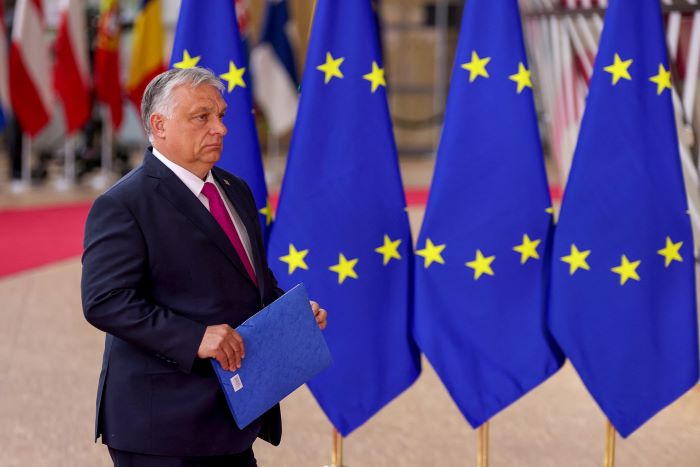
Hungary’s Prime Minister Viktor Orban (Photo: Reuters)