







Policing in Luxembourg and the limits of quiet accountability
Luxembourg is rarely at the centre of European debates on police violence. The Grand Duchy is widely perceived as one of the continent’s safest countries, with low crime rates and a professional police force operating in a stable political environment. Yet recent oversight figures suggest a more nuanced reality, one in which police conduct is increasingly scrutinised and complaints are rising, even if serious brutality remains limited.
Luxembourg’s national force, the Police grand-ducale, serves a population of just over 670,000 people. With a little over 3,200 officers, it is small by European standards, and its size partly explains why incidents involving excessive force seldom dominate headlines. Policing is centralised and overseen by the Inspection générale de la police, an independent body mandated to investigate complaints against officers and monitor compliance with the law.
In 2024, the inspectorate recorded a marked rise in its workload, with close to a quarter more cases than the previous year. A total of 109 criminal investigations were opened against police officers. Of these, just under a third involved allegations of police brutality, making excessive use of force the single largest category within criminal complaints. Other cases related to threats, abuse of power, off-duty violence and procedural breaches. Alongside criminal probes, dozens of disciplinary investigations were launched, though only a minority resulted in sanctions.
These figures require careful interpretation. An increase in investigations does not automatically point to worsening behaviour by police officers. It may also reflect greater public awareness of complaint mechanisms, a lower threshold for reporting misconduct, or more proactive oversight by the inspectorate itself. In a small country, even modest numerical changes can produce sharp percentage increases.
At the same time, the data confirm that allegations of misconduct, including brutality, are not absent from Luxembourg’s policing landscape. Oversight bodies have also identified administrative failures, unjustified fines and breaches of internal rules, some of which were corrected only after intervention. While fatal encounters with police are rare and firearm use is tightly regulated, the system is not immune to error or abuse.
Comparisons with neighbouring countries must be made with caution. France, Germany and Belgium all record far higher numbers of complaints, investigations and deaths linked to police action, but they also have much larger populations, more fragmented policing structures and, in some cases, a stronger protest culture that brings police into frequent confrontation with the public. Differences in how countries define and record “police brutality” further complicate direct statistical comparison.
France has faced sustained criticism over aggressive crowd control and discriminatory policing, Germany continues to debate the adequacy of its reporting on excessive force, and Belgium has struggled with concerns over racial profiling and deaths in custody. Against this backdrop, Luxembourg’s absolute figures appear low. Even when adjusted for population size, they do not suggest a systemic crisis comparable to those seen elsewhere in Europe.
What Luxembourg’s experience does illustrate is that the absence of widespread violence does not eliminate the need for vigilance. The credibility of its policing system rests heavily on the independence and effectiveness of oversight, the transparency of reporting, and the willingness of authorities to act on findings. As public expectations of accountability rise across Europe, quiet policing will no longer be enough. Even in one of the EU’s smallest and wealthiest states, trust in law enforcement depends on continuous scrutiny and the clear demonstration that no officer is beyond the reach of the law.
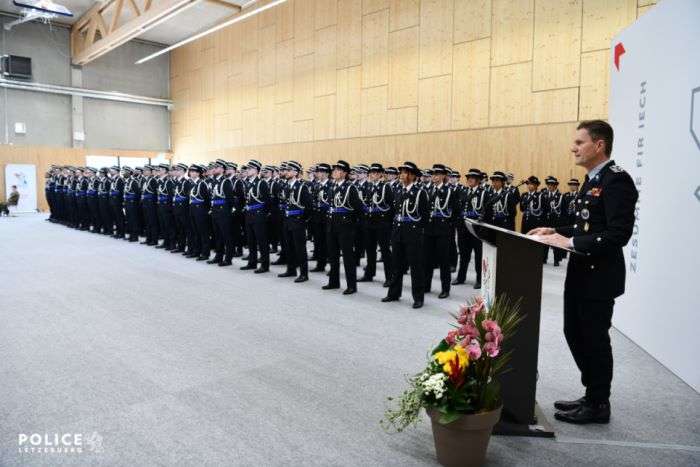
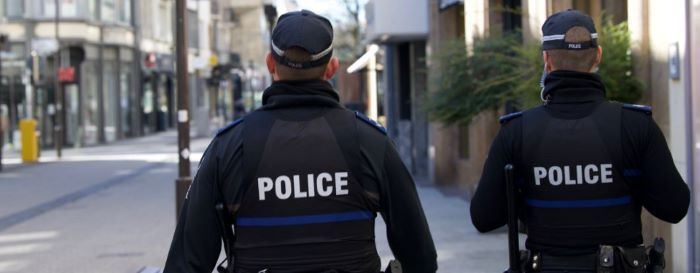
Photo – Police of Luxembourg