




Luxembourg/Armenia – When Small States Seek Strength in Partnership
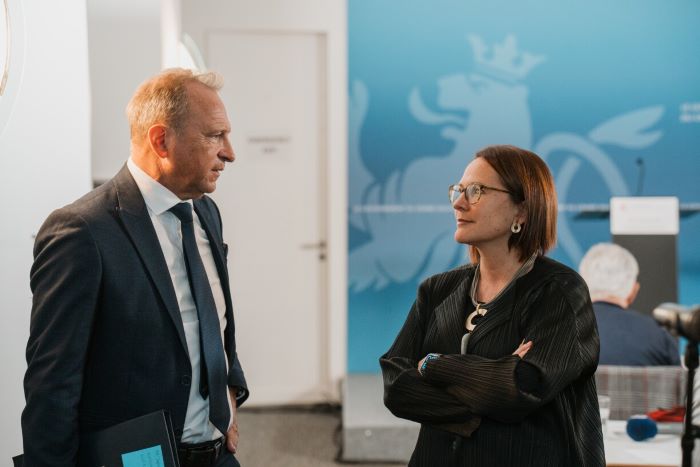
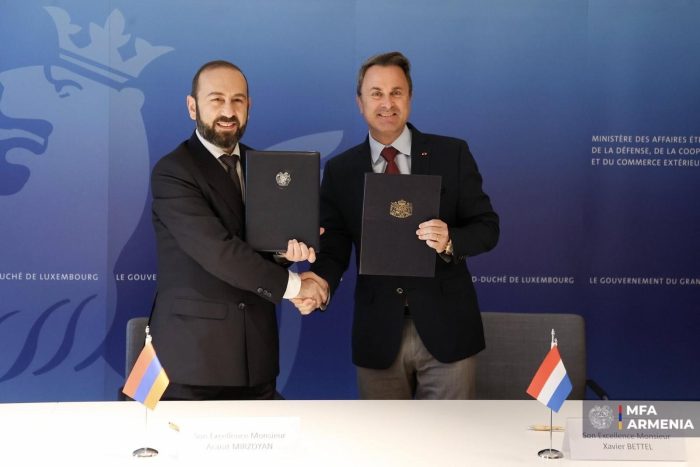
When the foreign ministers of Armenia and Luxembourg, Ararat Mirzoyan and Xavier Bettel, signed a joint declaration on a strategic partnership in Luxembourg, it was an agreement between two small states that have learned, in different ways, how to survive and exert influence in a world dominated by far larger powers.
At first glance, Armenia and Luxembourg appear to have little in common. One is a landlocked South Caucasus nation emerging from decades of conflict and geopolitical pressure; the other is a wealthy European microstate at the heart of the European Union. Yet their convergence lies precisely in their size, vulnerability and dependence on multilateralism as a shield against instability.
For Armenia, the partnership is primarily about anchoring itself more firmly within Europe’s political and institutional space at a time of profound insecurity. Following renewed tensions with Azerbaijan and a recalibration of its relations with traditional security partners, Yerevan has been seeking deeper ties with EU member states that can amplify its voice in Brussels. Luxembourg, despite its size, punches far above its weight in EU institutions, diplomacy and finance. A strategic partnership offers Armenia not only political goodwill, but a reliable advocate within European forums on issues such as democratic reform, rule of law, humanitarian concerns and post-conflict recovery.
Luxembourg, for its part, gains relevance beyond its borders by reinforcing its role as a principled, outward-looking EU actor. The Grand Duchy has long invested in diplomacy, development cooperation and international law as tools of influence. Engaging Armenia allows Luxembourg to project those values into a sensitive geopolitical region where the EU is keen to play a stabilising role. It also strengthens Luxembourg’s profile as a bridge-builder, particularly in Eastern Europe and the South Caucasus.
Economically, the partnership is asymmetrical but still mutually beneficial. Armenia stands to benefit from Luxembourg’s expertise in finance, digital innovation, satellite technology and regulatory frameworks. Luxembourg’s financial sector, one of the most sophisticated in the world, offers models for governance, transparency and investment structures that Armenia is keen to develop as it modernises its economy and attracts foreign capital. In return, Luxembourg gains access to an emerging market with a strong tech and diaspora-driven entrepreneurial culture, particularly in information technology and innovation.
What truly binds the two countries, however, is a shared belief in international rules as a survival strategy. Neither Armenia nor Luxembourg can rely on military power to secure their interests. Both depend on diplomacy, international law and multilateral institutions to protect sovereignty and stability. Luxembourg’s history of occupation during the world wars and Armenia’s experience of conflict and displacement have shaped similar instinctsthat security is best achieved through cooperation, alliances and legal norms rather than force.
The joint declaration is therefore less about immediate breakthroughs than about long-term alignment. It signals Armenia’s continued westward diplomatic outreach and Luxembourg’s willingness to invest political capital in regions beyond its immediate neighbourhood. In a fragmented international order, the partnership reflects a quiet but deliberate assertion that small states, when aligned by values and interests, can still shape outcomes beyond their size.
Photo – Armenpress