



Does Luxembourg Need to Diversify in a Changing Global Economic Landscape?
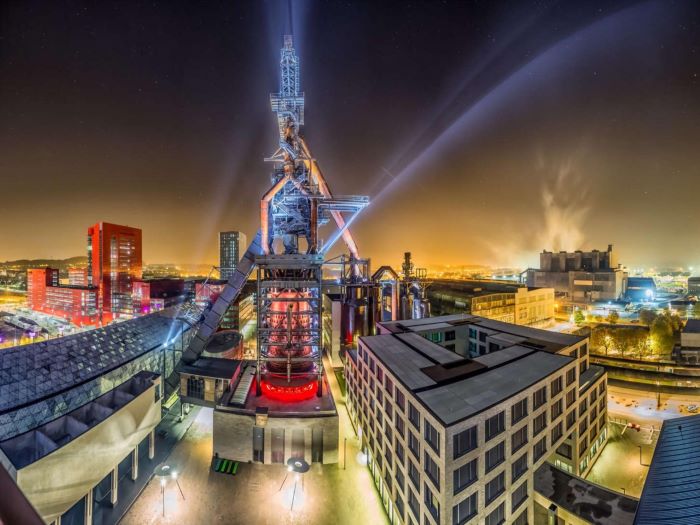
For decades, Luxembourg has enjoyed one of the highest standards of living in the world, built on a reputation as a financial safe haven. The Grand Duchy transformed itself in the late twentieth century from a steel-dominated industrial economy into one of the world’s leading centres for banking, investment funds and cross-border financial services. That strategic pivot brought extraordinary prosperity. But as global economic currents shift and new industrial powers rise, a question increasingly echoes through policy circles and business forums alike – does Luxembourg now need to diversify again to stay rich?
To many outsiders, Luxembourg appears to produce little beyond financial services. Glass towers filled with fund managers, lawyers and bankers have come to symbolise the country’s success. Yet this image hides a more complex economic reality. While finance remains the backbone of the economy, the country still has a productive base, though smaller and more specialised than in its industrial past.
Steel, once the lifeblood of Luxembourg, has not disappeared entirely. Advanced metal production and materials technology remain part of the industrial landscape, albeit in a more modern, automated form. Manufacturing in the country now focuses on high-value activities rather than mass production. Chemical products, plastics, precision components and specialised machinery are produced in industrial zones that reflect a shift from heavy industry to advanced manufacturing.
Beyond traditional industry, Luxembourg has quietly positioned itself in sectors that rely more on technology and expertise than on size or cheap labour. The country has become a hub for satellite communications and space-related services, hosting major operators and building a reputation as a legal and financial centre for the emerging space economy. Logistics is another important pillar, supported by the country’s central location in Europe and its efficient infrastructure. Agriculture, though modest, still contributes dairy products, meat and wine to both domestic consumption and export markets.
Despite this variety, the dominance of financial services remains striking. Finance contributes a substantial share of national output and employment, directly and indirectly. It is the engine that has powered Luxembourg’s growth for decades. But this dependence also makes the economy sensitive to external shocks. Changes in global interest rates, shifts in European regulation, or turbulence in international capital markets can quickly affect growth, tax revenues and employment.
Recent years have shown how fragile a service-heavy model can be. Inflation has fluctuated, growth has slowed at times, and productivity outside the financial sector has struggled to keep pace. As Europe faces demographic pressures, energy transitions and geopolitical tensions, even wealthy countries are being forced to reconsider their economic foundations.
The global industrial landscape is also changing rapidly. China has surged ahead in sectors that were once dominated by European manufacturers, from electric vehicles to commercial machinery and renewable energy equipment. The competition is no longer theoretical. It is reshaping supply chains, trade balances and technological leadership across the continent. For a small and open economy like Luxembourg, the rise of powerful manufacturing competitors underscores the risks of relying too heavily on one sector.
Yet diversification does not necessarily mean a return to smokestacks and assembly lines. Luxembourg lacks the land, population and labour cost structure needed for large-scale manufacturing. Competing with industrial giants in mass production would be both impractical and unnecessary. The country’s success has always come from identifying niche sectors where it can excel rather than trying to match the scale of larger economies.
The more realistic path forward lies in high-value production and innovation. Luxembourg’s emerging sectors, space technology, advanced materials, digital infrastructure, green finance and cleantech – represent industries where knowledge, not size, determines success. These are areas where a small but wealthy country can compete globally, provided it invests consistently in research, education and entrepreneurship.
Finance itself is also evolving. Sustainable finance, fintech and digital assets offer opportunities for Luxembourg to remain a global leader while reducing dependence on traditional banking activities. By integrating financial expertise with technological innovation, the country could build a more resilient and future-proof economic model.
The challenge is not just economic but psychological. Luxembourg’s financial success has been so overwhelming that it has shaped national identity. Diversification requires a willingness to embrace risk, invest in new industries and accept that transformation may take time. It also requires a workforce equipped with new skills and a political consensus around long-term economic strategy.
Luxembourg has reinvented itself before. The shift from steel to finance in the late twentieth century was not easy, but it ultimately secured the country’s prosperity. Today, the conditions are different, but the underlying principle remains the same. Economic resilience comes from balance, not dependence.
The Grand Duchy does not need to abandon finance, nor could it. But if it wishes to remain one of the richest and most stable countries in Europe, it may need to broaden its base once more, producing not just financial services, but also the technologies, ideas and specialised products that will define the next global economy.
Photo ©Luxinvest