




Luxembourg’s Asylum Laws: Quiet Tensions Beneath a Model System
Luxembourg, presents itself as a small, wealthy, and outward-looking state whose prosperity rests on openness. With nearly half of its residents born abroad, the Grand Duchy is not simply a country that receives immigrants; it is a country that depends on them. Yet behind the statistics and the official rhetoric lies a more complex story about how safe and secure immigrants really are under Luxembourg’s asylum and immigration laws.
On paper, the country offers one of the more protective frameworks in Europe. Its asylum regime is built around European Union rules and international refugee conventions, guaranteeing applicants the right to submit claims, be heard, and appeal decisions. Those granted protection receive access to education, healthcare, housing assistance, and social benefits, and are allowed to work without special permits. It is a system designed not only to protect, but to integrate.
Luxembourg’s economic structure makes such openness almost unavoidable. The country relies heavily on foreign labour and cross-border workers to sustain its financial sector, construction industry, and service economy. In many towns, immigrants outnumber native Luxembourgers, and the diversity is visible in schools, offices, and public spaces. Despite this demographic transformation, the country remains one of the safest in Europe, with low crime rates and little evidence of widespread social unrest linked to migration.
For immigrants who obtain legal status, Luxembourg offers stability, strong institutions, and a functioning welfare state. The rule of law is respected, discrimination is taken seriously in official discourse, and social services are widely accessible. Compared with many larger European countries, the asylum system is smaller, more orderly, and less overwhelmed by sheer numbers.
Yet the experience of immigrants is not uniformly secure. The asylum process, while legally structured, can still involve long waiting periods and uncertain outcomes. Applicants often spend months or years in reception centres or temporary housing, unsure whether they will ultimately be allowed to stay. The legal framework may be generous, but the psychological strain of uncertainty remains a defining part of the migrant experience.
Integration, too, comes with hidden obstacles. Luxembourg’s three official languages – Luxembourgish, French, and German – form a demanding linguistic environment. Many immigrants arrive speaking none of them, which limits access to jobs, education, and social networks. At the same time, housing costs are among the highest in Europe, forcing many newcomers into crowded or subsidised accommodation for extended periods.
The state’s approach also has a strict enforcement side. Asylum seekers whose applications are rejected and whose appeals fail are expected to leave the country. In such cases, authorities may move them into return facilities or encourage voluntary departure. This duality – protection for those accepted, firm removal for those refused – reflects Luxembourg’s broader attempt to balance humanitarian commitments with political and economic caution.
Because of its size, Luxembourg feels the impact of migration more quickly than larger countries. A few thousand additional arrivals can strain housing, schools, and administrative capacity. This reality shapes public debate and explains why, despite its wealth, the country remains careful about the number of asylum seekers it accepts.
In physical terms, immigrants in Luxembourg are generally safe. The country is peaceful, politically stable, and governed by predictable laws. But legal safety does not always translate into personal security or certainty about the future. For many asylum seekers, life is defined by waiting, paperwork, and the constant possibility of rejection.
Luxembourg’s asylum system is therefore less a humanitarian showcase than a carefully managed compromise. It offers real protection and tangible benefits to those who qualify, but it is also cautious, controlled, and, at times, emotionally taxing for those navigating it. In a country where openness is an economic necessity, immigration policy remains a quiet balancing act between generosity and restraint.
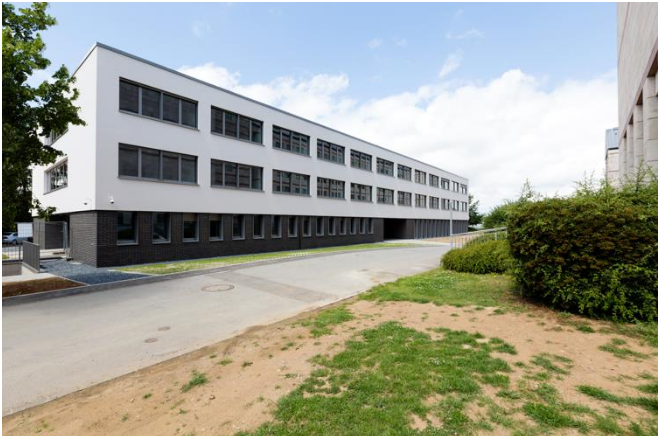
Foyer Lily Unden, avenue de la Faïencerie, Luxembourg – first reception centre, welcoming applicants for international protection (DPI) newly arrived in Luxembourg.
Photo – Ministre de la Famille et de l’Intégration