






Luxembourg Embraces Solar Revolution: Balcony Panels for Urban Apartment Dwellers
In a groundbreaking step toward a more inclusive and sustainable energy future,
residents of apartment buildings in Esch-sur-Alzette-Luxembourg’s second-largest city,
are being offered subsidised solar panels for their balconies. The pilot project, the first
of its kind in the country, aims to give tenants in multi-storey housing the opportunity to
harness solar power, a benefit long reserved for homeowners with access to rooftops.
Unveiled this week, the “Solar.Esch” initiative is being rolled out by the local municipality
in partnership with electricity provider Sudstroum and backed by the national
government’s Climate and Energy Fund. The move is seen as a significant step in
democratising access to renewable energy.
Esch-sur-Alzette is home to over 23,000 people living in apartment buildings,
representing more than half of the city’s total population. Until now, many of these
residents have been excluded from Luxembourg’s solar incentives due to the lack of
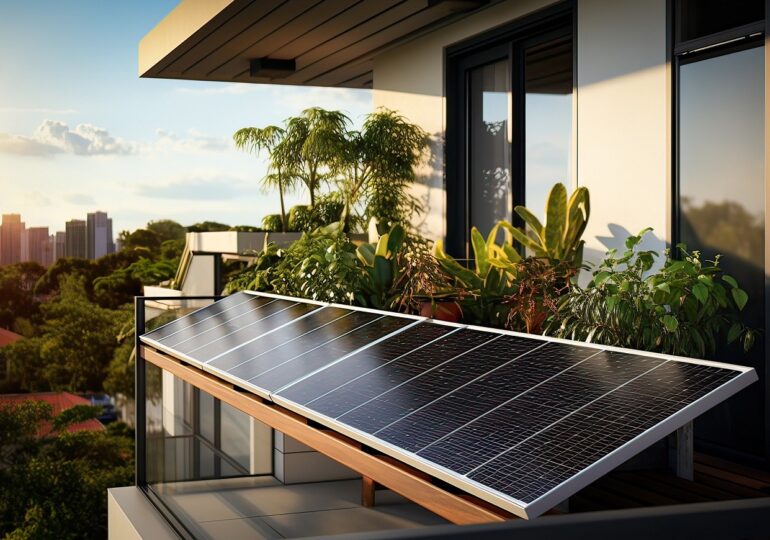
private roof space. Balcony-mounted solar panels offer a simple yet effective solution,
enabling individuals to generate electricity for their own use directly from the sun, right
from their own living space.
“These panels plug straight into the home’s power grid,” explained déi Gréng alderman
Meris Sehovic during the project’s unveiling. “Energy costs are a real problem for many
people, and this project can help to reduce those costs.”
Cost has often been a barrier to solar adoption, but the Esch initiative aims to eliminate
that hurdle. Under the scheme, residents can purchase one panel for just €150 or two
for €250, drastically lower than the typical retail prices of €750 and €1,100, respectively.
The remaining costs are covered through joint subsidies from the city, Sudstroum, and
the national Climate and Energy Fund.
The municipality is allocating more than €460,000 for the pilot phase of Solar.Esch,
which aims to facilitate the installation of 500 balcony solar units by 2027. Applications
are open from Saturday via www.solar.esch.lu.
The subsidies apply exclusively to those living in apartment blocks, addressing a long-
standing gap in Luxembourg’s green energy policies. “This is an important step towards
a socially just energy transition,” Sehovic said, underlining the project’s potential to
empower low- and middle-income households.
The pilot has gained unanimous approval from all parties in the Esch municipal council,
highlighting strong political support for the energy transition. However, not all feedback
has been uncritical. The Luxembourg Socialist Workers’ Party (LSAP) expressed
concern over what it described as inadequate overall subsidies for renewable
technologies, including solar panels and heat pumps.
According to LSAP critics, the city’s current budget for energy subsidies stands at just
€50,000, a figure that pales in comparison to allocations in other municipalities like
Differdange, which has committed €3 million to similar efforts.
A motion tabled by LSAP to increase Esch’s subsidy budget was rejected on Friday but
will be examined further in upcoming committee sessions.
The success of Solar.Esch could have wider implications across the Grand Duchy. As
urbanisation continues and more people live in multi-unit dwellings, the need for flexible
and accessible renewable solutions becomes increasingly urgent. The Esch model
could serve as a template for similar initiatives nationwide, potentially reshaping how
Luxembourg approaches decentralised clean energy.
With climate change intensifying and energy costs remaining volatile, initiatives like
Solar.Esch point to a more resilient, equitable, and environmentally sound future.
Whether this becomes a catalyst for broader national reform will depend not only on its
technical success but also on the political will to fund and replicate it elsewhere.