








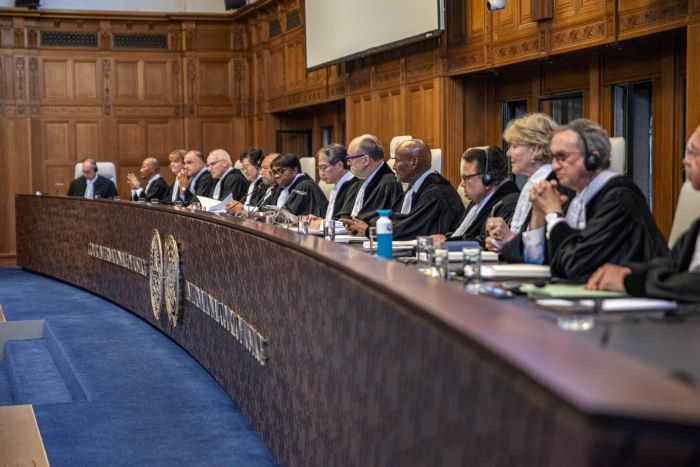
Historic ICJ Ruling Opens Door to Climate Justice Cases
In a landmark ruling that could redefine global environmental accountability, the
International Court of Justice (ICJ) on Wednesday declared that nations may be held
legally responsible for climate-related harm, including potential reparations for
vulnerable countries suffering from extreme weather disasters. The judgment stems
from the world’s largest climate case to date, brought before the Hague-based court by
96 countries and involving over 10,000 pages of documentation, 15 judges, and weeks
of high-level deliberations.
The ICJ’s advisory opinion affirmed that a “clean, healthy and sustainable environment”
is a fundamental human right, placing clear legal responsibility on nations to act on
climate change. Judge Yuji Iwasawa, delivering the opinion, stated that countries must
take appropriate measures to mitigate environmental harm or face legal consequences,
including being taken to international court.
For climate-vulnerable nations such as Vanuatu and Tuvalu, this is more than symbolic.
Entire communities in these island states are facing existential threats due to rising sea
levels and intensifying storms, despite contributing minimally to global emissions. Now,
the ICJ’s verdict offers a potential path for these nations to seek compensation from the
world’s largest polluters.
Environmental campaigners are hailing the decision as a “tremendous victory.” It
validates years of activism and provides legal muscle for ongoing and future climate
justice movements, especially in the Global South. The ruling may also influence
domestic courts and future United Nations resolutions, setting new legal precedents.
However, the ruling is non-binding, meaning enforcement will depend on political will
and international pressure. While many nations may adapt their policies to avoid liability,
others, especially major emitters, could resist compliance. Countries that fail to act may
increasingly face lawsuits or diplomatic isolation, especially as global consensus around
climate justice continues to strengthen.
If nations embrace the ruling, it could significantly accelerate global climate action,
enforce accountability, and channel much-needed funding to the countries bearing the
brunt of climate change but non-compliance could further fracture international
cooperation and stall the already fragile progress toward climate targets.
Still, the ICJ’s opinion marks a historic turning point. For the first time, the world’s
highest court has clearly stated: polluters can be held to account and the right to a
healthy environment is no longer just a moral imperative, but a legal one.