








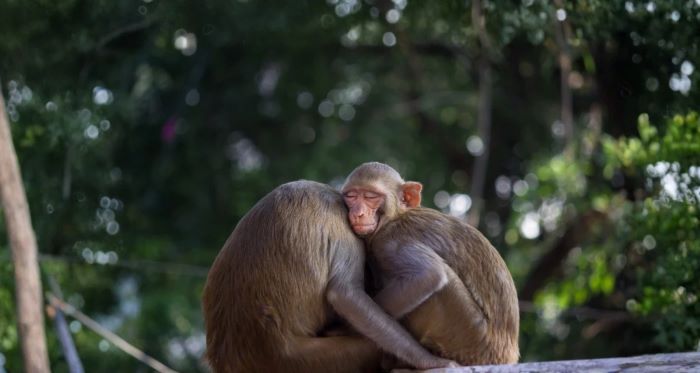
Controversy Trails France’s Biomedical Research on Primate Breeding
France’s decision to expand a state-backed primate breeding centre has ignited a fierce national debate over the future of biomedical research, pitting arguments about scientific independence and public health against growing demands for stronger animal protection and a faster shift to non-animal methods.
At the centre of the controversy is a long-established primatology facility run under the authority of the National Centre for Scientific Research (CNRS) in southern France. Plans to significantly increase its capacity, including the number of macaques bred for research, have been justified by officials as essential to safeguarding France’s ability to conduct advanced biomedical experiments without relying on foreign suppliers.
Researchers and government officials describe the move as a matter of “scientific sovereignty”. They argue that France, like many European countries, depends heavily on imported primates for work in neuroscience, immunology, infectious disease and vaccine development. That dependence, they say, leaves critical research vulnerable to geopolitical tensions, supply disruptions and ethical standards that vary from country to country. By expanding domestic breeding, France hopes to secure reliable access to animals under tighter regulatory oversight, reduce costs and protect strategically sensitive research programmes.
Supporters of the project insist that, despite advances in computer modelling, cell cultures and organoids, certain areas of research still cannot proceed without non-human primates, whose biological complexity more closely mirrors that of humans. They warn that restricting access to such models could delay or derail the development of treatments for neurological disorders, immune diseases and future pandemics.
Animal protection organisations see the expansion in starkly different terms. Groups including One Voice argue that increasing breeding capacity will inevitably lead to more invasive experiments on highly intelligent and socially complex animals. They accuse research authorities of entrenching practices that much of the public increasingly finds unacceptable and say the project runs counter to European commitments to reduce animal testing and invest in alternatives.
Campaigners have also questioned the transparency surrounding the expansion and the scale of public funding involved. They argue that state resources would be better spent accelerating the development of non-animal research techniques rather than reinforcing what they describe as an outdated and ethically fraught model of science. Several organisations are preparing legal challenges and public campaigns, signalling a prolonged confrontation rather than a short-lived protest.
The dispute unfolds against a wider European backdrop in which scrutiny of animal experimentation has intensified. Public opinion has hardened following repeated revelations about laboratory conditions, and lawmakers across the continent face pressure to tighten ethical controls on research involving primates. France’s move therefore places it at the centre of a broader debate about how far advanced economies are willing to go in balancing medical innovation with evolving standards of animal welfare.
Officials insist that any expansion will operate under strict ethical review and regulatory supervision, and they maintain that domestic breeding could improve welfare by reducing long-distance transport and ensuring consistent standards. But critics counter that better oversight does not address the fundamental moral question of whether primate experimentation should be expanded at all.
For now, the government is pressing ahead with consultations while bracing for resistance from campaigners determined to make the issue a national test case. Scientists warn that losing access to primate models would weaken France’s research standing and its ability to respond to health emergencies. Animal rights groups reply that true scientific leadership lies in moving beyond such experiments altogether.
As the arguments sharpen, the primate centre has become a symbol of a deeper tension in modern science policy – whether the pursuit of medical progress justifies continued reliance on animals closely related to humans, or whether the moment has arrived for a decisive break with practices increasingly at odds with public values. Whatever the outcome, the showdown promises to shape France’s research landscape for years to come.
+