




Outdated Degrees: Rethinking University Education in Europe
In a rapidly evolving world where artificial intelligence, climate change, digital
transformation, and shifting geopolitical landscapes are reshaping the way we live and
work, a university degree is no longer a guaranteed ticket to success. Across Europe,
some traditional academic disciplines are struggling to keep pace with the demands of
the 21st-century economy, leaving graduates disillusioned, underemployed, and
burdened with debt.
Once prized for their intellectual value and social prestige, certain degrees, such as
Classical Studies, Pure Philosophy, and even some branches of Literature, are now
seen by employers as disconnected from the skills needed in a modern workplace.
While these fields remain vital to cultural heritage and human understanding, they often
lack direct pathways to stable, well-paying jobs. The same can be said for some
outdated models of Business Administration or Political Science programs that have
failed to incorporate the digital and entrepreneurial realities of today.
Europe’s job market has undergone profound shifts. Automation, AI, and data-driven
decision-making have transformed industries from manufacturing to medicine. Climate
concerns have sparked a green revolution across sectors, demanding new
competencies in sustainability, energy transition, and environmental policy. Meanwhile,
the COVID-19 pandemic accelerated remote work and highlighted the importance of
digital literacy, resilience, and adaptability.
Graduates of degrees with limited real-world application now find themselves playing
catch-up, enrolling in coding bootcamps, digital marketing courses, or entrepreneurship
accelerators just to remain competitive. Employers are increasingly prioritizing
transferable skills such as critical thinking, problem-solving, and communication but
paired with technical know-how and practical experience.
According to recent European employment data, several academic areas have seen a
steep drop in graduate employment relevance. These include:
Traditional Humanities – Degrees like Latin, Ancient Greek, and Historical Theology have
seen declining enrolment and job market value, except in academia or very niche
professions.
Generic Social Sciences – Broad degrees without specialization, such as “General
Studies” or non-applied Political Science, often leave graduates with limited job
prospects unless followed by a Master’s degree.
Old-format Business Courses – degrees that exclude digital tools, international
exposure, or entrepreneurship training are failing to prepare students for modern
commerce.
This is not to dismiss the importance of these fields, but rather a wake-up call for
universities to adapt curricula and for students to consider how their education will
position them in a fast-changing world.
In contrast, there is a boom in degrees that are closely aligned with emerging industries
and global priorities. Here are some of the programs new university entrants in Europe
should consider.
Data Science & Artificial Intelligence – as automation spreads, companies need people
who can design, interpret, and ethically manage smart systems.
Environmental Science & Green Engineering – From renewable energy to climate policy,
these disciplines are critical in addressing global warming and meeting the EU’s Green
Deal targets.
Cybersecurity & Digital Infrastructure – with cyberattacks on the rise, governments and
businesses need experts to protect systems and data.
Health Informatics & Biotechnology – blending life sciences with technology, these fields
are central to personalized medicine, vaccine development, and public health.
Creative Technology & UX Design – as virtual reality, gaming, and immersive media
expand, creativity fused with tech is becoming a powerful career path.
Social Impact & Global Development Studies – for those passionate about justice and
change, programs integrating law, international relations, and sustainable development
offer meaningful career routes in NGOs, policy, and diplomacy.
Perhaps the most relevant degree today is one that fosters lifelong learning,
adaptability, and a multidisciplinary mindset. Universities across Europe, from Finland to
Portugal, are starting to restructure their degrees, combining liberal arts with tech,
embedding internships, and focusing on real-world problem-solving.
The question prospective students should ask is not just “What do I want to study?” but
“What problems do I want to solve?” and “What skills will I need to stay relevant in 20
years?”
In the end, the value of a degree lies not just in the knowledge it imparts but in how well
it prepares graduates to engage with a rapidly changing world. For today’s students,
choosing the right path means blending passion with practicality and keeping one eye
firmly on the future.
By Moji Danisa
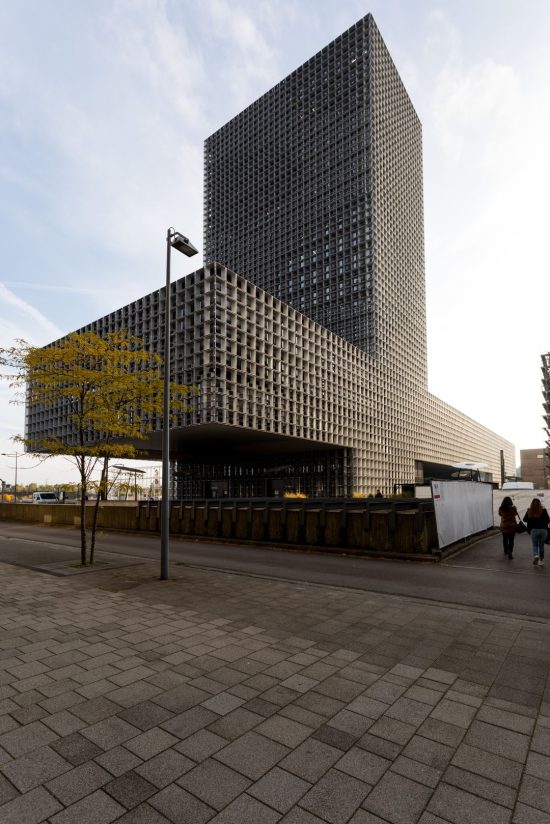
Photo – University of Luxembourg, Esch-Belval