







Maldives Launches Project Solar City in Bold Shift to Renewable Energy
The Maldives has taken a significant step to transform its economic landscape with the launch of Project Solar City, the first major initiative under its Special Economic Zones framework. The project, backed by a $187 million investment, aims to develop a 100-megawatt floating solar power plant alongside real estate, tourism, and industrial components, signaling a determined shift from reliance on traditional tourism to a diversified economy driven by renewable energy.
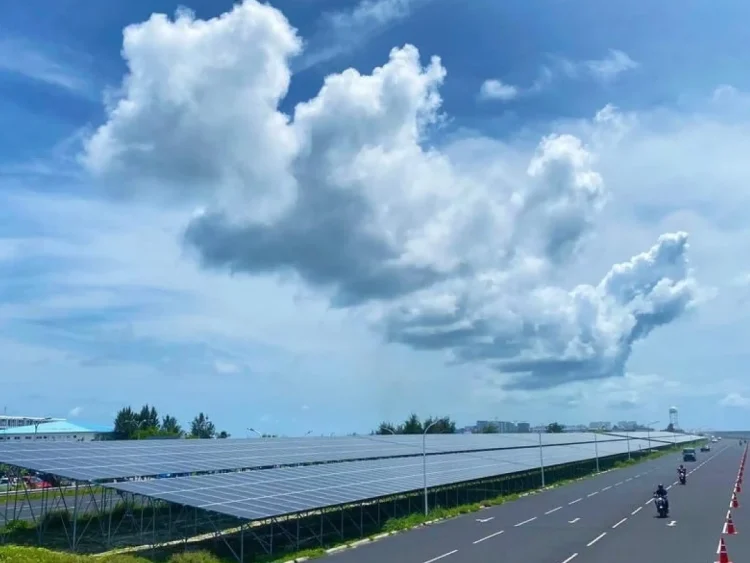
President Mohamed Muizzu’s administration has issued the first Special Economic Zones (SEZ) Permit under the SEZ Act to APM SPV Pvt. Ltd, a local entity created by Canada’s Abraxas Power Corp. The project is set to rise on a lagoon roughly five kilometers from Hulhumale and will incorporate battery storage and submarine cables connecting to the capital’s grid. Construction is expected to start by April 2025, with the system operational by 2027.
Officials say the project will directly support the president’s target of generating a third of the Maldives’ power from renewable sources. Currently, the country spends nearly $42 million each year on diesel for power, a burden that Project Solar City could substantially cut. In 2023 alone, fuel imports accounted for over 22 percent of total imports, with about 80 percent destined for electricity and marine transport.
Beyond clean energy, the initiative promises a multi-pronged impact. Plans include a luxury tourism facility designed to attract global MICE events, along with logistics, storage, and commercial real estate developments that could position the Maldives as a small but strategic trade and conference hub in the Indian Ocean.
For investors, the project offers a unique package. SEZ incentives in the Maldives include exemptions from import duties, tax holidays, streamlined regulations, and full foreign ownership rights. The country’s strategic location between Africa, the Middle East, and Asia also makes it an attractive point for regional shipping and investment. According to the Ministry of Economic Development, the SEZ model was specifically designed to lure large-scale projects like this one that can diversify the nation’s economic base and create high-quality local employment.
Returns on investment are expected to come from several streams. The renewable energy component reduces national fuel bills while generating stable revenues through power sales to the local grid. Tourism and real estate components tap into the Maldives’ global reputation for exclusivity. Industrial and logistics facilities could open new revenue lines by handling regional transshipment and value-added services.
However, the project is not without risks. A key challenge is environmental. The Maldives is one of the world’s most climate-vulnerable nations. Floating solar must be carefully designed to avoid disrupting delicate marine ecosystems, particularly coral reefs which underpin the tourism economy. Project planners insist they have incorporated rigorous environmental safeguards, including comprehensive impact assessments and adaptive engineering to withstand rising sea levels and storms.
Another challenge is financial. A nearly $200 million investment is a substantial commitment for a small country. The developers argue that the project’s diversified portfolio mitigates this by blending long-term power purchase agreements with premium tourism and real estate, ensuring that no single segment bears the full risk.
Questions also remain over whether such an ambitious mix of sectors can succeed together on floating infrastructure. Yet precedents exist that suggest it is feasible. Singapore has successfully operated large floating solar arrays, while hybrid tourism and industrial SEZ models in Mauritius and the UAE have demonstrated that small island economies can host multi-sector hubs profitably. These examples bolster confidence that, with proper execution, the Maldives can replicate similar success.
For local communities, the payoff could be transformative. Besides reducing energy costs, the project is expected to create hundreds of skilled jobs in construction, engineering, hospitality, and operations. It could also help insulate the economy from shocks like pandemics that previously brought the tourism sector to a standstill.
Project Solar City is ultimately a gamble to redefine the Maldives from a fragile paradise into a resilient, future-focused economy. In an era when small nations must innovate or fall behind, the Maldives is betting on the sun not just to power its islands, but to energize an entirely new chapter of growth.
By Moji Danisa