



Luxembourg’s Labour Tangle, “Game of Numbers”
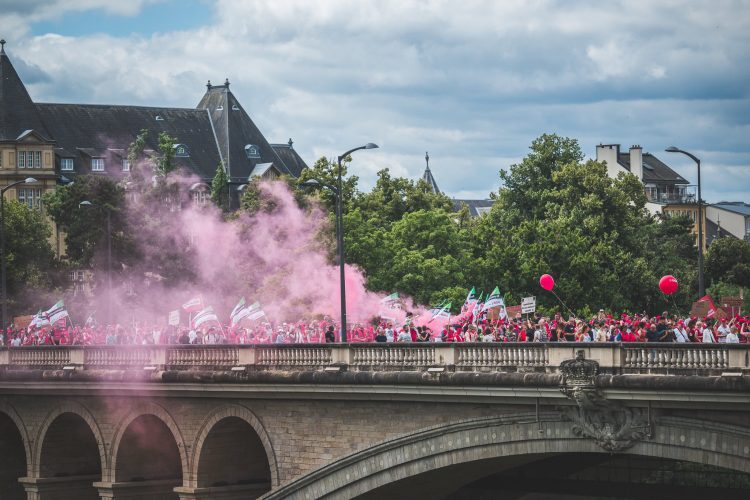
Whoever claimed numbers never lie clearly never watched governments and unions squabble over protest headcounts. On 28 June, Luxembourg’s streets brimmed with placards, chants, and enough simmering discontent to make even the most seasoned politician squirm. Ask the government, and they’ll tell you it was a crowd of 14,000, the figure broadcast by RTL. Ask the unions and their friendly private media allies, and they’ll swear it was well over 25,000. It’s astonishing that something as simple as counting people could prove so slippery. But that’s politics—spin first, verify later.
Beneath this statistical shadow-boxing lies a deeper dance of mutual suspicion. Luxembourg’s government, led by Prime Minister Luc Frieden and his ministers, seems intent on weakening the unions’ grip on collective bargaining. The unions, particularly the OGBL and LCGB, have declared such meddling a bright, glaring red line. In fact, before even stepping into negotiations this week, they demanded that the government put it in writing that collective agreements would remain exactly as they are, with no backdoor shortcuts allowed.
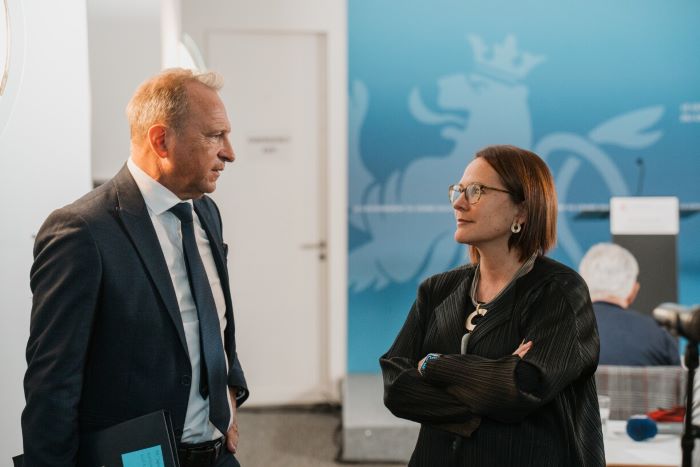
This uncompromising stance by the unions comes into sharper focus when you look closely at the government’s scattered, almost theatrical manoeuvres. Rather than approaching talks with a coherent voice, Luxembourg’s leadership seems to have orchestrated a kind of polyphonic strategy, with different figures striking discordant notes—perhaps hoping to unsettle the unions or pry them apart. Prime Minister Luc Frieden, ever the polished tactician, has maintained an upbeat tone in public, projecting optimism without offering concrete assurances. Deputy Prime Minister Xavier Bettel, known for his deft political touch, has also stepped forward, alongside a small battalion of ministers from the Christian Social People’s Party (CSV) and the Democratic Party (DP), each bringing their own script to the unfolding drama. The sheer number—seven ministers besides the top two—suggests more than simple inclusion; it hints at a deliberate effort to diffuse accountability and sow a measure of strategic confusion. Meanwhile, union leaders have held their line with remarkable discipline.
Taken together, these choreographed moves point to a subtle governmental playbook. By deploying multiple voices and keeping the discussions broad, the government buys time and perhaps hopes to tire out union resolve. It’s a gamble that might yet backfire, especially with union leaders already keenly attuned to any sign of divide-and-conquer tactics.
What’s more, the government has tiptoed around the elephant in negotiation room—runaway inflation. Everyone knows that much of the price surge is tangled up in geopolitics far beyond Luxembourg’s control. Energy markets, global supply chains, even the aftermath of conflicts elsewhere: it’s a toxic cocktail no small European state can simply wish away. Yet the government appears oddly reluctant to tackle this head-on. Perhaps that’s because opening that can of worms might lead to awkward questions about Luxembourg’s foreign policy stance, questions it would rather dodge.
Meanwhile, unions aren’t just stonewalling for the sake of tradition. Their demands cut to the core of working life: Sunday trading hours, minimum wage calculations, pension sustainability, and safeguarding health insurance. These aren’t the whimsical fancies of a movement nostalgic for 1970s socialism; they’re bread-and-butter concerns for tens of thousands of workers already grappling with the everyday pinch of higher costs. Their recent letter to the Prime Minister reminded him—politely but firmly—that between their demonstration and membership rolls, they stand for at least 75,000 citizens. That’s a slice of the electorate no government can afford to sneer at.
Yet one can’t help suspecting that both sides are more interested in shadowboxing than striking a true compromise. The government is likely hoping to slip through its reforms in the confusion, perhaps under the cover of dire warnings about competitiveness and future growth. The unions, for their part, are defending the status quo with a vigor that suggests they see any concession as the first stone pried loose in a dam.
So here Luxembourg sits, watching this high-stakes pantomime unfold. Citizens glance at the headlines, raise an eyebrow at the dueling crowd estimates, and wonder how long before all this talk turns into either painful austerity or fresh rounds of protest. Inflation isn’t going anywhere soon, and neither are the fears that the government will try to balance the books on workers’ backs. The unions smell that too, which is why they’re digging in.
The real risk is that this turns into a never-ending cat and mouse game. The government proposes, unions oppose, negotiations stall, and repeat. Meanwhile, everyday Luxembourgers keep paying more at the checkout, all while the two sides rehearse their talking points. It’s a costly standoff—just not for those seated comfortably at the negotiation tables.
In the end, the question might not be who had the better turnout figures on a sunny June afternoon. It might be who ends up paying the price when inflation bites hardest and reforms—either half-baked or too harsh—finally land. Until then, expect more counting, more posturing, and plenty of Luxembourgish patience stretched thin.
Opinion Analysis – David Danisa