






Luxembourg Shows Europe How to Ride Free and Clean
In a continent often snarled by traffic and burdened by escalating transit costs, the
Grand Duchy of Luxembourg stands as a pedestal of seamless, efficient, and,
remarkably, free public transportation. While other European nations grapple with
infrastructure deficits and commuter frustrations, this small nation has quietly, yet
decisively, built a system widely heralded as the continent’s best. The secret, it turns
out, lies in a bold vision, strategic investment, and a deeply ingrained commitment to its
citizens and the environment.
At the heart of Luxembourg’s transit triumph is the CFL Group, the national railway
company. Far from a sleepy state-owned enterprise, CFL is a dynamic behemoth, and
according to recent data released by statistics agency Statec, it remains the country’s
largest employer, now boasting over 5,000 staff. This isn’t just a statistical anomaly; it’s
a testament to the nation’s priorities. In an era where many public transport operators in
Europe struggle with staffing and funding, CFL’s growth, adding 200 employees in the
last year alone, signals a robust, expanding network.
The impact of this investment is tangible. In 2024, CFL reported a record number of
passengers, carrying 31.3 million people, a 9% increase from the previous year. This
surge isn’t merely organic growth; it’s a direct result of a revolutionary policy
implemented in February 2020 – free public transport for all. Buses, trams, and trains
within the Grand Duchy became entirely fare-free, making Luxembourg the first country
in the world to adopt such a widespread policy. This audacious move, initially viewed
with skepticism by some, has proven to be a game-changer, fundamentally altering
commuting habits and offering a compelling alternative to private car ownership.
The logic behind the “free” model is both social and environmental. By eliminating the
financial barrier, the government aimed to encourage residents, cross-border workers
(who constitute a significant portion of Luxembourg’s daily commuters), and tourists to
opt for public transport, thereby reducing dependence on cars, alleviating traffic
congestion, and curbing polluting emissions. A Greenpeace report from May 2023,
assessing public transport ticket offerings across 30 European countries, placed
Luxembourg at the top of its national ranking with a perfect score of 100 out of 100
points, followed by Malta, Austria, and Germany. This isn’t just about affordability; it’s
about accessibility and a seamless user experience.
Contrast this with the patchwork systems found across much of Europe. While cities like
Tallinn and Valletta also offer free public transport, Luxembourg’s national-level
implementation sets it apart. In many European nations, commuters face complex fare
structures, varying zone systems, and often high costs, particularly for cross-city or
regional travel. The financial burden can be substantial, especially for lower-income
households. Luxembourg’s approach levels the playing field, making mobility a
fundamental right rather than a privilege.
Beyond the free fares, Luxembourg’s commitment extends to its infrastructure. While
the nation is compact, its foresight in developing a multimodal network is exemplary.
The rail network has seen significant development, with passenger numbers rising from
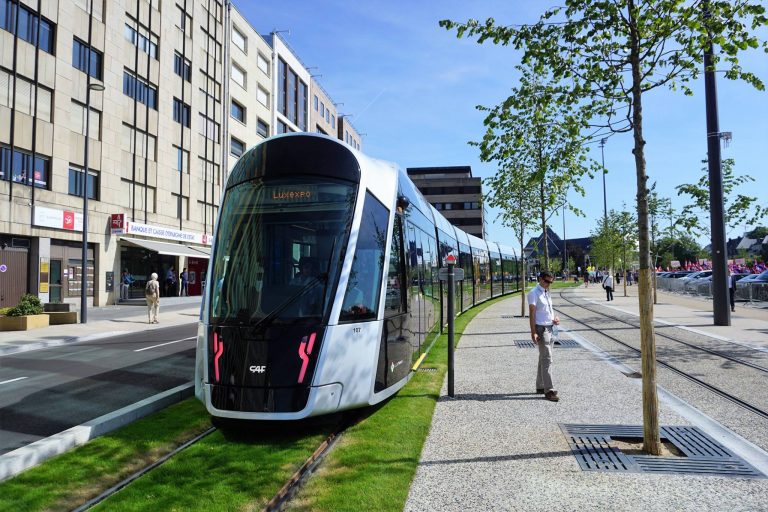
25 million in 2019 to 31.3 million in 2024. The tramway, reintroduced just a few years
ago after being abolished in the mid-20th century, has seen an even more dramatic
increase, from 6.2 million passengers in 2019 to 31.7 million in 2024. This exponential
growth is driven by successive extensions of the line, including the recent inauguration
of the extension to Luxembourg Airport in Findel.
The CFL Group’s emphasis on customer satisfaction and operational rigor is also a key
factor. With over 5,000 employees, the company can ensure higher frequencies, better
maintenance, and a more responsive service. Their focus extends beyond mere rail
operation to a broader vision of mobility, aiming to cover “first to last kilometer” journeys
for passengers and goods. This holistic approach includes expanding car-sharing
services (Flex brand saw a 28.64% increase in users in 2024) and retail options at
transport hubs.
Looking ahead, Luxembourg’s National Mobility Plan 2035 (PNM 2035) is an ambitious
roadmap for the future. It outlines over 200 projects, including major railway upgrades,
further tramway network expansion, and high-performance corridors for buses. The plan
anticipates accommodating an additional 40% of daily trips by focusing on moving
people, not just vehicles, and by anticipating future mobility demands rather than
reacting to current bottlenecks. This proactive strategy is a stark contrast to the often
reactive, piecemeal infrastructure planning seen in many other European nations.
While some might argue that Luxembourg’s small size and strong economy give it an
inherent advantage, its success is not simply a matter of scale. It’s a deliberate policy
choice, a recognition that investing in public transport is an investment in societal well-
being, economic productivity, and environmental sustainability. As other European
capitals continue to battle congestion and pollution, Luxembourg offers a compelling
blueprint for how a nation, even a small one, can revolutionize mobility and set a new
standard for urban living. The Grand Duchy’s green lanes are more than just a
convenience; they are a vision for the future, proving that truly exceptional public
transport is not a luxury, but a necessity that is within reach.