








Business Failures Amidst Economic Shift in Luxembourg
Long celebrated for its economic stability and role as a global financial hub,
Luxembourg is presently experiencing a notable increase in business failures across
multiple sectors. New figures released by the National Institute of Statistics and
Economic Studies (STATEC) reveal a significant rise in bankruptcies and liquidations
during the first half of 2025, signaling a challenging period for the Grand Duchy’s
economy.
According to STATEC data, bankruptcies have increased by 7% in the first six months of
2025 compared to the same period last year. Even more striking, liquidation procedures
have surged by a substantial 28%. This trend is impacting a diverse range of industries,
from the financial sector to construction, retail, and hospitality, leading to job losses and
business closures.
Of the 593 bankruptcies recorded between January and June 2025, nearly a third were
concentrated in holding companies and investment funds. While Luxembourg has
historically been an attractive base for these entities due to favorable tax conditions and
access to the EU market, they appear to be particularly vulnerable to current global
economic pressures.
Industry insiders suggest that a worldwide reduction in high-risk capital, coupled with
elevated interest rates and shaky investor confidence in the post-pandemic era, has
made many holding structures unsustainable. Furthermore, increasing international
pressure for tax transparency and evolving EU regulations are placing additional strain
on financial entities that historically thrived in Luxembourg’s accommodating
environment. This confluence of factors is contributing to a domino effect of closures
and court-ordered liquidations within the financial sector.
Despite a 10% decline in the number of bankruptcies in the construction sector, with 89
cases reported, the industry is far from robust. The more significant impact is seen in
job losses, with 515 positions eliminated. Rising material costs driven by inflation,
stagnating property demand, and stricter environmental regulations are reported as key
factors paralyzing many small and medium-sized contractors. Subcontractors report
difficulties in securing new projects, declining profitability, and challenges with bank
lending and client payments.
The retail sector recorded 84 bankruptcies and 186 job losses. The rise of e-commerce
continues to divert foot traffic from brick-and-mortar stores, while persistent inflation is
curbing consumer spending. Independent and family-run shops in particular are
struggling to maintain viability amidst high rents and competition from larger brands.
Wage pressures and staffing shortages are also cited as significant challenges for
retailers.
The HORESCA sector (hospitality, restaurants, and cafes) remains under pressure, with
61 businesses failing and 229 jobs lost. The sector has not fully recovered from the
lingering effects of the pandemic, with tourism still lagging and evolving consumer
habits favoring delivery services over dining out. Rising operational costs and the
reduction of government support schemes are further compounding difficulties for
hospitality businesses.
The increase in business failures points to a broader economic unease in Luxembourg.
Although the nation’s unemployment rate remains relatively low by international
standards, it is showing an upward trend, currently hovering around 6%. While inflation
has decreased from its 2022 peak, it remains a persistent concern. The rise in court-
ordered liquidations suggests that many companies see no viable path forward.
STATEC acknowledges that part of the year-over-year increase in bankruptcies is due
to an unusually low base in 2024. However, for businesses, employees, and
policymakers, the current figures underscore a significant shift. Luxembourg, long
perceived as economically resilient, appears to be increasingly susceptible to the
broader economic challenges affecting much of Europe.
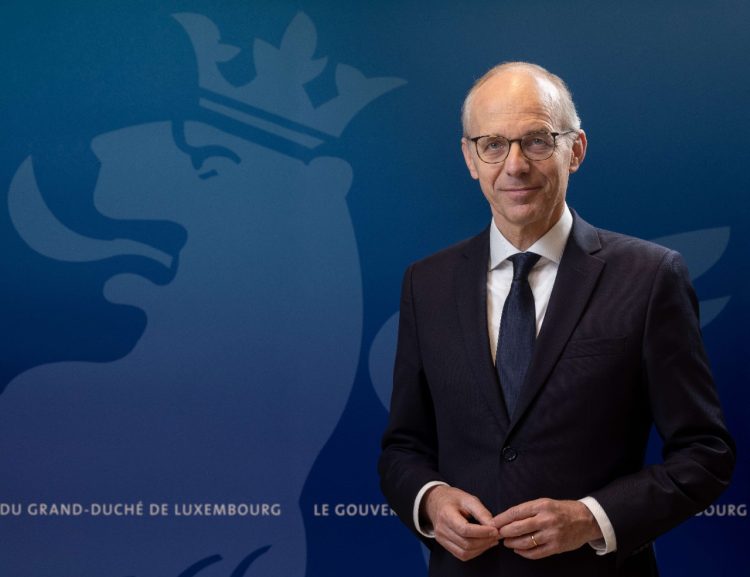
In response to the concerning trend, government officials are calling for calm. Luc
Frieden, the Economic Affairs Minister, has indicated the potential for new support
mechanisms aimed at small businesses and startups. Financial regulators are also
advocating for reforms designed to attract “productive” investment funds, distinguishing
them from more transient financial entities.
The path ahead for Luxembourg remains uncertain. The current economic climate
suggests that the nation’s traditional economic model, heavily reliant on finance and
international capital flows, may require reevaluation. As the global economy moves
towards greater transparency, sustainability, and digitalization, Luxembourg faces the
challenge of adapting its economic strategy to prevent further business closures and job
losses.
Photo – Luc Frieden, Prime Minister and Minister of Economic Affairs