








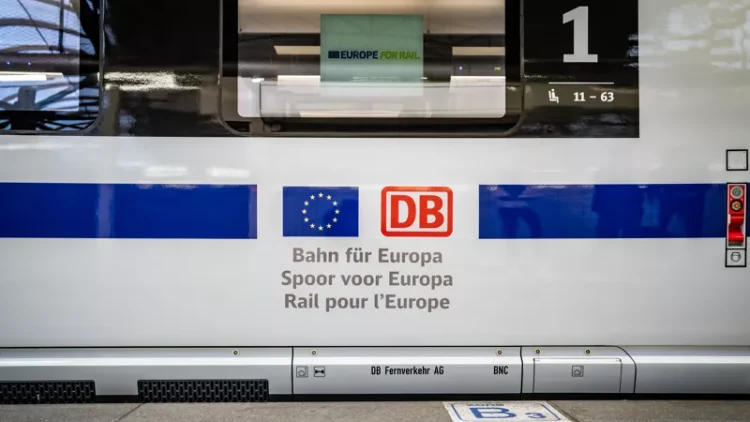
Germany, Belgium Forge Closer Ties with New High-Speed Link
In a move poised to significantly deepen economic and cultural ties between Germany
and Belgium, German rail giant Deutsche Bahn (DB) has submitted plans to launch a
new high-speed train service. This ambitious connection, linking Antwerp, Leuven, and
Brussels Airport with Cologne and Aachen, promises to dramatically cut travel times
and boost accessibility for millions.
The proposed service, slated to begin in September 2026, will run twice daily in both
directions. Crucially, the ICE trains will make stops at Brussels Airport in Zaventem, a
long-awaited development for the airport operator. The route will also include stops in
Leuven and Liège, further enhancing regional connectivity within Belgium and with
Germany.
For Belgium, the implications are substantial. Antwerp, a pivotal port city, gains a direct,
rapid link to Germany’s industrial heartland, potentially unlocking new avenues for trade
and logistics. Leuven, a thriving university city, and Liège, a key economic hub, will see
improved access for business travelers and tourists alike. The direct airport connection
is a game-changer, offering seamless international travel for Belgian residents and
visitors.
Germany stands to benefit from enhanced access to Belgium’s vital economic centers
and its strategic North Sea ports. The new service complements the existing eight daily
ICE trains between the two countries, which currently terminate at Brussels Midi. By
extending the reach to Antwerp and integrating Brussels Airport, DB is not just adding a
route; it’s weaving a denser, more efficient transport network that can facilitate greater
cross-border collaboration and economic exchange. The projected 2.5-hour journey
from Antwerp to Cologne underscores a commitment to speed and convenience,
making rail an even more attractive alternative to air travel for intra-European
connections.
This initiative is more than just a new train line; it represents a tangible step towards a
more integrated European transport landscape, solidifying the vital relationship between
two of the continent’s core economies.