



Conscience or Pragmatism – Why Luxembourg Voted to keep Tel Aviv Trade Office Open
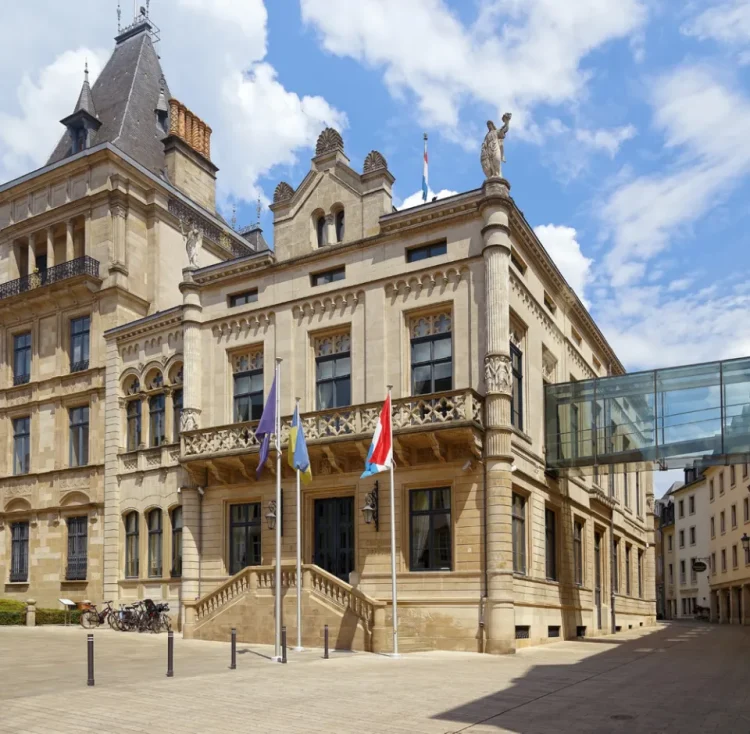
In the opulent halls of Luxembourg’s Chamber of Deputies, a debate recently unfolded
that laid bare the complex tightrope walk many European nations face when confronting
the humanitarian crisis in Gaza. Despite widespread acknowledgment of human rights
abuses, a majority of Luxembourg lawmakers on Wednesday voted against a motion to
close the country’s trade and investment office (LTIO) in Tel Aviv. This decision, though
symbolic in nature, underscores a persistent tension between moral imperatives and
perceived geopolitical or economic realities.
The motion, brought forth by left-wing MP David Wagner, was a direct response to
Israel’s ongoing military actions in Gaza, which have resulted in a devastating human
cost – at least 57,500 killed and over 135,000 wounded, in the wake of the October 7th
Hamas attacks that killed 1,200 and saw 250 taken hostage. Wagner, alongside LSAP
lawmaker Yves Cruchten, passionately argued for the closure, highlighting its symbolic
power as a unilateral measure Luxembourg could take to pressure Israel. “History has
its eyes on us,” Wagner declared, while Cruchten lamented, “What is happening is a
crime.” They pointed to the European Union’s robust sanctions against Russia following
its invasion of Ukraine as a stark contrast to the bloc’s comparatively muted response to
Israel, beyond sanctions on individual extremist settlers.
Indeed, the moral argument against maintaining the trade office is potent. Green MP
Sam Tanson bluntly stated, “Israel has definitely violated human rights. We can watch
the human rights abuses every day live on television.” The European Commission itself
has presented evidence suggesting “indications” that Israel is in breach of its human
rights obligations under the EU-Israel association agreement. For many, including the
4,500 signatories of a public petition demanding sanctions, the closure of the LTIO in Tel
Aviv represents a minimal, yet crucial, act of solidarity and condemnation.
However, the parliamentary vote revealed a prevailing sentiment among the ruling
coalition parties – the Democratic Party (DP), the Christian Social People’s Party (CSV),
and the Alternative Democratic Reform Party (ADR) – to prioritize a different approach.
These parties, collectively holding 40 votes against the 20 from the opposition (déi
Lénk, LSAP, déi Gréng, and the Pirate Party), based their decision on several key
arguments.
The DP, the party of Foreign Minister Xavier Bettel, emphasized that analyses by
the European Commission were ongoing regarding Israel’s human rights conduct and
what actions the bloc should take. This stance suggests a preference for a unified EU
response over unilateral action, perhaps to maintain diplomatic cohesion within the
Union. Bettel himself had previously argued against Luxembourg unilaterally imposing
sanctions, a claim subsequently refuted by a legal scholar, yet indicative of a leaning
towards collective EU foreign policy.
Secondly, while not explicitly stated in the parliamentary debate, the inherent function of
the LTIO is to facilitate trade and investment. Luxembourg’s economy, known for its
financial services and innovation, has established ties with Israel’s burgeoning tech and
startup sector. Closing such an office, even if symbolic, could be perceived as damaging
to these economic relationships or as a disincentive for future investments, potentially
impacting Luxembourg’s own economic interests. The LTIO Tel Aviv explicitly states its
mission is to “assist innovative Israeli businesses in expanding to Luxembourg and
accessing the European market” and to “facilitate trade between Luxembourg and
Israel.”
Finally, there’s the argument, implicitly or explicitly made, that a symbolic gesture, while
emotionally resonant, might not effect tangible change on the ground for Palestinians.
Foreign Minister Bettel had previously made a similar point when rejecting calls for
Luxembourg to recognize Palestinian statehood, arguing it would be symbolic and not
alter the current context for Palestinians. This perspective, while perhaps pragmatic,
dismisses the very real power of international pressure and moral signaling.
As EU foreign ministers prepare to meet next week to discuss proposals for sanctions,
Luxembourg’s vote against closing its Tel Aviv trade office highlights the difficult calculus
facing European governments. It’s a balance between expressing moral outrage at
human rights violations and navigating complex diplomatic and economic
considerations, often deferring to the slower, more deliberative pace of broader EU
consensus. For now, in Luxembourg, the perceived benefits of maintaining existing
diplomatic and economic channels, coupled with a preference for a collective European
stance, have outweighed the compelling calls for a stronger, unilateral symbolic act.